Skip to content
Trail & Terminal

01 — Camp / Guide

Outdoor gear brands worth buying

Brand matters enormously in four categories and barely at all in six. Knowing which is which is worth more than any individual brand recommendation.

By Brijon M.Last updated How we pick
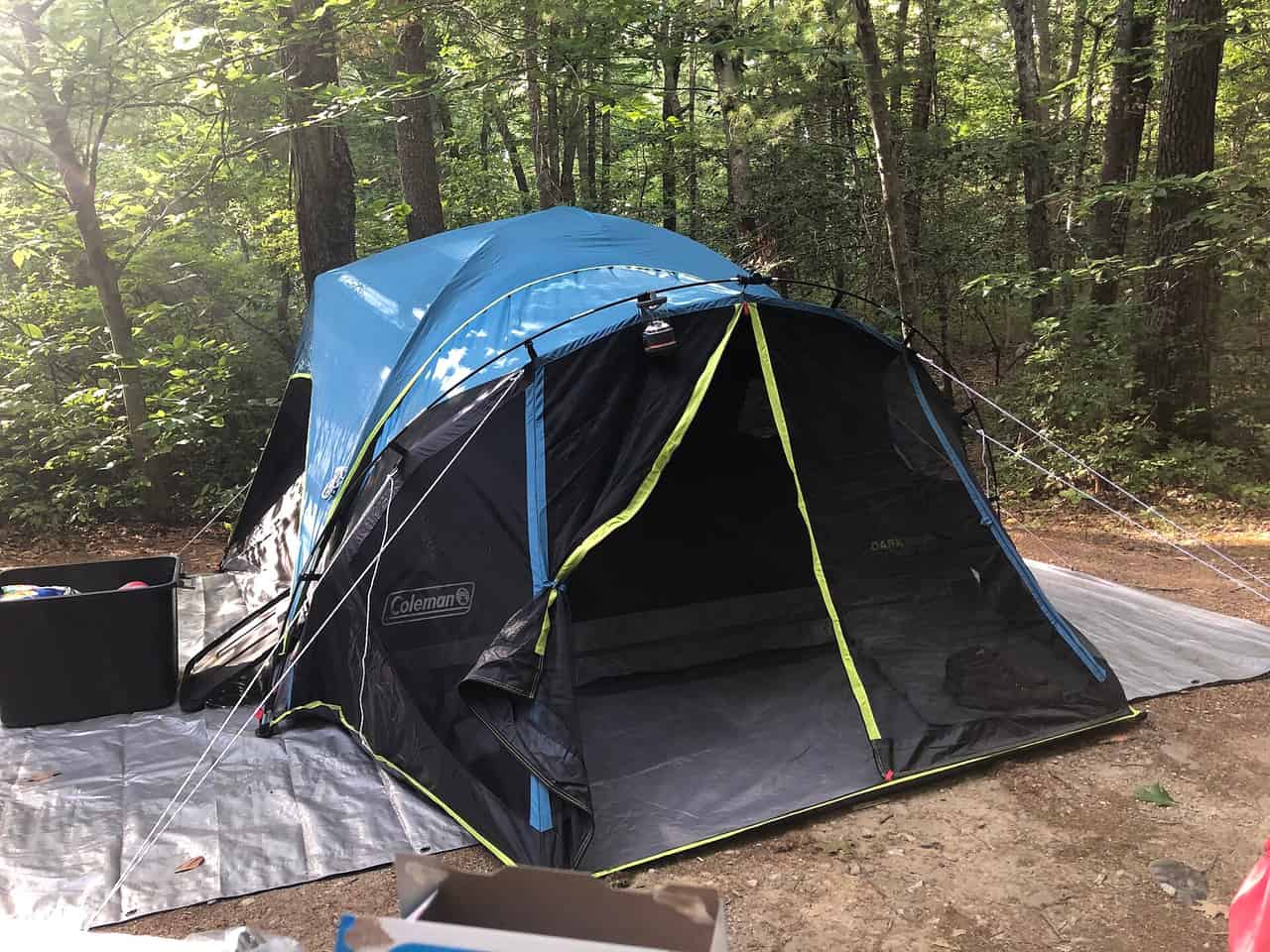
A camping setup with a tent and gear at a campsite

The short answer

Brand matters most where a part is load-bearing or sealed: packs, sleeping insulation, water filtration and footwear. It matters least in chairs, tables, lanterns, coolers under a day of retention, cookware and bottles, where cheap versions do the same job for years.

01 — Framing

The question behind the question

Almost nobody searching for outdoor gear brands wants a list of logos. They want to know where spending more buys something real and where it buys a label, because the price gap between a budget and a premium version of the same object runs from nothing to ten times.

The useful answer is not brand by brand. It is category by category. The same company can make an excellent pack and an unremarkable water bottle, and a store brand can make an entirely adequate camping chair and a tent you should not trust in wind. So the structure below is: which categories reward brand spending, which do not, and what the specific signals are that let you judge an unfamiliar name.

This page sits upstream of the category roundups. If you already know which category you are buying, go straight to it -- tents, sleeping pads, daypacks and the rest. If you are trying to work out whether the premium version is worth it at all, keep reading.

02 — Spend here

The four categories where brand genuinely matters

The pattern across these four is simple: each contains a part that is either load-bearing or sealed. If a component carries your weight, holds pressure, or has to keep something out, manufacturing consistency is the product, and that is exactly what an established brand's tooling and quality control buys you.

Backpacks, above about 25 liters

A loaded pack transmits weight through a hip belt, a frame and a set of stitched anchor points. Cheap packs fail at the anchor points, and they fail suddenly -- the seam at the shoulder strap gives out and the pack becomes unusable mid-trip. Established pack brands also carry something a store brand cannot: a torso-length fit system and the spare parts to replace a buckle five years later.

Below 25 liters this reverses. A small daypack carries so little weight that the frame and belt barely exist, and a generic one lasts years. See hiking daypacks for where the line sits and Osprey vs The North Face for a head-to-head on two of the big names.

Sleeping insulation -- bags, quilts and pads

Down fill power, baffle construction and R-value are all claims you cannot verify by looking. In sleeping pads there is now an industry test standard (ASTM F3340) for R-value, and brands that publish a tested figure are telling you something; brands that quote a vague "4-season" rating are not. In bags, a brand that cites an EN or ISO comfort rating is giving you a comparable number.

This is also the category where a failure costs you the whole night rather than an inconvenience. See sleeping pads, sleeping bags and down vs synthetic.

Water filters and purifiers

This is the one category where brand reputation is a safety matter rather than a durability matter. A filter is a sealed element with a pore size you cannot inspect, and the only evidence that it does what the box says is third-party testing against a recognized standard. Established filtration brands publish that testing. Unbranded filters on marketplaces frequently do not.

Buy a filter from a company whose testing claims you can look up, and replace the element on the stated schedule. See water filters for backpacking.

Footwear

Boots and trail shoes are the category where fit is the product, and fit is a function of a brand's lasts -- the forms their shoes are built around. This is why people become loyal to a footwear brand and not to a cooler brand: once you know a given maker's last suits your foot, that knowledge transfers across their whole range and saves you years of blisters.

The corollary is that nobody else's brand recommendation helps you much here. The right brand is the one whose shape matches your foot, which you can only find by trying several.

03 — Save here

The six categories where brand barely matters

In these categories the budget version does the same job for years, and the premium version is buying you weight savings, packed size or finish rather than function. That is sometimes worth paying for -- packed size genuinely matters on this site -- but it is not a durability argument.

CategoryWhat the premium actually buysVerdict
Camping chairsLower weight and smaller packed sizeBuy cheap unless packed size is the constraint
Camping tablesSmaller fold, better top surfaceBuy cheap; failure is cosmetic
Lanterns and headlampsRegulated output and better beamMid-range is the sweet spot; premium is marginal
Coolers, under a day of retentionMulti-day ice retentionBuy capacity cheap unless you need multi-day
CookwareWeight, nesting and non-stick qualityA thrift-store pot works; buy for nesting
Water bottlesInsulation and lid designAny food-grade bottle holds water fine

04 — Signals

How to judge a brand you have never heard of

Marketplace listings are full of names that did not exist two years ago, some of which are making perfectly good gear. These are the signals that actually separate them, in rough order of how much they tell you.

  1. 01Does it publish a testable number? A tested R-value, an EN/ISO bag rating, a filter's pore size with a named test standard, a denier figure for fabric. Numbers that can be checked are a different class of claim from adjectives.
  2. 02Can you buy a spare part? A brand that sells replacement buckles, poles, zipper pulls and valve caps intends the product to last. A brand with no parts page has priced the item as disposable, whatever the marketing says.
  3. 03What is the warranty, in writing? "Lifetime" means nothing without a stated process. Look for who pays shipping, what counts as a defect versus wear, and whether a receipt is required.
  4. 04How old are the reviews? Durability complaints appear in year two, not month one. A product with only recent five-star reviews has no durability record yet -- that is not bad, it is unknown.
  5. 05Is the same item sold under several names? Many budget items are the same factory product rebadged. That is fine, and it means paying more for one badge than another buys nothing.
  6. 06Is there a real address and a support channel? A warranty you can only reach through a marketplace message is worth considerably less than one with a phone number behind it.

05 — Total cost

Warranty and repairability are the real brand premium

The strongest practical argument for established outdoor brands has little to do with the fabric. It is that a mid-life failure is repairable. A broken tent pole section, a snapped sternum buckle, a leaking pad valve -- each is a $10 part from a company that stocks it and a trip-ending problem from one that does not.

That changes the arithmetic. A $300 pack you keep for twelve years because you can replace a buckle costs less per year than three $90 packs. But the same logic does not apply to a chair, because nobody repairs a chair -- which is exactly why the categories split the way they do above.

  • Check the parts page before you buy, not after. It takes thirty seconds and tells you how the company thinks about the product's lifespan.
  • Register the product if registration is required. Several outdoor warranties are conditional on it, and nobody reads that part until they need the warranty.
  • Repair tape and a spare buckle are cheaper than brand loyalty. A roll of fabric repair tape fixes most field failures regardless of what made the item -- it is on our camping checklist for that reason.
  • Secondhand premium beats new budget in the four categories above. A used pack from a brand with a parts catalog is a better buy than a new unbranded one.

06 — What to ignore

The traps

Brand-as-identity pricing

Some outdoor brands sell at a premium because their logo carries social value in cities, not because the gear is better. That is a legitimate thing to buy if you want it, but do not confuse it with a durability claim. The tell is a product line that is mostly cotton and mostly worn indoors.

"Military grade" and "tactical"

Neither term has any defined meaning in consumer gear. In practice they correlate with heavier fabric, more straps than the item needs, and a color palette. None of that predicts whether a seam holds.

House brands at outdoor retailers

These are often the best value on the shelf, because the retailer carries the warranty and has a reputation to protect. They are usually made to a spec the retailer wrote, with real published numbers, and priced below the name brands next to them. Treat a serious outdoor retailer's own label as a real brand, not a generic -- our cheap camping gear guide leans on them heavily.

Chasing the newest model

Outdoor gear iterates slowly and last year's model is frequently identical with a different colorway. The previous generation at a discount is one of the few genuinely free wins in gear buying.

What to buy

The gear we would buy for this

Trail & Terminal earns a commission when you buy through our Amazon links, at no extra cost to you. It does not change which products we pick -- see our affiliate disclosure and selection method.

1

Best for a category where brand earns it

Osprey Talon 22

The example of the premium that pays back: a fitted suspension, a parts catalog and a warranty with a stated process.

We use this as the worked example rather than a universal recommendation. It shows what the premium buys in a brand-sensitive category: a sizing system, a suspension that transfers load, and the parts and warranty that make a twelve-year ownership realistic. For a full comparison against the other big name, see <a href="/trail/osprey-vs-north-face-backpacks">Osprey vs The North Face backpacks</a>.

Specs

  • Sized by torso length rather than one-size-fits-all
  • Continuous-wrap harness and a real hip belt
  • Trekking pole and helmet attachment
  • Covered by Osprey's All Mighty Guarantee

Good for

  • Fit is adjustable in the ways that matter when the pack is loaded
  • Spare buckles, straps and parts are available years later
  • Warranty process is published rather than implied

Bad at

  • Several times the price of a generic 22L daypack
  • At 22L the fit advantage is smaller than it would be on a 50L pack
  • Lots of straps and attachment points you may never use
2

Best for where brand is a safety question

Sawyer Squeeze

Filtration is the one category where an unknown brand is a genuine risk rather than a durability gamble.

Included to make the point concrete: with a filter you are buying a sealed element whose pore size you cannot verify, so the manufacturer's testing record is the entire product. That is the clearest case on this page for paying for a known name. Full options in <a href="/trail/best-water-filters-for-backpacking">water filters for backpacking</a>.

Specs

  • 0.1 micron absolute hollow fiber membrane
  • Manufacturer-stated bacteria and protozoa removal
  • Backflush syringe included
  • Inline, bottle-top or gravity configurations

Good for

  • Published testing against a recognized standard, which unbranded filters often lack
  • Very long element life when backflushed as directed
  • Works several ways, so one filter covers different trip styles

Bad at

  • Flow rate drops noticeably as the element loads up
  • Must not freeze -- a frozen element is compromised and cannot be inspected
  • Does not remove viruses, so it is not a purifier
3

Best for where brand stops mattering

Coleman Portable Camping Quad Chair

The counter-example. A cheap chair does the job for years, and the premium version buys packed size rather than durability.

Here to balance the page. In chairs, tables, lanterns and cookware the budget option is not a compromise you are tolerating -- it is the correct purchase, and the premium version is buying you packed volume. That tradeoff is worth making sometimes, which is what <a href="/camp/best-camping-chairs">camping chairs</a> and <a href="/camp/compact-camping-gear">compact camping gear</a> work through.

Specs

  • Steel quad-fold frame
  • Cooler pouch in the armrest
  • Mesh cup holder
  • Carry bag included

Good for

  • Cheap enough that replacement is not a decision
  • Does the same thing a chair costing five times more does
  • Available essentially everywhere, including on the drive there

Bad at

  • Fabric tears at the frame stress points, often within two seasons
  • Bulky folded compared with a packable camp chair
  • Low and shallow -- adequate rather than comfortable

Questions

Frequently asked

Which outdoor gear brands are actually worth the money?
Judge by category, not by name. Paying more reliably buys something real in backpacks, sleeping insulation, water filters and footwear, because each contains a load-bearing or sealed part. In chairs, tables, lanterns, cookware and bottles it mostly buys packed size.
Are store-brand outdoor gear and house labels any good?
Often the best value on the shelf. A serious outdoor retailer's own label is made to a written spec, carries the retailer's warranty, and usually publishes real numbers. Treat it as a real brand rather than a generic.
Does expensive camping gear last longer?
In categories where parts are replaceable, yes -- and that is the real premium. A pack you can buy a spare buckle for can last a decade. A chair nobody repairs cannot, so price buys you nothing there.
How do I know if an unfamiliar gear brand is trustworthy?
Look for a testable number (tested R-value, EN/ISO bag rating, a filter's pore size with a named standard), a spare parts page, a warranty with a written process, and reviews at least two years old. Durability complaints only appear in year two.
Does "military grade" mean anything on outdoor gear?
No. Neither it nor "tactical" has a defined meaning in consumer gear. In practice they signal heavier fabric, more straps than the item needs and a color palette, none of which predicts whether a seam holds.

Back up a level

This page sits in Camp -- campsite kit: shelter, sleep, kitchen, light and power.

Read next