Skip to content
Trail & Terminal

01 — Camp / Guide

Cheap camping gear

Most camping gear is fine cheap. Two categories are a false economy, and knowing which is the difference between saving money and wasting it.

By Brijon M.Last updated How we pick
Basic affordable camping gear laid out on the ground

The short answer

Buy cheap tents, chairs, stoves, cookware and coolers -- all are genuinely adequate. Do not buy a cheap uninsulated sleeping pad, which is the main reason people decide they dislike camping. Rent or borrow the expensive items for your first trips.

01 — Save here

Where cheap is genuinely fine

In these categories the inexpensive version does the same job, and the premium version buys refinement rather than capability. Spending more here is optional.

Tents, for fair-weather camping

A basic two-pole dome pitches in minutes, keeps rain out and costs very little. What you give up is wind resistance -- fiberglass poles splinter where aluminum bends -- and a vestibule.

If your camping is settled summer weather at established sites, that is a reasonable trade and a cheap tent is genuinely adequate. If you camp in weather, poles are the one place to spend. See camping tents.

Stoves

A basic propane two-burner has been a solved problem for decades. The expensive versions buy push-button ignition and finer simmer control, both of which are nice and neither of which is capability you cannot work around.

Propane fuel is also the cheapest and most available option in the United States. See camping stoves.

Cookware

A cheap nesting set plus one decent pan covers almost every camp meal. Full premium camp kitchen sets are among the most commonly regretted camping purchases, because most of the pieces never get used.

Bare stainless is the cheapest option and has one genuine advantage: there is no coating to destroy. See camping cookware.

Coolers, for short trips

A thin-walled cooler holds ice for a day or two, which covers most American camping. Over an overnight or a weekend the difference between it and a rotomolded cooler barely shows, and it holds far more for its external size.

Pre-chill it, use block ice, keep it shut and in shade -- those free habits matter more than the cooler. See camping coolers.

Chairs

Cheap quad chairs fail in the same place as mid-priced ones: the fabric at the frame stress points. A premium chair postpones that rather than preventing it.

Treat a camp chair as a consumable with a two-to-three-season life and buy accordingly. See camping chairs.

02 — Spend here

Where cheap is a false economy

Two categories, and in both the cheap version does not do the job at all rather than doing it less well.

Sleeping pads -- the one that matters

Do not buy a cheap uninsulated air pad. This is the single most consequential purchase in camping and the one people skimp on. Cold ground conducts heat out of you all night, and a bag's insulation is compressed flat underneath you and does almost nothing -- so your protection from the ground is the pad's R-value and nothing else.

A cold first night is the most common reason people conclude they dislike camping, and it is almost always this. If the budget is tight, buy a cheap closed-cell foam mat rather than a cheap air pad -- foam is less comfortable and it genuinely insulates, which an uninsulated air pad does not. See sleeping pads.

Headlamps, slightly

A cheap headlamp works, with two real compromises: unregulated output means the beam fades continuously as the batteries drain, and the red mode usually sits behind white in the cycle, so reaching it means blinding everyone first.

Neither matters for a backup light. For your only light, a modest step up buys regulated output, which is the difference between usable light all evening and a dim yellow pool by hour three. See headlamps.

03 — Alternatives

Cheaper than buying cheap: rent, borrow, buy used

The genuinely cheapest way to start camping is not to buy budget gear. It is to not buy gear yet.

  1. 01Borrow. Someone you know owns a tent they use twice a year. One weekend with borrowed gear teaches you more about what you want than a month of research.
  2. 02Rent. Many outdoor retailers rent tents, pads and sleeping bags by the night for very little. This is the best option for a first trip: good gear, no commitment, and you find out whether you like camping before spending anything.
  3. 03Buy used. Tents, chairs, coolers and stoves all hold up well secondhand, and gear-swap sales and online marketplaces are full of equipment bought enthusiastically and used twice. Check tent poles for cracks and air pads for leaks before buying.
  4. 04Buy end-of-season. Camping gear discounts hardest in late summer and early fall as retailers clear floor space. Buying a season behind is the single biggest saving available.
  5. 05Buy last year's model. Outdoor gear iterates slowly, and the differences between model years are often cosmetic.

04 — Skip entirely

What not to buy at all

The cheapest gear decision is not buying things you will not use, and these appear on nearly every beginner list.

  • A twelve-piece cookware set. You will use one pot and one pan.
  • A camping-specific coffee maker. Instant, or a filter cone over a mug, costs almost nothing and packs flat.
  • A hydration bladder. The consistent long-run complaint is that owners stop cleaning them.
  • A camp shower. Almost every established campground has facilities.
  • A camp table. Most campsites provide a picnic table.
  • A big power station. A pocket power bank charges phones for a weekend.
  • A multi-tool with thirty functions. A knife and a spoon cover camp needs.
  • Camping-specific clothing. Your existing layers are fine. A rain shell is the only exception.

05 — Technique

The free things that matter more than gear

Several habits improve a camping trip more than an equipment upgrade would, and all of them cost nothing.

  • Pre-chill the cooler the night before with a sacrificial bag of ice, then load fresh. This does more than a cooler upgrade.
  • Use block ice with cubes filling the gaps, and fill the cooler two parts ice to one part contents.
  • Pitch the tent in a yard once before the trip. It takes ten minutes and removes the single biggest source of first-trip stress.
  • Arrive with two hours of daylight. Everything is harder in the dark.
  • Wear a hat and dry socks to sleep. Disproportionately effective and free.
  • Pack for the forecast overnight low, not the daytime high.
  • Chop vegetables at home. Saves cooler space, knife work and washing up.

What to buy

The gear we would buy for this

Trail & Terminal earns a commission when you buy through our Amazon links, at no extra cost to you. It does not change which products we pick -- see our affiliate disclosure and selection method.

1

Best for the cheap option that is not a false economy

Therm-a-Rest Z Lite Sol

If the pad budget is tight, buy foam rather than a cheap air pad. Foam actually insulates.

The right cheap answer in the one category where cheap usually fails. A cheap air pad feels like the better buy and insulates almost not at all; foam is less comfortable and keeps you warm. Comfort you adapt to, cold you do not. See <a href="/camp/best-sleeping-pads">sleeping pads</a>.

Specs

  • Accordion-folding closed-cell foam
  • Moderate manufacturer-stated R-value
  • Reflective coating on one face
  • Nothing to inflate or puncture

Good for

  • Genuinely insulates, which a cheap uninsulated air pad does not
  • Cannot puncture or deflate -- no valve, no seam
  • Doubles as a sit pad, a dog mat, or a layer under an air pad

Bad at

  • Noticeably less comfortable than any air pad, especially for side sleepers
  • Bulky folded and does not compress
  • Foam compresses permanently over years
2

Best for where cheap is genuinely fine

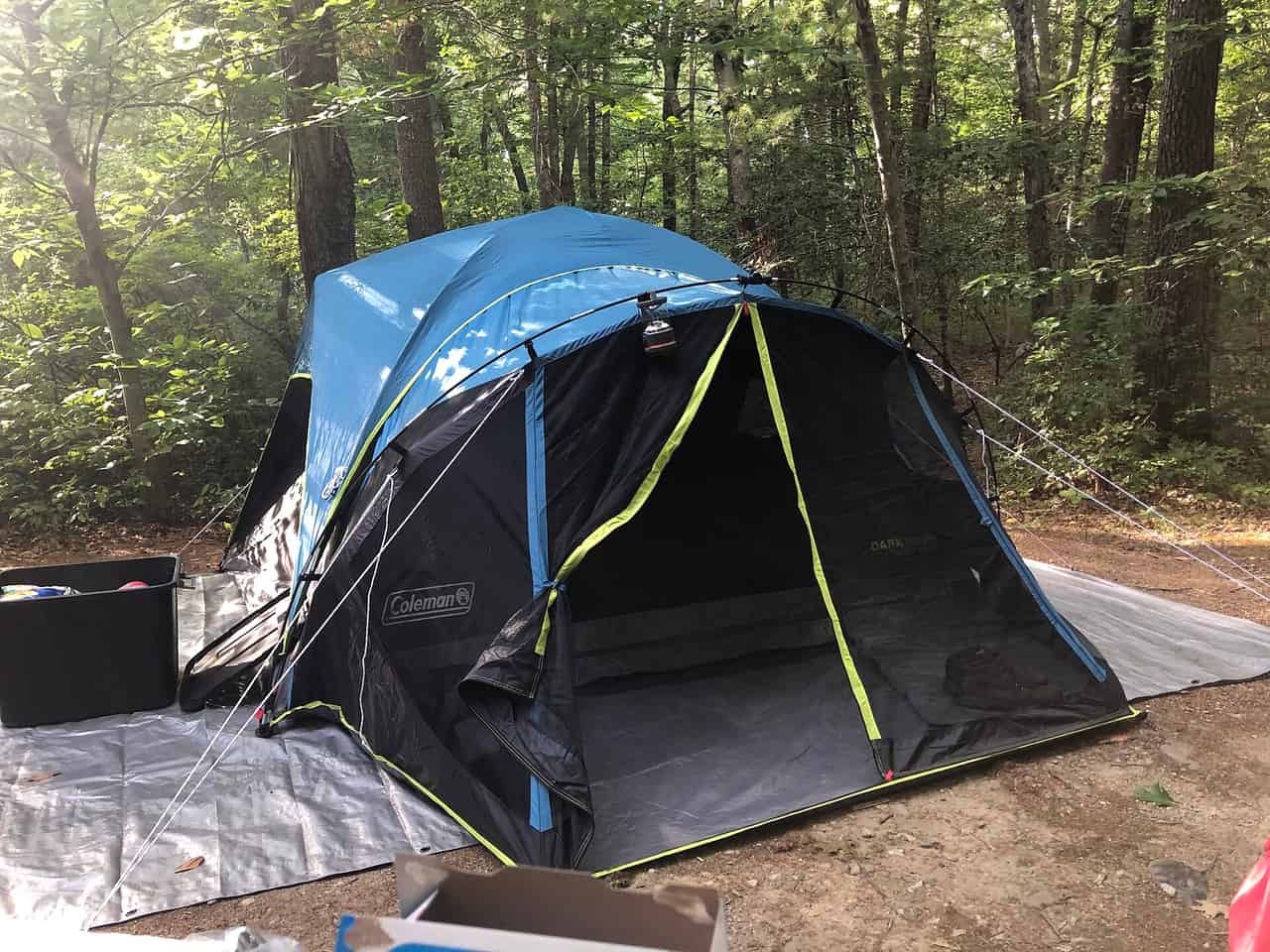
Coleman Sundome 4-Person Tent

Cheap, simple, and entirely adequate for settled-weather camping at established sites.

The clearest example of cheap being the right answer. A basic dome keeps rain out and pitches in minutes, and the thing you give up -- wind resistance -- only matters if you camp in wind. See <a href="/camp/best-camping-tents">camping tents</a>.

Specs

  • Two fiberglass poles, sleeve pitch
  • Coleman-stated taped floor seams
  • Freestanding
  • 4-person size for two adults plus gear

Good for

  • Cheap enough that learning on it costs nothing
  • Pitches in minutes with nothing to get wrong
  • Generic replaceable poles

Bad at

  • Fiberglass poles splinter in real wind
  • No vestibule, so wet boots come inside
  • You will want better if you camp in weather
3

Best for a cheap backup light

Energizer Vision HD Headlamp

Fine as a spare, compromised as a primary. Unregulated output is the thing you notice.

Light is the one category where owning a cheap redundant backup is actively sensible, and this is that backup. As your only light the unregulated output is a real compromise. See <a href="/camp/best-headlamps">headlamps</a>.

Specs

  • Three AAA batteries
  • White spot and flood plus red
  • Single-button cycling
  • Basic water resistance

Good for

  • Cheap enough to put one in every bag
  • Replaceable batteries, so it works when a rechargeable is flat
  • One-button operation with nothing to learn

Bad at

  • Unregulated -- the beam fades steadily as batteries drain
  • Red mode is behind white in the cycle
  • Plastic clips are the wear point

Questions

Frequently asked

Is cheap camping gear worth buying?
For tents, stoves, cookware, coolers and chairs, yes -- the cheap versions are genuinely adequate for ordinary camping. The exception is a cheap uninsulated sleeping pad, which does not do the job at all and is the main reason people decide they dislike camping.
What camping gear should I not buy cheap?
Sleeping pads, above everything else. Cold ground is what ruins nights, and your protection from it is the pad's insulation, not the sleeping bag. If the budget is tight, buy a cheap closed-cell foam mat rather than a cheap air pad -- foam at least insulates.
How can I start camping cheaply?
Rent or borrow for your first two trips rather than buying budget gear. Many outdoor retailers rent tents, pads and bags by the night for very little, and one weekend tells you more about what you want than a month of research -- with nothing bought if you dislike it.
Is used camping gear a good idea?
Often yes. Tents, chairs, coolers and stoves all hold up well secondhand, and marketplaces are full of gear bought enthusiastically and used twice. Check tent poles for cracks and air pads for leaks before buying, and avoid used sleeping bags unless you can verify their loft.
When is camping gear cheapest?
Late summer into early fall, when retailers clear summer floor space, and deep winter for cold-weather gear. Buying a season behind is the single biggest saving available, and outdoor gear iterates slowly enough that last year's model is usually cosmetically different only.

Back up a level

This page sits in Camp -- campsite kit: shelter, sleep, kitchen, light and power.

Read next