Skip to content
Trail & Terminal

04 — Carry-On / Guide

How to pack light

Packing light is a wardrobe decision, not a gear decision. Once you accept doing laundry, a week and a month need the same bag.

By Brijon M.Last updated How we pick
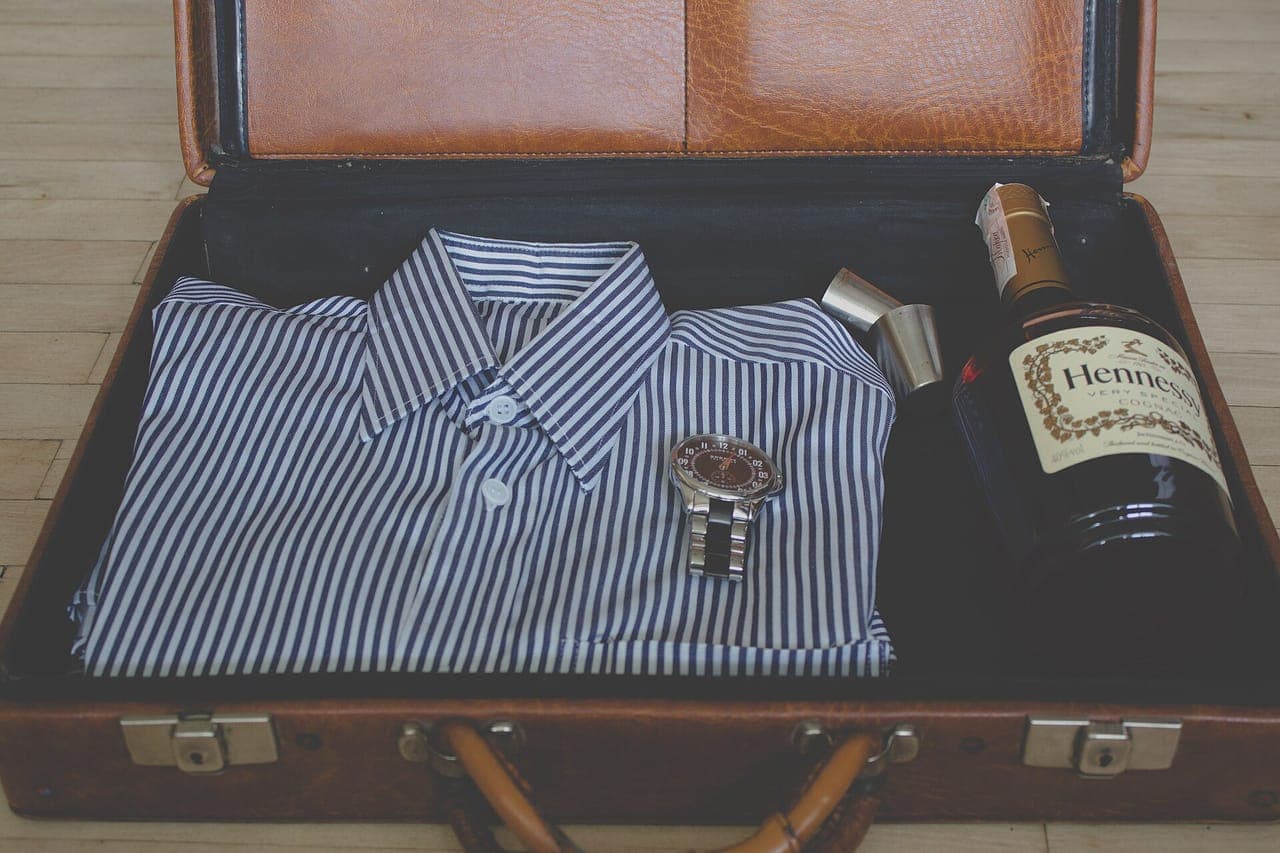
A small set of clothes laid out beside a carry-on bag

The short answer

Build a capsule: one color palette, everything layers, nothing worn only once. Then accept doing laundry, which is what makes trip length stop mattering. A week and three weeks fit the same carry-on once you wash things.

01 — The principle

The one idea that makes everything else work

Trip length stops mattering once you do laundry. That is the whole thing, and every other technique on this page is secondary to it.

People pack for the number of days because they are implicitly refusing to wash anything. Seven days means seven outfits. But a sink, a small bottle of travel detergent and a length of cord weigh almost nothing, and with them a week's packing covers a month. Most hotels, hostels and apartments have a sink, and almost every town has a laundromat.

The practical consequence: stop asking how many days and start asking how many days between washes. Four or five is comfortable. That is the number of each item you pack, whether the trip is a week or three.

Everything else below is about making those few items cover more situations.

02 — The wardrobe

Build a capsule

A capsule is a small set of clothes where everything works with everything else. That is what turns five items into many outfits rather than five.

  1. 01Pick one neutral base and one accent. If every bottom works with every top, five items combine. If you pack three colors that clash, you have packed three outfits.
  2. 02Everything must layer. A base layer, a mid layer and a shell cover a far wider temperature range than three standalone garments, and they let you handle a cold morning and a warm afternoon with the same packing.
  3. 03Nothing that is worn only once. The outfit for one dinner is the item you will carry for the whole trip for one evening. Either find something that works for both, or leave it.
  4. 04Two pairs of shoes, maximum, and wear the bulkier pair. Shoes are the biggest single volume item most people pack. One versatile pair plus one specific pair is the limit.
  5. 05Choose fabrics that do not need ironing and dry overnight. Merino wool and technical synthetics both resist odor and dry fast. Cotton does neither, which is why cotton is the enemy of packing light.
  6. 06Pack for the forecast, not for every eventuality. You can buy a sweater in almost any city on earth if you genuinely need one.

03 — Technique

Wear it, do not pack it

Airlines measure your bag. They do not measure you. Anything worn on the flight costs you no allowance at all, in volume or in weight.

  • Wear the bulkiest shoes. Boots or trainers on, the flatter pair packed. This alone recovers a noticeable share of a carry-on.
  • Wear the heaviest layer, or carry it over your arm. A jacket is both bulky and light, which is the worst possible ratio for packing.
  • Use jacket pockets as extra capacity for a book, a power bank, chargers and headphones.
  • Cabins are cold anyway, so wearing your warm layer is not a sacrifice -- you will want it on the flight.
  • Do not overdo it. Arriving sweating in four layers to save an inch of bag space is a bad trade. One pair of shoes and one jacket is the sensible version.

04 — Laundry

The laundry setup, which weighs nothing

This is the enabling technology for everything above, and it fits in a pocket.

  • A small bottle of travel detergent or a few detergent sheets. Sheets are not liquids, which keeps them out of your liquids allowance entirely.
  • A length of cord and a couple of clips. A bathroom is a drying room if you can hang things across it.
  • A universal sink plug. Surprisingly many sinks have no working plug, and this is the thing that defeats sink laundry.
  • Merino and technical synthetics dry overnight. Cotton does not, which is the real reason cotton is a poor travel fabric.
  • Wring in a towel. Roll the garment in a dry towel and press -- it removes far more water than wringing by hand, and it is the difference between dry by morning and damp.
  • Know where the laundromats are. For a longer trip, one proper wash beats nightly sink laundry. Look it up before you need it.

05 — The list

A worked carry-on list for a week or more

This is a template rather than a prescription -- adjust for climate and for what you actually do. The point is the quantities, which do not change with trip length.

ItemHow manyWhy
Tops4 to 5Enough for a wash cycle; all work with all bottoms
Bottoms2One worn, one packed. Dark and versatile
Underwear and socks4 to 5Merino or synthetic -- washes and dries overnight
Mid layer1Fleece or light insulation
Shell1Waterproof, packable. Earns its space on any trip
Shoes2Wear the bulkier pair
Sleepwear1Or a clean base layer doing double duty
Swimwear1 if relevantDries fast, weighs nothing
One smarter item1 at mostOnly if the trip genuinely requires it

06 — The anti-list

What to leave at home

  • Full-size toiletries. Decant, or use solid versions -- a shampoo bar is not a liquid and does not count against the allowance.
  • More than one book. You will read less than you plan. Load an e-reader or your phone.
  • A second bag 'just in case'. Unless it folds into its own pocket, in which case it costs nothing and is genuinely useful.
  • Clothes for weather that is not forecast. Check the forecast for your actual dates and pack for it.
  • Anything you have not worn in the last month at home. You will not wear it abroad either.
  • A hair dryer. Almost every hotel has one, and a single-voltage one abroad is the most commonly destroyed appliance in travel.
  • Towels, unless you are staying somewhere that provides none. A small travel towel is a reasonable hedge; a full-size one is not.

07 — Longer trips

The two-week trip in a carry-on

The honest answer is that it is the same bag with the same contents. If you have accepted laundry, the packing for two weeks is identical to the packing for one, and what changes is the itinerary rather than the luggage.

What a longer trip genuinely adds: a planned laundry stop rather than nightly sink washing, slightly more robust footwear because you will walk further in total, and spare copies of the things whose failure would be a problem -- a charging cable, a pair of glasses.

What it does not add: more clothes. Fourteen t-shirts is not a longer trip, it is a checked bag.

The same discipline applies to gear as to clothes: buy things that work on more than one kind of trip. A pad that works at a campsite and in a car, a bottle that works on a trail and through security, a power bank sized for both. See compact camping gear for that principle applied the other way around.

What to buy

The gear we would buy for this

Trail & Terminal earns a commission when you buy through our Amazon links, at no extra cost to you. It does not change which products we pick -- see our affiliate disclosure and selection method.

1

Best for making a small bag navigable

Eagle Creek Pack-It Reveal Cube Set

Cubes do not save space. They let you live out of the bag without unpacking it.

Once you are packing few items, the benefit of cubes is not volume -- it is that a multi-stop trip stops involving repacking every morning. Buy the bag first, then cubes that fill it. See <a href="/carry-on/best-packing-cubes">packing cubes</a>.

Specs

  • Recycled ripstop with mesh top panels
  • Three sizes designed to tessellate
  • Self-healing zippers
  • Lifetime warranty

Good for

  • Find one item without disturbing everything
  • Mesh tops mean you identify contents without opening
  • Adds almost no weight

Bad at

  • No space saving at all
  • Mesh snags
  • Costs more than generic sets
2

Best for fabric that makes laundry work

Darn Tough Hiker Micro Crew Cushion Socks

Merino washes in a sink and dries overnight, which is what makes packing four pairs enough.

Fabric choice is what makes the laundry strategy viable. Merino resists odor so garments can be worn more than once, and it dries overnight where cotton does not. This is the clearest example of why fabric matters more than quantity.

Specs

  • Merino wool blend
  • Seamless construction
  • Cushioned sole
  • Unconditional lifetime warranty

Good for

  • Resists odor, so they can be worn more than once
  • Washes in a sink and dries overnight
  • Lifetime warranty makes the cost per year low

Bad at

  • Expensive per pair
  • Wears through at the heel eventually
  • Warm for hot climates
3

Best for the one layer always worth packing

Outdoor Research Helium Rain Jacket

Light and packable enough that it never competes for space, and it covers the weather you did not plan for.

Packing light means every item has to justify itself, and a shell justifies itself by covering the one eventuality that genuinely ruins a day. The requirement is that it packs small enough to never be the item you cut. See <a href="/trail/day-hike-checklist">the day hike checklist</a>.

Specs

  • Waterproof breathable membrane
  • Very light, packs small
  • Fully taped seams
  • Minimal features

Good for

  • Packs so small it is never the thing you leave out
  • Taped seams and a real membrane, unlike water-resistant jackets
  • Useful on every trip type

Bad at

  • No pit zips, so it runs hot under effort
  • Light fabric is less abrasion-resistant
  • Breathability has limits

Questions

Frequently asked

How do I pack for two weeks in a carry-on?
The same way you pack for one week, and then do laundry. Four or five of each item, one color palette so everything combines, fabrics that dry overnight, and a small bottle of detergent. Trip length stops mattering once you accept washing things.
What is a capsule wardrobe for travel?
A small set of clothes where every top works with every bottom, usually one neutral base plus one accent, and everything layers. That is what turns five items into many outfits rather than five, and it is the core technique behind packing light.
How do you do laundry while traveling?
A sink, a few detergent sheets, a universal sink plug and a length of cord. Wash, roll the garment in a dry towel and press to remove water, then hang it overnight. Merino and technical synthetics dry by morning; cotton does not.
What should I wear on the plane to save space?
The bulkiest shoes and the heaviest layer, since airlines measure your bag and not you. Use jacket pockets for a book, chargers and a power bank. Do not overdo it -- arriving sweating in four layers to save an inch of space is a bad trade.
How many pairs of shoes should I pack?
Two at most, and wear the bulkier pair. Shoes are the single biggest volume item most people pack, and a third pair is almost always carried unworn. One versatile pair plus one specific pair covers nearly every trip.

Back up a level

This page sits in Carry-On -- flight kit that fits the bin and the personal-item slot.

Read next