Skip to content
Trail & Terminal

01 — Camp / Guide

Compact camping gear

Packing small is not a style. It is what decides whether a complete camp setup fits in your car alongside the people coming with you.

By Brijon M.Last updated How we pick
Collapsible and compact camping gear packed into a small duffel

The short answer

Compact gear is a free win in lighting, power, cookware and chairs, where the small version does the same job. It costs you real comfort in sleeping pads, coolers and tents, where volume is the function -- so shrink the first group and leave the second alone.

01 — The premise

Why packed volume is the real constraint

Car camping has no weight limit and a hard volume limit. That single fact is the reason this whole site exists, and it is the opposite of how camping gear is marketed.

Marketing optimizes for weight, because weight is the backpacking metric and backpacking is where the engineering prestige lives. But nobody driving to a campsite cares that a tent is two pounds lighter. What they care about is whether a six-person tent, three chairs, a stove, a cooler, a bin of cookware and four people's bags fit in a vehicle at the same time -- and they routinely do not.

Volume, not weight, is what forces the hard decisions. A chair that packs to a water bottle rather than a long bundle, a lantern that is also a power bank, cookware that nests completely: each of those buys back space that gets used for something else. And the compounding effect is larger than any single item suggests.

The discipline is also what makes gear work across trip types, which is the other half of the argument. Something that packs small enough for a loaded trunk also packs small enough for a walk-in site, a back seat, and in some cases an overhead bin.

02 — Easy wins

Where packing small is free

In these categories the compact version does the same job as the full-size one. There is no comfort penalty, so there is no reason not to take the space back.

Lighting

A rechargeable lantern the size of a mug lights a picnic table as well as a large one, and some of them charge a phone as well -- which deletes a separate item from the list. An inflatable solar lantern packs to a disc. A headlamp is already small.

The only case for a large lantern is a propane mantle lantern for genuinely lighting an outdoor cooking area, and even then it is one item rather than the format for all your lighting. See camping lanterns.

Power

A 10,000mAh power bank fits in a pocket and charges a phone roughly twice, which is a weekend for one person. A power station is hundreds of times the volume for a job you do not have unless you are running a fridge.

This is the clearest free win in camping gear: the compact option is not a compromise, it is the correct sizing, and the large option is usually oversold. See power banks.

Cookware

A two-person set that nests into a single cylinder with the mugs and bowls inside, plus one good pan, covers almost every campsite meal. A twelve-piece set is priced on piece count and occupies a bin.

Collapsible silicone-walled pots pack flatter still, with one real constraint: the walls must not meet flame. See camping cookware.

Chairs

A shock-corded pole chair packs to roughly the size of a water bottle, against a long bundle for a quad chair. You give up some seat comfort and you need ground discs for sand, and in exchange three people's chairs occupy the space of one.

This is the compact category with the most real trade-off on the easy-wins list, and it is still usually worth it for the space. See camping chairs.

03 — Do not shrink these

Where packing small costs too much

In these three categories, volume is the function. Shrinking them does not save space so much as remove capability, and this is where the pack-small instinct turns into a bad trip.

  • Sleeping pads, below a point. Thickness and insulation are what make a pad work, and the ultralight pads that pack smallest are also the thinnest and most puncture-prone. The small insulated pads are excellent; the thin uninsulated ones are a cold night. See sleeping pads.
  • Coolers. Ice retention is a direct consequence of insulation thickness, and a small cooler is also a thin-walled cooler held at the wrong ratio of air to contents. A half-empty cooler warms fast. Size the cooler to the trip, not to the gap in the trunk. See coolers.
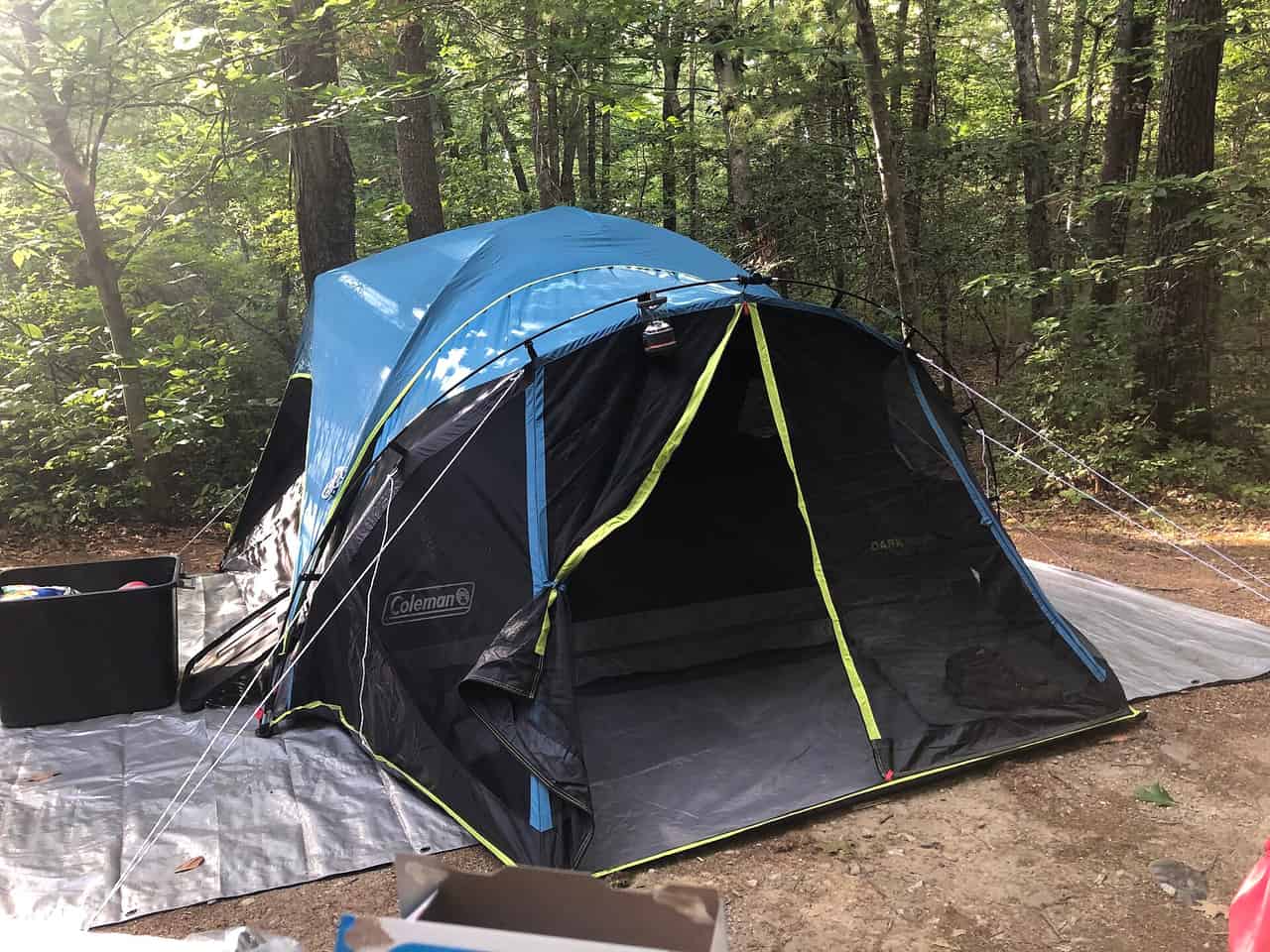
  • Tents, below your actual headcount plus two. Capacity ratings count sleeping pads edge to edge with nothing else inside. A tent sized exactly to your group has no room for gear, boots or anyone turning over. See camping tents.

04 — Collapsible

The collapsible items that are genuinely worth it

Collapsible gear is a mixed category: some of it is excellent and some is a novelty that fails. The pattern is consistent -- collapsible things that hold water or air work well, and collapsible things that bear weight or meet heat are the ones that break.

ItemWorth it?Why
Collapsible water jug or bucketYesPacks flat, nothing to fail, enormously useful at a site with one distant tap
Collapsible sink or wash bagYesThe most underrated camp item, and it packs to nothing
Collapsible bowls and mugsYesSilicone with a rigid rim works well; the rim is what makes it usable
Collapsible cookware with a metal baseMostlyWorks on a burner; the silicone walls must never meet flame
Collapsible lanternsYesInflatable and folding designs pack flat with no real downside beyond output
Collapsible camp tablesRarelyMost sites have a table; folding ones are bulky even collapsed
Collapsible kettles and all-silicone pansNoHeat distribution is poor without a metal base, and they deform

05 — Method

How to actually free up trunk space

Buying compact gear is only half of it. These five habits recover more space than most equipment upgrades, and they cost nothing.

  1. 01Use soft bags, not hard bins. Bins waste the space between their corners and the car's shape. Duffels deform into it. Bins are only worth it for things that must not be crushed.
  2. 02Fill the voids. Socks and small items inside shoes, inside pots, inside the cooler on the way out. The empty interior of every rigid item is wasted space.
  3. 03One cooler, not two. A second drinks cooler is pure volume, and one cooler kept shut outperforms two opened constantly.
  4. 04Leave the cookware set at home and take one pot and one pan. The single biggest volume saving available in camp kitchens.
  5. 05Decant everything. Full-size toiletries, condiment bottles and cereal boxes are mostly air. Small bottles and bags recover a surprising amount.

06 — Crossover

Gear that works on more than one kind of trip

The best reason to buy compact is that compact gear travels. An insulated pad that packs to bottle size works at a campsite, on a walk-in site and in the back of a car. A headlamp works everywhere. A 10,000mAh power bank is the right size for a campsite and the right size to take through airport security.

That is the whole premise of this site: one purchase that covers several trip types beats three specialized purchases you store for most of the year. If you are packing for a flight rather than a trunk, the same discipline applies with a harder limit -- see how to pack light.

What to buy

The gear we would buy for this

Trail & Terminal earns a commission when you buy through our Amazon links, at no extra cost to you. It does not change which products we pick -- see our affiliate disclosure and selection method.

1

Best for the biggest space saving

Helinox Chair One

Packs to roughly the size of a water bottle, against a long bundle for a normal chair.

The single largest volume recovery available per dollar in car camping. The comfort penalty is real but modest; the space saved is not. Full comparison in <a href="/camp/best-camping-chairs">camping chairs</a>.

Specs

  • Shock-corded aluminum alloy frame
  • Suspended fabric seat
  • Packs into an included stuff sack
  • Assembles in under a minute

Good for

  • Three of these occupy roughly the space of one quad chair
  • Light enough to carry to a walk-in site
  • Aluminum frame does not rust in storage

Bad at

  • Small feet sink in sand without add-on discs
  • Low seat is hard to get out of for some people
  • Less comfortable than a quad chair
2

Best for a whole kitchen in one cylinder

MSR Trail Lite Duo System

Pot, bowls, mugs and space for a pocket stove inside. The entire cooking system as one item.

The clearest example of nesting done properly: everything including the stove lives inside the pot. Against a twelve-piece set in a bin, this is a bin of recovered space. More in <a href="/camp/best-camping-cookware">camping cookware</a>.

Specs

  • Hard-anodized pot with strainer lid
  • Two insulated mugs and two deep dishes
  • Room inside for a small canister stove and fuel
  • Nests to a small cylinder

Good for

  • The complete cooking system becomes one object
  • Deep dishes suit camp food better than flat plates
  • Hard-anodized surface is more durable than basic nonstick

Bad at

  • Two people maximum
  • No frypan included
  • Thin walls mean hot spots on a narrow burner
3

Best for packing flattest

MPOWERD Luci Outdoor 2.0

An inflatable solar lantern that deflates to a disc. Costs essentially no space at all.

The point is not that it is the best lantern -- it is not. The point is that it occupies no space, so it is always with you. See <a href="/camp/best-camping-lanterns">camping lanterns</a> for a brighter primary.

Specs

  • Inflatable clear body, collapses flat
  • Integrated solar panel
  • Several brightness levels
  • Waterproof and floats

Good for

  • Flattest packed item in any camp kit
  • No batteries and no cable
  • Waterproof and floats

Bad at

  • Dim -- ambience and close tasks only
  • Needs real sun to recharge
  • The inflatable body is the long-term wear point

Questions

Frequently asked

Is compact camping gear worth the extra cost?
In lighting, power, cookware and chairs, yes -- the small version does the same job, so the space you recover is free. In sleeping pads, coolers and tents, be careful: volume is part of the function in all three, and shrinking them removes capability rather than bulk.
What is the biggest space saver for car camping?
Leaving the cookware set at home and taking one pot and one pan, followed by compact chairs. Both recover more trunk space than any single gear upgrade, and the cookware change costs nothing at all because you were not going to use the other nine pieces.
Does collapsible camping gear last?
The pattern is consistent: collapsible things that hold water or air last well, and collapsible things that bear weight or meet heat fail. Collapsible jugs, sinks, bowls and lanterns are excellent. All-silicone cookware without a metal base and collapsible kettles are the ones to avoid.
Should I buy lightweight backpacking gear for car camping?
Sometimes, but for the packed size rather than the weight. A lightweight pad or chair saves real volume. A lightweight tent, though, has a thin floor that is a liability on gravel campground pads, and you pay a lot for a weight saving that no car cares about.
How do I fit camping gear for four people in one car?
Soft bags instead of hard bins, one cooler rather than two, compact chairs, one pot and one pan, and everything small packed inside the voids in everything rigid. Those five habits typically do more than any equipment purchase.

Back up a level

This page sits in Camp -- campsite kit: shelter, sleep, kitchen, light and power.

Read next