Skip to content
Trail & Terminal

01 — Camp / Roundup

Best camping tents

Seven tents ranked on the two things that actually decide a camping purchase: how much trunk space they cost you, and how fast they go up when you arrive after dark.

By Brijon M.Last updated How we pick
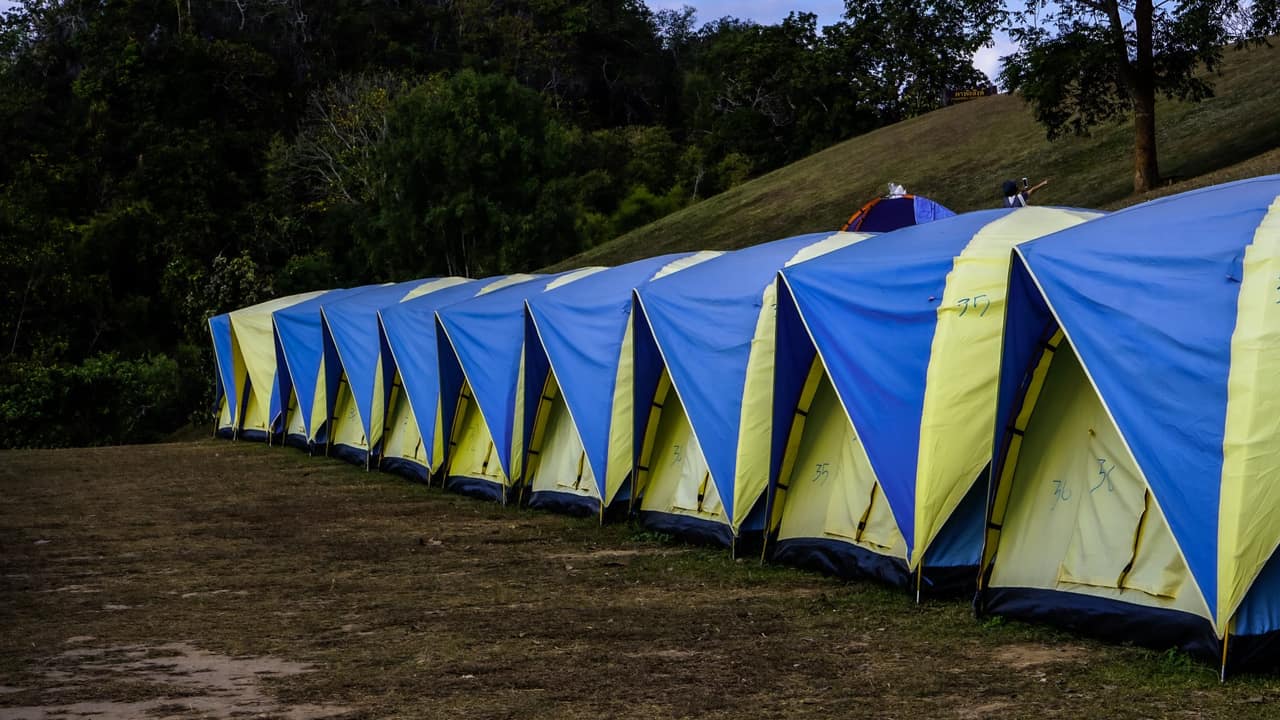
A dome tent pitched on flat ground at a wooded campsite

The short answer

For most people the Coleman Sundome is the right camping tent: it is cheap, it goes up in minutes, and it survives casual storage. Spend up to the REI Co-op Base Camp if you camp in real weather, or the Big Agnes Copper Spur if the same tent has to work on a trail.

Trail & Terminal earns a commission when you buy through our Amazon links, at no extra cost to you. It does not change which products we pick -- see our affiliate disclosure and selection method.

Our picks at a glance

Best camping tents -- ranked picks
#ProductBest forKey specPrice
1Coleman Sundome 4-Person TentThe default answer. Nothing about it is exciting and almost nothing about it goes wrong in a season.most weekend campersSimple 2-pole dome
2REI Co-op Half Dome SL 2+The crossover tent. Light enough to carry occasionally, roomy enough to car camp in regularly.campers who also backpackTwo doors, two vestibules
3REI Co-op Base Camp 4A genuinely storm-worthy family tent. Heavy, expensive, and the one you want when the forecast turns.camping in real weatherGeodesic pole structure
4Big Agnes Copper Spur HV UL2The packs-smallest tent here by a wide margin, and the most fragile. A specialist, bought deliberately.the smallest packed sizeUltralight 2-person
5Coleman Skydome 6-PersonThe pre-attached pole design genuinely is faster. Space for a family, at the cost of a bulkier pack.fast family setupPre-attached poles
6Kelty Discovery Element 4Better poles and better fabric than the entry tents, without jumping to expedition money.a step up from entry levelAluminum poles, mid price
7NEMO Aurora Highrise 4PNearly vertical walls and real standing height. The most livable tent here, and among the bulkiest.standing roomNear-vertical walls

Ranked by the criteria in how we pick. We hold no live prices, so every button goes straight to the current Amazon listing.

Every pick, in full

The picks

1

Best for most weekend campers

Coleman Sundome 4-Person Tent

The default answer. Nothing about it is exciting and almost nothing about it goes wrong in a season.

The Sundome has been the default American camping tent for long enough that its weaknesses are completely documented, which is exactly why it is the safe recommendation. Two poles, one sleeve layout, a rainfly that covers the roof. There is no system to learn and no part that confuses you at eleven at night.

Where it earns its place against more expensive tents is packed size and replaceability. It stuffs into a bag you can throw in a trunk alongside everything else, and when a pole section eventually splits, a generic fiberglass replacement fits. Owners report the same two failure points over years: pole splintering in high wind and water finding its way in at the floor corners during sustained rain. Both are what you accept for the price. If your camping is fair-weather weekends at established sites, that is a good trade.

Specs

  • 2-pole fiberglass dome frame
  • Coleman-stated WeatherTec taped floor seams
  • Freestanding -- pitches without stakes on hard ground
  • Sizes from 2 to 6 person

Good for

  • Pitches in under ten minutes solo, in the dark, without the instructions
  • Fiberglass poles are cheap and universally replaceable
  • Packs to a duffel rather than a barrel

Bad at

  • Fiberglass poles splinter rather than bend in genuine wind -- this is not a storm tent
  • No vestibule, so wet boots either come inside or stay out in the rain
  • The 4-person size realistically sleeps two adults plus gear
2

Best for campers who also backpack

REI Co-op Half Dome SL 2+

The crossover tent. Light enough to carry occasionally, roomy enough to car camp in regularly.

This is the tent that most directly serves the premise of this site: one purchase that works at a campsite and on a short approach hike. The hubbed aluminum frame gives near-vertical walls, so the usable floor area is much larger than the footprint suggests, and the two-door layout removes the single most common complaint about two-person tents.

The honest framing is that it is a compromise in both directions. A dedicated car-camping tent gives you more space for less money; a dedicated backpacking tent is substantially lighter. If you only ever do one of those two things, buy the specialist. If you do both a few times a year and do not want two tents in the garage, this is the one that makes sense, and the aluminum poles are the upgrade you actually feel.

Specs

  • Aluminum pole frame with a hubbed design
  • Two doors and two vestibules
  • Near-vertical sidewalls from the pole geometry
  • Semi-freestanding -- needs corner stakes to reach full volume

Good for

  • Two doors means neither person climbs over the other at night
  • Aluminum poles bend and recover where fiberglass splinters
  • Genuinely carryable for a short approach, unlike any car-camping tent

Bad at

  • Costs several times a basic dome for benefits you only notice on bad nights
  • Still heavy by actual backpacking standards -- a compromise, not an ultralight tent
  • The hubbed pole set is proprietary, so a broken section is a special order
3

Best for camping in real weather

REI Co-op Base Camp 4

A genuinely storm-worthy family tent. Heavy, expensive, and the one you want when the forecast turns.

Geodesic tents work by crossing poles multiple times, which distributes load instead of concentrating it at a single apex. That is why this style stands up in wind that flattens a two-pole dome, and why it holds a shape under wet snow. If your camping includes shoulder seasons, exposed sites or mountain weather, this is the structural difference that matters and nothing cheaper substitutes for it.

The cost is bulk and setup time. This is the biggest packed item in this roundup and it is not a tent you throw up alone in five minutes while someone else gets dinner going. Owners who camp mostly in July consistently report it is more tent than they needed; owners who have had a bad night in one of the cheaper options on this page consistently report the opposite.

Specs

  • Geodesic frame with multiple pole crossings
  • Two doors, two vestibules
  • Full-coverage rainfly to the ground
  • Factory-taped seams per REI's specification

Good for

  • Geodesic geometry handles wind in a way no 2-pole dome can
  • Full-coverage fly means wet gear lives in the vestibule, not on your sleeping bag
  • Holds its shape under snow load far better than a dome

Bad at

  • Packed size is the largest on this list -- a real chunk of a trunk
  • The pole crossings make setup genuinely slower, and awkward alone
  • Overkill, and oversized, for fair-weather summer camping
4

Best for the smallest packed size

Big Agnes Copper Spur HV UL2

The packs-smallest tent here by a wide margin, and the most fragile. A specialist, bought deliberately.

This is on the list because packed size is a stated criterion on this site and nothing else here competes. Where a family dome occupies a corner of the trunk, this occupies roughly the volume of a sleeping bag, which changes what else you can bring.

What you pay for that is durability margin. Ultralight canopy and floor fabrics are thin by design, and the dominant owner report is floor punctures from grit and twigs rather than any manufacturing problem -- which is why a footprint should be treated as part of the purchase rather than an accessory. It is also the wrong tent for a dog, as the trail dog section covers in more detail. Buy it if small packed size is the constraint you are actually solving.

Specs

  • Single hubbed ultralight pole set
  • Two doors, two vestibules despite the weight
  • High-volume pole geometry for steeper walls
  • Lightweight ripstop canopy and floor fabrics

Good for

  • Packs smaller than any other tent on this page, by a lot
  • Two doors at this weight is genuinely unusual
  • Steep walls make a small floor area feel usable

Bad at

  • The lightweight floor is the one most likely to be punctured -- a footprint is effectively mandatory
  • Thin fabrics are poorly suited to dogs, kids or casual treatment
  • Costs more than most of the family tents here and sleeps fewer people
5

Best for fast family setup

Coleman Skydome 6-Person

The pre-attached pole design genuinely is faster. Space for a family, at the cost of a bulkier pack.

The pitch-speed claim on this category is usually marketing, but the pre-attached pole concept does deliver: there is no stage at which you are working out which pole goes in which sleeve, and that removes the step that makes arriving-after-dark setups miserable. For a family with kids and a short window before everyone loses patience, it is the most practical tent here.

The trade is packed shape. Because the poles stay attached, it rolls into one large cylinder rather than compressing into a flat bag, and it occupies a fixed, awkward volume. Given that packed size is weighted heavily on this site, that is the reason it sits here rather than higher. Owners also consistently note wind noise from the large wall panels, which is a comfort issue rather than a structural one.

Specs

  • Poles pre-attached to the canopy
  • Coleman-stated taped floor and welded corners
  • Taller center height than the Sundome
  • Integrated rainfly

Good for

  • Measurably quicker to pitch than a sleeved dome -- the poles cannot be assembled wrong
  • Standing height for most adults in the middle
  • Steeper walls than a classic dome, so the floor is more usable

Bad at

  • Pre-attached poles mean the tent packs as one bulky unit, not a flat bag plus poles
  • A broken pole section is harder to replace than on a sleeved design
  • Large flat wall panels catch wind noticeably
6

Best for a step up from entry level

Kelty Discovery Element 4

Better poles and better fabric than the entry tents, without jumping to expedition money.

This is the sensible middle of the category, and the honest sweet spot for someone who has used a budget tent for a season and knows what annoyed them. Aluminum poles instead of fiberglass is the single most meaningful material upgrade available in camping tents, because pole failure is the most common way a tent dies, and clip-based pitching is faster and easier on the fabric than threading sleeves.

What it does not fix is layout. A single door is a genuine nightly irritation for two adults, and if that matters to you the two-door tents above are worth the extra. Think of this as the tent that corrects the materials problem without correcting the ergonomics one.

Specs

  • Aluminum pole set
  • Single door with a vestibule
  • Taped seams per Kelty's specification
  • Color-coded pole and clip system

Good for

  • Aluminum poles at a price where most competitors still use fiberglass
  • A real vestibule for boots and packs, which the cheapest tents lack
  • Clip-based pitch rather than sleeves, so it goes up faster

Bad at

  • One door only, so the person on the inside climbs over the other
  • Less headroom than the taller family tents in this list
  • Not meaningfully lighter than cheaper tents despite the better materials
7

Best for standing room

NEMO Aurora Highrise 4P

Nearly vertical walls and real standing height. The most livable tent here, and among the bulkiest.

If your trips are week-long stays at a fixed site in reliable weather, livability beats structural margin, and this is the tent that optimizes for it. Vertical walls turn the stated floor area into actual usable room, standing height makes dressing and changing a non-event, and the large vestibules keep the inside clean.

Understand what you are trading. A tall, flat-sided tent presents a large surface to wind, and that is where owner reports consistently show its limit. It is also expensive for what is fundamentally a fair-weather design. Chosen for the right trip it is the most comfortable option here; chosen for an exposed site it is the wrong one.

Specs

  • Steep-wall pole architecture
  • Two doors with vestibules
  • Included footprint per NEMO's listing
  • Large mesh panels for ventilation

Good for

  • You can stand up and change clothes, which no dome on this list allows
  • Footprint included rather than sold separately
  • Two doors plus genuinely large vestibules

Bad at

  • The tall profile is the worst performer in wind of anything here
  • Among the heaviest and bulkiest packed sizes on the page
  • Priced near the storm-worthy options while being less weather-capable

01 — Buying guide

What actually matters when buying a camping tent

Tent marketing talks about capacity ratings and waterproof numbers. Neither is the thing that decides whether you are happy with a tent in year two. These five are.

Poles: aluminum versus fiberglass is the real decision

This is the single highest-value thing to understand in the category. Fiberglass poles are cheap and work fine until they are loaded past their limit, at which point they splinter -- and a splintered section is done. Aluminum poles bend under the same load and can often be straightened or splinted well enough to finish the trip.

If you camp only in settled summer weather at low elevation, fiberglass is a reasonable economy. If any of your trips involve wind, buy aluminum. It is the difference between a tent that lasts five years and one that fails suddenly in the one storm you actually needed it for.

Capacity ratings are sleeping-bag math, not living space

A manufacturer's person rating describes how many standard sleeping pads fit edge to edge on the floor with nothing else in the tent. It does not account for bags, boots, a duffel or anyone turning over.

The durable rule is to size up by one or two. A 4-person tent is a comfortable tent for two adults with gear. A 6-person tent is right for two adults plus two kids plus the stuff that comes with kids. Nobody has ever regretted the larger tent except when loading the car.

Where water actually gets in

Not through the fabric. Modern tent canopies shed rain well above what a weekend camper encounters. Water gets in at seams, at the floor corners where the fly stops short, and through condensation that people mistake for a leak.

So look at fly coverage rather than a waterproof rating: a fly that reaches the ground keeps the floor-to-wall seam out of the weather, and a fly that stops at the roofline does not. Ventilation matters for the same reason -- a tent that cannot vent will drip on you on a cold clear night, and no amount of waterproofing addresses that.

Packed shape, not just packed size

Two tents with the same stated packed volume load completely differently. A tent that stores as a flat bag plus a separate pole bundle slides alongside other gear. A tent that stores as a single fixed cylinder -- which is what the pre-attached pole designs do -- claims a specific space and will not share it.

If you pack a full trunk, shape is worth as much as volume, and it is a spec nobody publishes. Our rule of thumb: a tent you can compress is worth more than a tent of the same nominal size that you cannot.

Setup, tested in the dark

Count the stages. A pitch with two identical poles, color-coded clips and a fly that only attaches one way is a tent you can put up alone, at night, in the rain, on a trip that started two hours later than planned -- which describes most trips.

Anything that needs two people to tension, requires the instructions, or has a fly that can go on backwards costs you at exactly the worst moment. This is why the simple dome keeps winning for ordinary use despite being the least sophisticated design here.

02 — Use cases

Tents for specific situations

The ranking above assumes a general weekend camper. These are the common cases where a different pick wins.

Best camping tent for two people

Buy a 4-person tent, not a 2-person one, and prioritize two doors. The REI Half Dome SL 2+ is the pick if you want the crossover capability; the Kelty is the value answer if you can live with one door. The single biggest quality-of-life upgrade for a couple in a tent is not floor area -- it is not having to climb over each other at two in the morning.

Best camping tent for a family with kids

Prioritize standing height and door count over weather margin, because the limiting factor is getting small people changed and settled rather than surviving wind. The Coleman Skydome 6 is the practical choice and its fast pitch genuinely matters when children are involved. Size up by two over your headcount, and accept the bulk.

Best camping tent for bad weather

Geodesic frame, full-coverage fly, aluminum poles. The REI Base Camp 4 is the pick here and nothing cheaper does the same job. If the forecast matters to your trips, this is the one category where spending up buys something you cannot improvise: structural geometry.

Best camping tent if you camp with a dog

Floor material is the whole question. Skip the ultralight options, whose thin floors are the ones claws go through, and give the dog its own foam mat rather than letting it settle on an inflatable pad. The tents for camping with dogs page goes into which floors survive and which door designs dogs defeat.

Best camping tent that also works for backpacking

The REI Half Dome SL 2+ is the honest answer, with the caveat in its write-up: it is a compromise, not an ultralight tent. If the backpacking is a real priority rather than an occasional thing, the Copper Spur is the tent and you accept the fragility and the lower capacity in exchange.

03 — Criteria

How we ranked these tents

Four criteria, weighted for car camping: packed size and shape first, then what fails in year two, then setup speed under bad conditions, then weather capability. Full method on how we pick.

We have not pitched these tents. The ranking comes from published specifications, each manufacturer's own documentation, pole and fabric construction, and consistent patterns in long-run owner reports -- which are unusually informative in this category because tent failures are specific and people describe them precisely.

What we did not do: assign scores, print prices, or claim field hours. If a tent here is discontinued or substantially revised, it comes off the list -- tell us if you spot one before we do.

Questions

Frequently asked

How many people does a 4-person tent really sleep?
Two adults comfortably, with room for gear and boots. The manufacturer's rating counts sleeping pads laid edge to edge with nothing else in the tent, so size up by one or two over your actual headcount. This is the most consistent source of disappointment in the category.
Are expensive camping tents worth it?
It depends entirely on one thing: whether you camp in weather. The money buys aluminum poles, better pole geometry and full fly coverage, and all three only pay off when conditions turn. For settled-summer camping at established sites, a basic dome does the same job and packs smaller.
Do I need a footprint under my tent?
On a thin-floored lightweight tent, treat it as mandatory -- floor punctures are the dominant failure report on those models. On a heavier car-camping tent with a thick floor it is optional, and a cheap ground tarp cut slightly smaller than the tent footprint does the same job for less.
Why is my tent wet inside when it did not rain?
Condensation. Two people breathing overnight release a surprising amount of moisture, and on a cold clear night it condenses on the inside of the fly and drips. It is not a leak and waterproofing will not fix it. Open the vents, leave a gap at the fly, and avoid pitching in a hollow where cold air settles.
What is the difference between a camping tent and a backpacking tent?
Weight versus durability and space. A camping tent uses heavier poles, thicker floors and bigger volume because it only travels from a car. A backpacking tent sacrifices all three to be carryable. A crossover tent compromises both ways -- see the camping versus backpacking tent comparison for the full breakdown.

Back up a level

This page sits in Camp -- campsite kit: shelter, sleep, kitchen, light and power.

Read next