Skip to content
Trail & Terminal

02 — Trail / Head to head

Down vs synthetic sleeping bag

Down packs smaller and lasts longer. Synthetic keeps working when wet. Everything else in this argument is a detail.

By Brijon M.Last updated How we pick
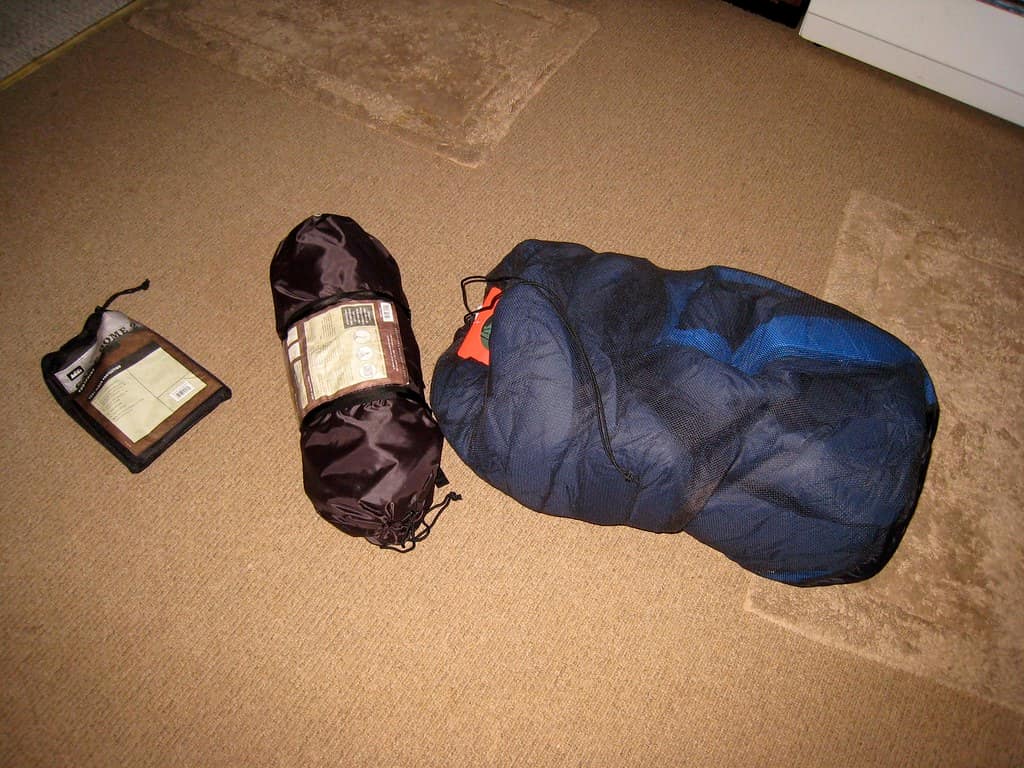
A compressed down sleeping bag beside a bulkier synthetic bag

The short answer

Buy down unless your trips are persistently wet or you will not be careful with the bag. Down gives far more warmth for its packed size and weight and lasts decades, but it loses most of its insulation when soaked. Synthetic keeps working damp, at the cost of bulk.

Trail & Terminal earns a commission when you buy through our Amazon links, at no extra cost to you. It does not change which products we pick -- see our affiliate disclosure and selection method.

Our picks at a glance

Down vs synthetic sleeping bag -- ranked picks
#ProductBest forKey specPrice
1REI Co-op Magma 30The down side of the argument: the best warmth for packed size available, with a standardized rating.packed size and weight30F down, high fill power
2NEMO Forte 20The synthetic side: bulkier and heavier, and it keeps insulating when down would collapse.wet conditions20F synthetic

Ranked by the criteria in how we pick. We hold no live prices, so every button goes straight to the current Amazon listing.

Every pick, in full

The picks

1

Best for packed size and weight

REI Co-op Magma 30

The down side of the argument: the best warmth for packed size available, with a standardized rating.

Down's advantage is structural and large: the plumage traps air more efficiently per unit of weight and volume than any synthetic fiber currently does, which is why a down bag at a given rating packs to roughly half the volume of a synthetic one. It also lasts far longer -- a well-cared-for down bag is a decades-long purchase, where synthetic fill loses loft permanently over years. The water-resistant treatment helps with condensation and brief damp, and it does not make down function soaked.

Specs

  • High fill-power down with a water-resistant treatment per REI
  • Rated around 30F with a published EN/ISO comfort limit
  • Mummy cut with a contoured hood
  • Compresses to a small stuff size

Good for

  • Far better warmth for packed size and weight than any synthetic equivalent
  • Lasts decades if stored uncompressed and kept dry
  • Published standardized rating rather than a marketing figure

Bad at

  • Loses most of its insulation when genuinely soaked, and dries slowly
  • Expensive, and high fill power is what costs the money
  • Needs careful washing and uncompressed storage
2

Best for wet conditions

NEMO Forte 20

The synthetic side: bulkier and heavier, and it keeps insulating when down would collapse.

Synthetic fill is made of fibers that trap air in a structure water cannot collapse in the same way, so a damp synthetic bag retains a usable portion of its insulation where a soaked down bag retains almost none. In cold wet conditions that is not a comfort difference -- it is the difference between an unpleasant night and a dangerous one. The costs are packed size, weight and lifespan, all of which are real and all of which matter less if the bag travels by car.

Specs

  • Synthetic insulation
  • Spoon-shaped cut with room at elbows and knees
  • Rated around 20F
  • Thermo Gills for venting without opening the bag

Good for

  • Keeps insulating when damp, which is the whole argument
  • Dries fast, so a wet bag is recoverable rather than a problem
  • Cheaper than down at the same rating, and easier to wash

Bad at

  • Substantially bulkier and heavier packed at the same warmth
  • Fill loses loft permanently with compression over years
  • Thermal efficiency per ounce will not match down

01 — Comparison

Head to head

Two rows decide it for most people: warmth for packed size, where down wins decisively, and performance when damp, where synthetic does. Which of those matters more to you is a question about your trips, not about the products.

DownSynthetic
Warmth for packed sizeMuch betterRoughly double the volume
Warmth for weightMuch betterHeavier
When dampLoses most insulationKeeps most insulation
Drying timeSlowFast
LifespanDecades with careLoses loft over years
Price at a given ratingHigherLower
WashingSpecialist, carefulStraightforward
StorageMust be uncompressedMust be uncompressed
Right forBackpacking, dry climates, long-term valueWet climates, water trips, car camping, kids

02 — The key spec

What fill power actually means

Fill power is the spec that confuses people most, and it is simpler than it looks.

Fill power measures the volume one ounce of down occupies when allowed to expand -- so 800 fill power down occupies more space per ounce than 600 fill power down. Since warmth comes from trapped air, higher fill power means less down by weight is needed for the same warmth.

That means fill power is not a warmth rating. A 600-fill bag and an 850-fill bag can be equally warm; the 850-fill one will be lighter and will pack smaller, and it will cost considerably more. Two bags with the same temperature rating and different fill powers differ in weight and bulk, not in warmth.

The practical takeaway: compare bags on their temperature rating first, then use fill power to understand why one is lighter and more expensive than the other. If packed size does not matter much to you, lower fill power is a legitimate way to save money for the same warmth.

03 — Decision

Choose down if

  • You carry the bag, and packed size or weight is a real constraint.
  • Your climate is dry, or you camp in a tent where keeping the bag dry is manageable.
  • You want a bag that lasts decades rather than years -- a down bag is the better long-term value despite the price.
  • You are willing to store it uncompressed and wash it carefully. Both are easy; both get neglected.
  • You want the smallest possible sleep system. See the ultralight gear list.

04 — Decision

Choose synthetic if

  • Your trips are persistently damp -- coastal, rainforest, shoulder-season mountain weather.
  • You canoe, kayak or raft, where a swamped bag is a realistic outcome rather than a worry.
  • The bag is for a child, or for anyone who will not be careful with it.
  • You car camp and packed size is not a binding constraint.
  • Price matters. Synthetic at a given rating is reliably cheaper.

05 — Care

Caring for either bag

The thing that kills sleeping bags is not use, it is storage. Both fill types are destroyed by the same mistake.

  1. 01Never store a bag compressed. Long-term compression permanently damages loft in both down and synthetic. Store it loose in a large breathable sack, or hanging in a closet.
  2. 02Use a liner. Body oils degrade insulation over time, and a liner is washable where a bag is a careful job. This is the cheapest way to extend a bag's life by years.
  3. 03Air it after every trip before it goes away, and make sure it is completely dry.
  4. 04Wash rarely, and correctly. Down needs a down-specific detergent, a front-loading machine, and a long tumble dry with clean tennis balls to break up clumps. Synthetic is more forgiving but still needs low heat.
  5. 05Keep down out of the rain in transit. A dry bag or a liner inside your pack costs almost nothing and removes the main risk down carries.

06 — Criteria

How we compared these

Warmth per unit of packed size first, then wet performance, then lifespan, then price. The weighting shifts with climate, which is why this page gives a verdict per situation rather than a single winner. Full method on how we pick.

We have not slept in these bags. Temperature ratings are each manufacturer's published figures, and we treat EN 13537 and ISO 23537 tested figures as comparable while untested ones are not. The behavior of down and synthetic fill when wet is established material science rather than a finding of ours.

Questions

Frequently asked

Is down or synthetic better for a sleeping bag?
Down for packed size, weight and lifespan; synthetic for wet conditions and price. The deciding question is whether your bag is likely to get genuinely wet. Soaked down loses most of its insulation and dries slowly, which in cold weather is a safety issue rather than a comfort one.
What does fill power mean?
The volume one ounce of down occupies when expanded. Higher fill power means less down by weight is needed for the same warmth, so a higher-fill bag at the same temperature rating is lighter and packs smaller -- and costs more. It is not itself a warmth rating.
Does water-resistant down work?
It helps with condensation, light damp and brief exposure, and it does not make down function when soaked. Treat it as insurance against a damp tent rather than permission to get the bag wet. If genuine soaking is likely, buy synthetic.
How long does a sleeping bag last?
A well-cared-for down bag can last decades. Synthetic fill loses loft permanently over years of compression, so expect a shorter useful life. In both cases the thing that kills bags is storing them compressed -- store them loose and dry and both last far longer.
Can I wash a down sleeping bag?
Yes, rarely and carefully: a down-specific detergent, a front-loading machine without an agitator, and a long low-heat tumble dry with clean tennis balls to break up the clumps. Rushing the drying is what ruins bags. A liner means you need to do this far less often.

Back up a level

This page sits in Trail -- what you carry on your back: packs, poles, water, warmth.

Read next