Skip to content
Trail & Terminal

02 — Trail / Roundup

Best water bottles for hiking

Water is the heaviest thing you carry, so the bottle should weigh almost nothing. Insulation is a luxury with a real weight cost.

By Brijon M.Last updated How we pick
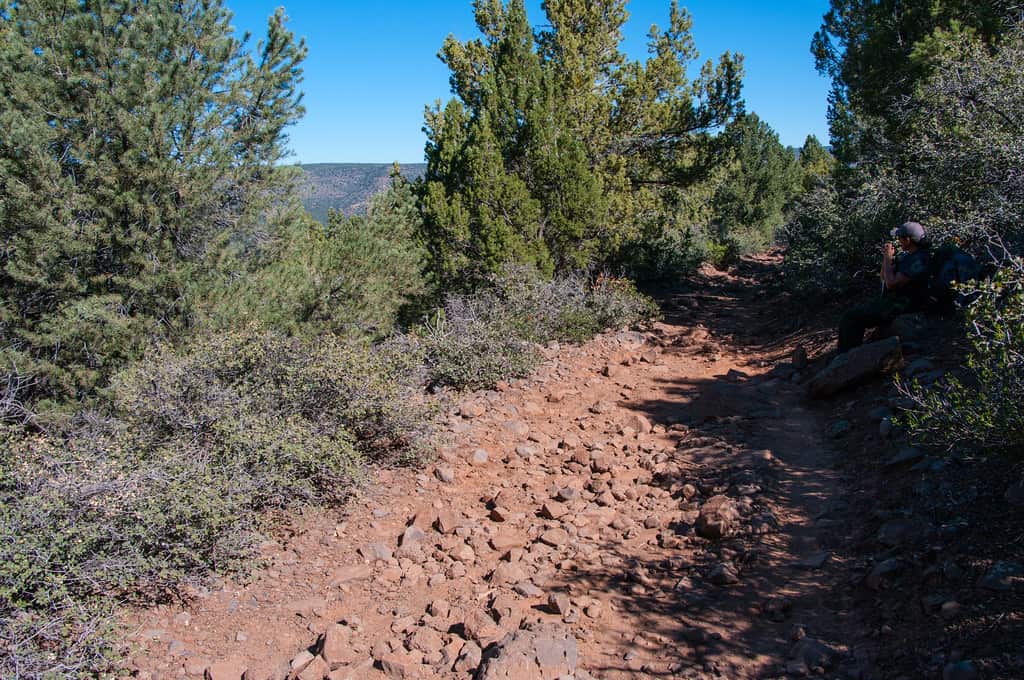
A water bottle resting on a rock with a trail view behind

The short answer

The Nalgene Wide Mouth is the best hiking water bottle for most people: nearly indestructible, almost weightless, and it fits every filter thread. Buy a Hydro Flask if cold water matters more than weight, and a Platypus soft bottle if packed size is the constraint.

Trail & Terminal earns a commission when you buy through our Amazon links, at no extra cost to you. It does not change which products we pick -- see our affiliate disclosure and selection method.

Our picks at a glance

Best water bottles for hiking -- ranked picks
#ProductBest forKey specPrice
1Nalgene Wide Mouth 32ozCheap, almost indestructible, weighs nothing, and threads onto every common filter.most hiking32oz, BPA-free Tritan
2Hydro Flask Wide Mouth 32ozGenuinely keeps water cold for a full day. Heavy empty, and that weight is carried all day too.cold water all dayVacuum insulated steel
3Platypus SoftBottle 1LRolls flat when empty. The bottle for carrying capacity you do not always need.packed sizeCollapsible 1L
4Nalgene Narrow Mouth 32ozSame bottle, narrower opening. Much easier to drink from without stopping or spilling.drinking while moving32oz, narrow opening
5Stanley Quencher H2.0 Travel TumblerAn excellent insulated tumbler and a poor hiking bottle. Know which one you are buying.the car and the trailheadInsulated tumbler, straw lid
6CNOC Vecto 3L Water ContainerA collapsible reservoir with a wide roll-top opening. Built for filling from awkward sources.collecting and gravity filtering3L, wide roll-top

Ranked by the criteria in how we pick. We hold no live prices, so every button goes straight to the current Amazon listing.

Every pick, in full

The picks

1

Best for most hiking

Nalgene Wide Mouth 32oz

Cheap, almost indestructible, weighs nothing, and threads onto every common filter.

The default hiking bottle and the one this site recommends without hesitation. It weighs almost nothing, which matters because the water inside it already weighs about two pounds per liter. It is transparent, so you can see whether the inside is clean. The volume markings are genuinely useful for mixing drink powders and for rationing. And the standard thread means a filter screws straight on, turning the bottle into part of a water system rather than just a container. See <a href="/trail/best-water-filters-for-backpacking">water filters</a>.

Specs

  • BPA-free Tritan copolyester
  • 63mm wide mouth that takes ice cubes and a hand to clean
  • Graduated volume markings on the side
  • Threads compatible with common hollow fiber filters

Good for

  • Essentially unbreakable in normal use, and transparent so you can see inside
  • Very light empty, which matters when you are already carrying the water
  • Standard thread fits most filters, which turns it into part of a water system

Bad at

  • No insulation at all -- water matches the air temperature within hours
  • Rigid, so it takes the same space empty as full
  • The wide mouth is prone to spilling if you drink while walking
2

Best for cold water all day

Hydro Flask Wide Mouth 32oz

Genuinely keeps water cold for a full day. Heavy empty, and that weight is carried all day too.

On a genuinely hot day, cold water is not a luxury -- people drink substantially more of it, and drinking enough is the actual goal. That is the argument for carrying the extra weight. The counter-argument is that the weight is real and constant, and on a cool-weather hike you are carrying insulation you get no benefit from. The other honest issue is cleaning: you cannot see inside a steel bottle, and the ones that smell are the ones nobody inspected. See <a href="/trail/hydro-flask-vs-yeti-vs-stanley">the insulated bottle comparison</a>.

Specs

  • Double-wall vacuum insulated stainless steel
  • Powder-coated exterior for grip
  • Wide mouth taking ice cubes
  • Manufacturer's lifetime warranty

Good for

  • Cold water hours into a hot day, which changes how much you drink
  • Durable powder coat that survives being dropped on rock
  • No plastic taste, and it does not retain flavors

Bad at

  • Heavy empty -- several times a plastic bottle, carried all day
  • You cannot see inside, so it gets neglected and develops odor
  • Dents rather than bounces, and a dented vacuum wall loses performance
3

Best for packed size

Platypus SoftBottle 1L

Rolls flat when empty. The bottle for carrying capacity you do not always need.

The right answer for capacity you need occasionally. Most hikes do not need four liters, but some do, and a rigid spare bottle takes the same space whether it is full or empty. This one rolls to the size of a pack of cards when empty, so carrying the option costs almost nothing. It is a supplementary bottle rather than a primary one: it will not stand up, it is fiddly to fill from a trickle, and punctures end it. Carry it alongside a rigid bottle rather than instead of one.

Specs

  • Flexible laminate body that rolls flat
  • Standard closure cap, filter-compatible versions available
  • Very low empty weight
  • Taste-free laminate per Platypus

Good for

  • Rolls to almost nothing empty, so extra capacity costs no space
  • Lightest option here by a clear margin
  • Ideal as a second bottle for a long dry stretch

Bad at

  • Will not stand up on its own when partly full
  • Punctures and seam failures are the reported end of its life
  • Awkward to fill from a shallow trickle compared with a rigid bottle
4

Best for drinking while moving

Nalgene Narrow Mouth 32oz

Same bottle, narrower opening. Much easier to drink from without stopping or spilling.

Worth listing separately because the mouth diameter changes the bottle's job more than people expect. The wide mouth is better to clean and to fill; the narrow mouth is better to drink from while walking, and if you have ever poured water down your front on a trail you know why that matters. It also pours accurately, which is useful for cooking and for topping up a filter. The trade is cleaning access and filter compatibility, so check the thread if you plan to pair it with a filter.

Specs

  • BPA-free Tritan copolyester
  • Narrow mouth for controlled pouring and drinking
  • Volume markings on the side
  • Loop-top cap

Good for

  • Far easier to drink from on the move without soaking yourself
  • Pours accurately, which matters for cooking and for filling a filter
  • Same durability and low weight as the wide mouth

Bad at

  • Harder to clean -- you cannot get a hand or a brush fully inside
  • Will not take ice cubes
  • Narrow thread is not compatible with some filters that fit the wide mouth
5

Best for the car and the trailhead

Stanley Quencher H2.0 Travel Tumbler

An excellent insulated tumbler and a poor hiking bottle. Know which one you are buying.

Included because people do take these hiking and they should know what they are getting. As a vehicle and trailhead tumbler it is excellent, and the straw genuinely increases how much people drink. As a hiking bottle it has one disqualifying flaw: it is not leakproof when inverted, so in a pack it is a spill waiting to happen. Keep it in the car, carry a sealed bottle on the trail. For the comparison with properly sealed insulated bottles see <a href="/trail/hydro-flask-vs-yeti-vs-stanley">Hydro Flask vs YETI vs Stanley</a>.

Specs

  • Double-wall vacuum insulated stainless steel
  • Rotating lid with a reusable straw
  • Tapered base sized for car cup holders
  • Large capacities available

Good for

  • Keeps drinks cold for a very long time
  • The straw lid makes drinking effortless, which genuinely increases intake
  • Fits a car cup holder, which hiking bottles do not

Bad at

  • Not leakproof when tipped or inverted -- it will empty into your pack
  • Very heavy for its capacity, and the handle snags on pack straps
  • The straw and lid assembly has several parts that need cleaning
6

Best for collecting and gravity filtering

CNOC Vecto 3L Water Container

A collapsible reservoir with a wide roll-top opening. Built for filling from awkward sources.

The piece of water kit that solves the actual problem on a trail, which is collecting rather than carrying. A wide roll-top opening scoops from a shallow stream or a trickle over rock, where a narrow bottle is almost impossible to fill. Thread a filter onto the other end, hang it from a branch, and you have a gravity system that filters for a group while you pitch the tent. It is a collection container rather than a drinking bottle, so it complements a rigid bottle. See <a href="/trail/best-water-filters-for-backpacking">water filters</a>.

Specs

  • Collapsible 3 liter reservoir
  • Wide roll-top opening at one end
  • Filter-compatible thread at the other
  • Rolls flat when empty

Good for

  • The wide opening fills from a shallow trickle, which narrow bottles cannot
  • Threads onto a filter for gravity filtering while you set up camp
  • Rolls flat empty, so a group's water capacity costs little space

Bad at

  • The roll-top closure must be done correctly or it leaks
  • Not a drinking bottle -- it is a collection and storage container
  • Seams are the long-term failure point, as with all soft containers

01 — Buying guide

How much water to carry, and why the bottle should be light

Water weighs roughly two pounds per liter, which makes it the single heaviest thing most day hikers carry. That one fact should drive every decision in this category.

It means two things. First, the bottle itself should weigh almost nothing, because every ounce of container is an ounce you carry alongside the water. A heavy insulated bottle is carrying insulation plus water all day. Second, a water filter is a bigger weight saving than any gear upgrade: if you can refill from streams, you carry one liter instead of three or four, which is a saving of several pounds that no lightweight gear purchase comes close to.

How much to carry: roughly half a liter per hour of moderate hiking is a reasonable planning figure, more in heat or at altitude. But the honest answer is that it depends on the person and the conditions, so treat that as a starting point, carry margin on your first hikes in a new area, and research water availability on the route before you leave.

02 — The real decision

Insulated or not

The honest answer for hiking is plastic, with one exception: genuinely hot weather. People drink noticeably more when water is cold, and drinking enough is the real goal, so on a hot-weather hike the weight penalty can be worth paying. In cool weather you are carrying insulation for nothing.

The pragmatic setup most experienced hikers land on: one light plastic bottle, plus a collapsible bottle for extra capacity on dry stretches, plus a filter. Insulated bottles stay in the car for the drive home.

Plastic (Nalgene)Insulated steelCollapsible
Empty weightVery lightHeavyLightest
Keeps water coldNoYes, all dayNo
Packs emptySame size as fullSame size as fullRolls flat
Can you see insideYesNoPartly
DurabilityNearly unbreakableDentsPunctures
Filter compatibleUsuallyRarelyOften
PriceLowHighLow

03 — Care

Cleaning, which decides how long a bottle lasts usefully

Bottles do not usually break. They become unpleasant, and then they stop being used. The pattern is consistent and preventable.

  • Transparent bottles stay clean because you can see when they are not. This is a genuine argument for plastic over steel that nobody puts on a spec sheet.
  • Rinse and dry fully after any drink that is not water. Electrolyte powders and juice leave residue that grows biofilm, and a capped damp bottle is an ideal environment for it.
  • Dry with the cap off. A sealed bottle with a film of water inside is how the smell starts.
  • Scrub the cap and threads, not just the body. That is where residue actually collects, and it is the part people skip.
  • Avoid bladders if you will not clean them. The most consistent complaint across the whole hydration category. See hiking daypacks for the bottle-versus-bladder discussion.

04 — Use cases

Bottles for specific situations

Best bottle to pair with a water filter

A Nalgene Wide Mouth, because the thread matches most common hollow fiber filters, so the filter screws straight on. The CNOC Vecto is the companion for collecting from awkward sources and for gravity filtering.

Best bottle for hot weather

An insulated steel bottle, accepting the weight. Cold water genuinely increases how much people drink, and dehydration is the actual risk on a hot hike. See Hydro Flask vs YETI vs Stanley.

Best bottle to take on a flight

Any empty bottle you can fill after security. A collapsible bottle is the best choice because it takes no space in a carry-on until you need it, and a light plastic bottle is the next best. Leave the heavy insulated one at home. See carry-on essentials.

Best bottle for a dog hike

Any bottle plus a collapsible bowl, or a dedicated bottle with an integrated trough. The thing that matters is that the dog can actually drink from it, which rules out drinking directly from a narrow bottle. See dog hiking gear.

05 — Criteria

How we ranked these bottles

Empty weight first, because the water is already the heavy part, then durability in the way each type actually fails, then whether it works with a filter, then whether insulation earns its weight for the conditions. Full method on how we pick.

We have not field-tested these bottles. Materials and thread compatibility come from each manufacturer's published specifications; the weight-of-water arithmetic is arithmetic. Durability and odor notes come from consistent long-run owner reports, which in this category are unusually clear about what fails and why.

Questions

Frequently asked

How much water should I carry hiking?
Roughly half a liter per hour of moderate hiking is a reasonable planning figure, and more in heat or at altitude. It varies by person and conditions, so carry margin on a route you do not know, and research water availability before you go rather than assuming a stream will be running.
Are insulated water bottles worth carrying hiking?
In hot weather, often yes -- people drink noticeably more when water is cold, and drinking enough is the real goal. In cool weather you are carrying several extra ounces of steel for no benefit. Most experienced hikers use light plastic and leave the insulated bottle in the car.
Is a Nalgene or a Hydro Flask better for hiking?
Nalgene for weight, price, cleanability and filter compatibility, which covers most hiking. Hydro Flask for hot days where cold water matters. The Nalgene is also transparent, which is a real advantage because you can see when it needs cleaning rather than discovering it by smell.
Why does my water bottle smell?
Residue from non-water drinks, plus being capped while damp. Scrub the cap and threads as well as the body, rinse immediately after anything with sugar or electrolytes in it, and store the bottle with the cap off so it dries fully. Opaque bottles are worst because you cannot see the problem developing.
Can I bring a water bottle through airport security?
Empty, yes -- then fill it after the checkpoint. A collapsible bottle is ideal for flying because it takes almost no space in a carry-on until you need it. Full bottles will not pass the liquid rules, so empty it before the line rather than in it.

Back up a level

This page sits in Trail -- what you carry on your back: packs, poles, water, warmth.

Read next