Skip to content
Trail & Terminal

06 — Trail Dog / Roundup

Best dog hiking gear

The gear is easy. The limits are what matter: how much a dog should carry, and when it is too hot to go at all.

By Brijon M.Last updated How we pick
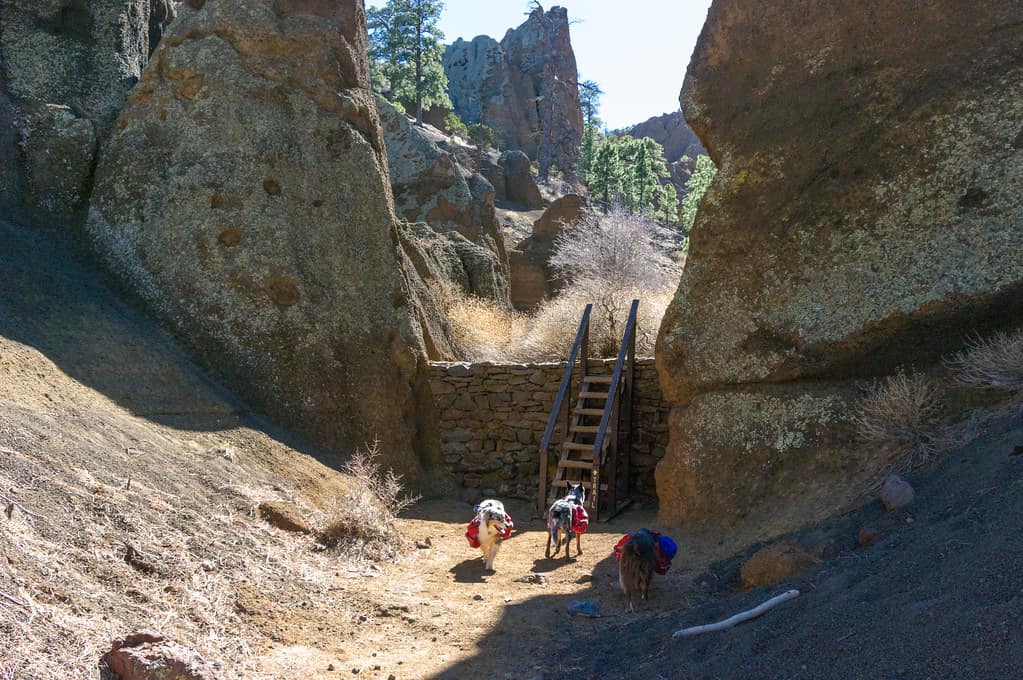
A dog wearing a harness on a rocky mountain trail

The short answer

A well-fitted harness, water the dog can drink from, and a light are the essentials. Measure girth rather than guessing from breed or weight, and respect the heat and load limits -- those matter far more than any product choice.

Trail & Terminal earns a commission when you buy through our Amazon links, at no extra cost to you. It does not change which products we pick -- see our affiliate disclosure and selection method.

Our picks at a glance

Best dog hiking gear -- ranked picks
#ProductBest forKey specPrice
1Ruffwear Front Range HarnessWell-padded, properly sized by girth, with two attachment points. The sensible default.most dogs on most trailsPadded, girth-sized
2H2O4K9 Stainless Steel Dog Water BottleAn integrated trough lid, so you are not pouring water onto the ground and hoping.water the dog can actually drinkBottle with trough lid
3Ruffwear Quencher Collapsible BowlPacks flat, holds its shape when full, and pairs with whatever bottle you already carry.the lightest water optionCollapsible, stiffened rim
4Ruffwear Grip Trex Dog BootsReal protection for paws on surfaces that injure them. Most dogs need acclimatizing to them.hot rock, sharp ground and iceVibram sole dog boots
5Ruffwear The Beacon Safety LightMakes a dark-coated dog visible. A safety item rather than an accessory.early starts and late finishesRechargeable collar light
6Adventure Medical Kits Me and My Dog First Aid KitHuman and canine supplies in one kit, including a tick remover and a dog-specific guide.a kit that covers both of youDual human and dog kit

Ranked by the criteria in how we pick. We hold no live prices, so every button goes straight to the current Amazon listing.

Every pick, in full

The picks

1

Best for most dogs on most trails

Ruffwear Front Range Harness

Well-padded, properly sized by girth, with two attachment points. The sensible default.

A harness rather than a collar is the right attachment for hiking, because a collar concentrates all the force on a dog's neck and throat if they lunge or you need to steady them. Four adjustment points matter because dogs of the same girth have very different chest depths. Measure the girth behind the front legs and use the chart for this specific product, not the brand's general one.

Specs

  • Padded chest and belly panel
  • Four points of adjustment
  • Two leash attachment points, front and back
  • Sized by girth, with published charts per size

Good for

  • Four adjustment points mean it fits a wider range of body shapes properly
  • Padded panel spreads load rather than concentrating it on straps
  • The front attachment point helps with dogs that pull

Bad at

  • Sized by girth -- the wrong size undoes the whole benefit
  • Padding holds water and takes a while to dry
  • Not a load-carrying pack, just a harness
2

Best for water the dog can actually drink

H2O4K9 Stainless Steel Dog Water Bottle

An integrated trough lid, so you are not pouring water onto the ground and hoping.

The practical problem with watering a dog on a trail is not carrying the water -- it is getting the dog to drink it without pouring most of it onto the dirt. An integrated trough solves that in one object. For a large dog the trough is shallow and a collapsible bowl works better. A plain bottle plus a collapsible bowl is the lighter alternative.

Specs

  • Stainless steel insulated bottle
  • Lid that doubles as a drinking trough
  • Leakproof cap
  • Multiple sizes

Good for

  • The dog drinks from the lid, so no water is wasted and no second bowl is needed
  • Insulated, which keeps water cool enough that the dog will drink it
  • One object rather than a bottle plus a bowl

Bad at

  • Heavier than a plain bottle plus a fabric bowl
  • The trough is shallow for large dogs
  • Stainless is opaque, so it needs regular cleaning
3

Best for the lightest water option

Ruffwear Quencher Collapsible Bowl

Packs flat, holds its shape when full, and pairs with whatever bottle you already carry.

The lightest approach: carry one bottle for both of you and a collapsible bowl for the dog. The rim is the whole specification -- a bowl without a stiffened rim folds under the weight of its own water and the dog gives up on it. See <a href="/trail/best-water-bottles-for-hiking">water bottles</a>.

Specs

  • Coated polyester with a stiffened rim
  • Collapses flat and clips to a bag
  • Water-resistant lining
  • Machine washable

Good for

  • Costs almost no weight or space
  • The stiffened rim keeps it usable when full
  • Pairs with the bottle you already carry rather than adding one

Bad at

  • Seams seep eventually
  • Light enough to move if a dog pushes at it
  • Not insulated, so water warms in sun
4

Best for hot rock, sharp ground and ice

Ruffwear Grip Trex Dog Boots

Real protection for paws on surfaces that injure them. Most dogs need acclimatizing to them.

Worth owning for specific conditions rather than general hiking. Hot rock and sand genuinely burn paw pads, sharp scree cuts them, and ice plus road salt is painful. Boots solve all of those. Two honest points: most dogs need a patient introduction indoors before a trail, and some never tolerate them. Buy a set rather than a pair, because one will go missing.

Specs

  • Vibram rubber outsole
  • Breathable mesh upper
  • Hook-and-loop closure
  • Sized by paw width, sold in sets or pairs

Good for

  • Genuine protection on hot rock, sharp scree, ice and salted roads
  • Vibram sole is real grip rather than a fabric bootie
  • Sized by paw width, which is the correct measurement

Bad at

  • Most dogs need a gradual introduction and some never accept them
  • Boots come off on rough ground -- expect to lose one eventually
  • Reduce the dog's ability to grip and feel the ground naturally
5

Best for early starts and late finishes

Ruffwear The Beacon Safety Light

Makes a dark-coated dog visible. A safety item rather than an accessory.

Hikes run later than planned, and a dark-coated dog at dusk near a trailhead parking area or a road is a real hazard. A bright clip-on light is cheap insurance. Check the clip each time -- lost lights are the consistent owner complaint, and they are usually lost rather than broken.

Specs

  • Rechargeable LED with USB charging
  • Multiple modes including strobe
  • Manufacturer-stated waterproof rating
  • Clips to a collar or harness

Good for

  • A dark dog is genuinely invisible at dusk, including to drivers
  • Rechargeable, so no coin cell to lose
  • Waterproof, which dogs require

Bad at

  • Easy to lose if the clip is not properly closed
  • Needs charging before the trip
  • Strobe modes are distracting to other people
6

Best for a kit that covers both of you

Adventure Medical Kits Me and My Dog First Aid Kit

Human and canine supplies in one kit, including a tick remover and a dog-specific guide.

A combined kit is the one that gets carried rather than left behind. Paw cuts and ticks are the realistic dog injuries on a trail, and both are covered. Two honest limits: the quantities are small, and a kit without knowledge does little. This is general information rather than veterinary advice -- ask your vet about your dog. See <a href="/trail/best-first-aid-kits">first aid kits</a>.

Specs

  • Wound care and bandaging for both people and dogs
  • Tick removal tool
  • Includes a canine first aid reference booklet
  • Water-resistant outer bag

Good for

  • One kit rather than two, which means it actually gets carried
  • Includes a tick remover, which matters across most of the United States
  • The dog-specific booklet is genuinely useful for things like paw injuries

Bad at

  • Thin on quantity for any serious injury
  • No prescription medication, canine or human
  • A kit is not a substitute for knowing what to do

01 — Safety limits

Heat is the limit that matters most

This is the part of dog hiking content that gets skipped, and it is the part with real consequences.

Dogs shed heat far less efficiently than people do. They do not sweat meaningfully; they cool mostly by panting, which is much less effective. A temperature that feels pleasant to a human walking can be dangerous for a dog working, and the dog will keep going because it wants to be with you.

Flat-faced breeds are at substantially higher risk. Brachycephalic dogs -- bulldogs, pugs, boxers and similar -- have compromised airways and much reduced cooling capacity, and should not be worked hard in warm weather at all.

Ground temperature matters separately from air temperature. Rock, sand and asphalt reach temperatures that burn paw pads long before the air feels dangerous. The usual test is to hold the back of your hand on the surface for several seconds -- if you cannot, the dog should not be walking on it.

What to do: hike early or late, choose shaded routes with water, carry more water than you think, stop often, and turn back when the dog's panting changes character. Signs of heat distress -- excessive panting, drooling, lethargy, unsteadiness -- are an emergency, and the right response is active cooling and a vet.

This is general information, not veterinary advice. Your vet is the right source for your dog's specific limits, particularly for an older dog, a puppy, a flat-faced breed or any dog with a respiratory, cardiac or joint condition.

02 — Load limits

How much a dog should carry

Published guidance from canine-sport and veterinary sources is consistently conservative about how much a dog should carry, and it scales with the individual dog's conditioning rather than with the capacity of the pack you bought. We are not going to print a percentage as though it applied to every dog, because it does not.

The principles that are consistent across sources:

  • Puppies and adolescent dogs whose growth plates have not closed should carry nothing. This is the firmest rule in the category.
  • Start empty and build gradually over several hikes, letting the dog get used to the pack itself before any weight goes in it.
  • Keep the load balanced side to side. An unbalanced pack twists and causes rubbing.
  • Weight sits on the shoulders, not the hips or the spine. A pack that has slid back is both uncomfortable and less safe.
  • Ask your vet for your dog's limit, especially for an older dog or one with any joint condition. They can assess the individual animal, which an article cannot.
  • Remove the pack at rest stops and in water. See dog hiking backpacks.

03 — Fit

Sizing, which is why dog gear fails

Almost every complaint about dog gear is a fit complaint. Three measurements cover nearly everything, taken with a soft tape and the dog standing.

MeasurementWhereSizes
GirthDeepest part of the chest, behind the front legsHarnesses and packs
NeckBase of the neck where a collar sitsCollars
LengthBase of neck to base of tailCoats; checking pack placement
Paw widthWidest point of the paw, weight-bearingBoots

04 — Etiquette

Trail etiquette with a dog

  • Check whether dogs are allowed before you go. Many national parks prohibit dogs on trails entirely while allowing them in campgrounds, which catches people out constantly.
  • Leash rules are usually absolute where they apply, and often specify a maximum length. Assume leashed unless you have confirmed otherwise.
  • Yield to everyone. Step off the trail with the dog on the downhill side and let others pass. Not everyone likes dogs, and that is their right.
  • Pack out waste. Bagging it and leaving the bag beside the trail is worse than not bagging it. Carry it out.
  • Keep the dog out of wildlife. Chasing is a hazard to the animal, to the dog, and to your access.
  • Do not let a dog drink from or swim in sources other people draw water from where you can avoid it.

05 — Criteria

How we ranked this gear

Fit and sizing honesty first, since that is why dog gear fails, then whether the item solves a real trail problem, then durability, then weight. Full method on how we pick.

We have not used this gear with a dog. Specifications and sizing come from each manufacturer's published information. The heat and load guidance paraphrases published material from veterinary and canine-sport sources and is general information rather than veterinary advice -- your vet is the right source for your dog.

Questions

Frequently asked

What gear does a dog need for hiking?
A well-fitted harness, water the dog can actually drink from, a light for early starts and late finishes, and waste bags. Boots are worth owning for hot rock, sharp scree or ice specifically rather than for general hiking.
How hot is too hot to hike with a dog?
Lower than most people assume, because dogs cool by panting rather than sweating and that is much less effective. Flat-faced breeds are at substantially higher risk. Check the ground temperature with the back of your hand too, since rock and asphalt burn paws before the air feels dangerous.
How much weight can a dog carry?
Less than most people assume, and it depends on the individual dog's conditioning rather than the pack's capacity. Published guidance is consistently conservative. Puppies and adolescent dogs should carry nothing. Ask your vet for your dog's limit.
Do dogs need boots for hiking?
For specific conditions, yes: hot rock and sand burn paw pads, sharp scree cuts them, and ice with road salt is painful. For ordinary trails, no. Most dogs need a patient introduction to boots indoors first, and some never tolerate them.
Harness or collar for hiking with a dog?
A harness. A collar concentrates all the force on the neck and throat if the dog lunges or you need to steady them on uneven ground. A harness with multiple adjustment points also fits a wider range of body shapes properly, which matters for comfort over miles.

Back up a level

This page sits in Trail Dog -- kit for the dog that comes along.

Read next