Skip to content
Trail & Terminal

06 — Trail Dog / Roundup

Best dog backpack carriers

A carrier is a load-hauling pack with a living animal in it. Weight limit, hip belt and ventilation decide whether it works -- not the color.

By Brijon M.Last updated How we pick
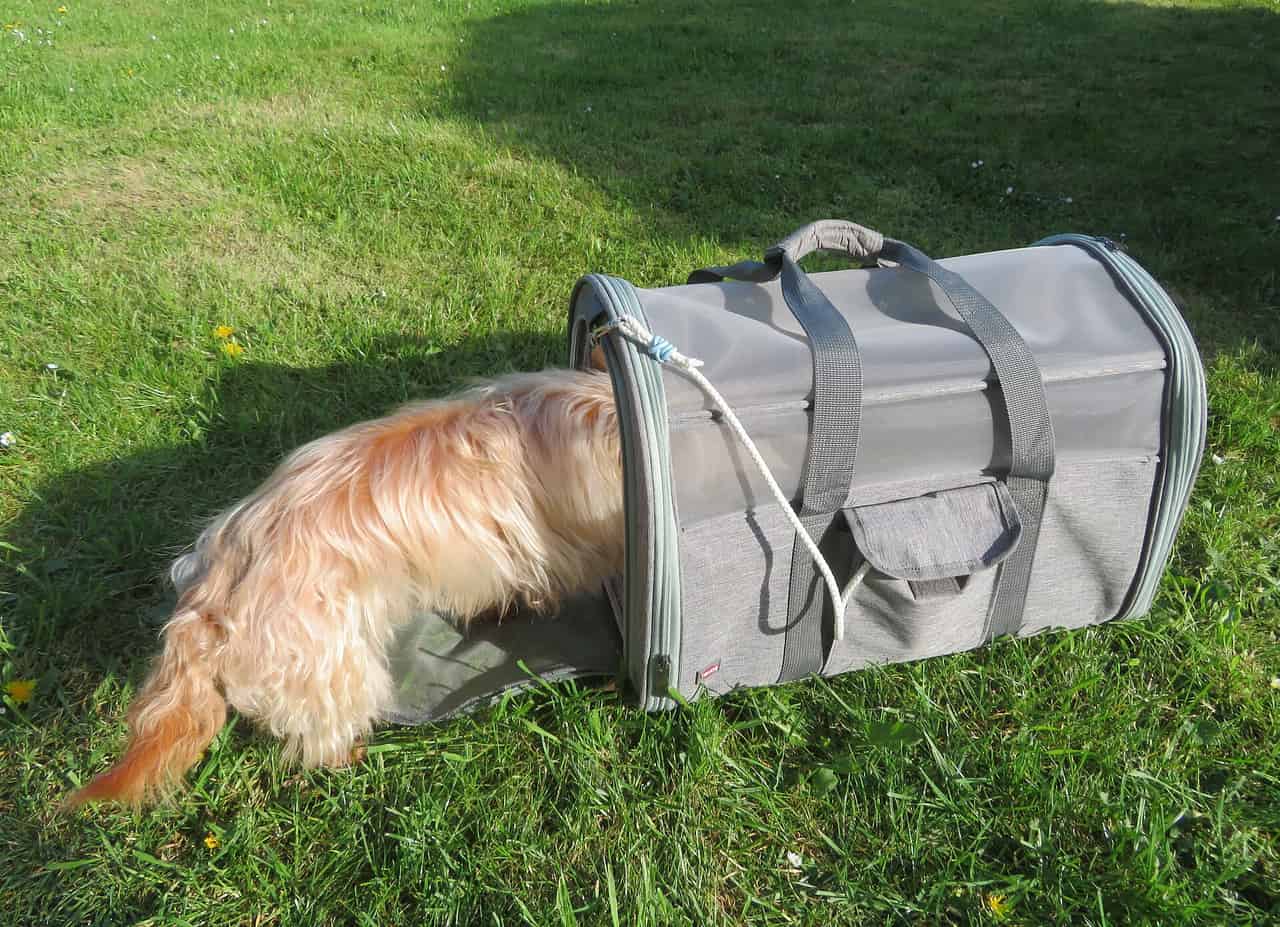
A small dog stepping into a soft-sided pet carrier on grass

The short answer

For most dogs the K9 Sport Sack Air Plus 2 is the right starting point: forward-facing, well ventilated, with real storage. If you are walking distance rather than a mile, the Knavigate adds an internal frame and a hip belt, and the Kolossus is the only pick here rated for genuinely large dogs.

Trail & Terminal earns a commission when you buy through our Amazon links, at no extra cost to you. It does not change which products we pick -- see our affiliate disclosure and selection method.

Our picks at a glance

Best dog backpack carriers -- ranked picks
#ProductBest forKey specPrice
1K9 Sport Sack Air Plus 2The forward-facing carrier the category is built around, with mesh side panels and a storage compartment that makes it a usable daypack too.most dogs, most of the timeForward-facing, mesh sides
2K9 Sport Sack KnavigateThe only carrier here with an internal frame and a load-bearing hip belt, which is what makes miles rather than minutes possible.actual hiking distanceInternal frame, hip belt
3K9 Sport Sack KolossusRated for dogs far heavier than anything else here, and it converts into a large backpacking pack when the dog is walking.genuinely large dogs20-80 lb, 50-60 L
4K9 Sport Sack KloudAn ultralight mesh body on an inflatable frame -- the most ventilated carrier the brand makes, and the one that packs down.hot weatherMesh body, inflatable frame
5Kurgo G-Train K9 Carrier BackpackA carrier that is also a genuine daypack -- laptop sleeve, bottle pockets, water-resistant shell -- for dogs up to about 25 lb.the dog and the commuteUp to 25 lb, laptop sleeve
6Outward Hound PoochPouch BackpackA lightweight mesh carrier for dogs under about 20 lb, at a fraction of the price of the specialist packs.small dogs on a small budgetUnder 20 lb, mesh body
7PetAmi Deluxe Pet Carrier BackpackA well-ventilated, well-padded soft carrier that is better specified than its price suggests, within clear limits.small dogs and cats, mostly on roadsSmall breeds, 4-sided mesh
8Texsens Innovative Traveler Bubble BackpackThe bubble-window carrier, for pets up to about 15 lb -- the one that settles an anxious animal by letting it see out.a dog that wants to watchUp to 15 lb, bubble window

Ranked by the criteria in how we pick. We hold no live prices, so every button goes straight to the current Amazon listing.

Every pick, in full

The picks

1

Best for most dogs, most of the time

K9 Sport Sack Air Plus 2

The forward-facing carrier the category is built around, with mesh side panels and a storage compartment that makes it a usable daypack too.

This is the model most people should look at first, because it solves the problem the cheap carriers do not: where the dog's legs go. In a plain tote-style pet backpack the dog is folded into a box. Here the legs pass through openings, the dog sits more or less as a dog sits, and it can shift its weight.

Size it by measuring the dog rather than by its weight class. Length from chest to tail base and chest girth both matter, and a dog at the top of one size and the bottom of the next should usually go smaller, because a loose carrier lets the dog slide and swing. Get the dog used to the carrier at home, on the floor, with treats, before the first time you put it on your back -- most carrier refusals are training problems, not product problems. See <a href="/trail-dog/dog-backpack-vs-carrier">dog backpack vs carrier</a> for whether you want this at all.

Specs

  • Forward-facing design with the dog's legs through dedicated openings
  • Breathable mesh side panels
  • Multi-compartment storage pack on the back
  • Sized by dog length and girth rather than weight alone

Good for

  • Legs hang through proper openings rather than being folded under the dog, which is the single biggest comfort difference between carriers
  • The storage pack means you are not also carrying a second bag for water, bowls and waste bags
  • Forward-facing position puts the dog's weight close to your back, where a load should be

Bad at

  • You cannot see the dog while walking, so you are checking by feel and by sound
  • No hip belt on this model, so the weight sits on your shoulders
  • Sizing is unforgiving -- an undersized carrier bunches the dog's shoulders and an oversized one lets it slide
2

Best for actual hiking distance

K9 Sport Sack Knavigate

The only carrier here with an internal frame and a load-bearing hip belt, which is what makes miles rather than minutes possible.

If you are genuinely planning to walk with a dog on your back rather than to rescue one at the end of a walk, the suspension is the thing that matters and nothing else on this page has it. A twenty-pound dog on your shoulders is tolerable for ten minutes and awful for an hour; the same twenty pounds on a hip belt is a loaded daypack.

The frame also solves a problem specific to live loads: a dog moves, and an unframed carrier transmits every shift straight into your lumbar spine. Be honest with yourself about the use case before paying for this, though. Most people who buy a carrier use it for short distances and would be better served by the Air Plus above. Our <a href="/trail/best-hiking-daypacks">hiking daypack guide</a> explains the same suspension principles on a normal pack.

Specs

  • Internal frame with a load-transferring hip belt
  • Manufacturer-stated suitability for dogs from roughly 5 to 50 lb across its size range
  • Widest size range in the brand's lineup
  • Ventilated panels and storage

Good for

  • A hip belt moves most of the load off your shoulders onto your hips, exactly as it does on a hiking pack -- this is the difference between a mile and five
  • The internal frame stops the load collapsing into your back as the dog shifts
  • Covers a very wide range of dog sizes, so it suits households with an unusual-sized dog

Bad at

  • The most expensive carrier in the brand's standard range
  • Frame and belt add bulk and weight before the dog is in it
  • Overkill for the common use case, which is carrying a tired dog the last half mile
3

Best for genuinely large dogs

K9 Sport Sack Kolossus

Rated for dogs far heavier than anything else here, and it converts into a large backpacking pack when the dog is walking.

This exists for a specific and real situation: an injured, elderly or heat-stressed large dog that has to get back to the trailhead. That is an emergency tool more than a hiking accessory, and it is worth saying plainly that a 70 lb dog on your back over uneven ground is at the limit of what most people can safely do.

The conversion to a gear pack is what makes it defensible to own rather than rent. On the days the dog is fine it carries camp kit; on the day it is not, it carries the dog. If you have a large dog and you hike remote ground, this is the honest answer to a question most people never have to ask. See <a href="/trail-dog/hiking-with-dogs-guide">hiking with dogs</a> for recognizing the heat and fatigue signs that lead to needing it.

Specs

  • Manufacturer-stated capacity for dogs roughly 20 to 80 lb
  • Sizes L through XXL
  • Converts to a 50-60 L gear-hauling pack when empty
  • Full suspension with hip belt

Good for

  • The only realistic option on this page for a dog over about 50 lb
  • The gear-pack conversion means it is not dead weight on the days the dog walks
  • Proper backpacking-grade suspension, because it has to be

Bad at

  • Heavy and very expensive, and it is a large object to store
  • Carrying 60 or 70 lb of live, moving weight is a serious physical undertaking for the human
  • Far too large for small and medium dogs -- the fit will be wrong in both directions
4

Best for hot weather

K9 Sport Sack Kloud

An ultralight mesh body on an inflatable frame -- the most ventilated carrier the brand makes, and the one that packs down.

Heat is the real hazard of carrying a dog, and it is counterintuitive why: a dog in a carrier cannot pant efficiently with its chest compressed, it is pressed against a human radiating heat, and it is not moving air over itself the way it would be walking. A carrier made mostly of mesh is a direct answer to that.

The pack-down ability is the second argument. A carrier you can deflate and stuff into a daypack is one that comes along on every walk as insurance, which is a different proposition from a rigid carrier that has to be worn empty or left at home. Accept that mesh and an inflatable frame are a durability trade; this is a fair-weather, moderate-distance tool and it is very good at being one.

Specs

  • Predominantly mesh construction for airflow
  • Inflatable frame rather than a rigid one
  • Lightest carrier in the brand's lineup
  • Deflates and packs down when not in use

Good for

  • Far more airflow than a nylon-bodied carrier, which directly addresses the main risk of carrying a dog in summer
  • Packs down small enough to go in a pack for the return leg of a hike
  • Light enough that the carrier itself stops being part of the weight problem

Bad at

  • Mesh and an inflatable frame are inherently less abrasion-resistant than Cordura over a rigid frame
  • An inflatable structure is a puncture away from being a sack
  • Less supportive for long distances than the framed Knavigate
5

Best for the dog and the commute

Kurgo G-Train K9 Carrier Backpack

A carrier that is also a genuine daypack -- laptop sleeve, bottle pockets, water-resistant shell -- for dogs up to about 25 lb.

Kurgo's angle here is that a carrier spends most of its life not carrying a dog, so it should be useful the rest of the time. The G-Train is a competent daypack with bottle pockets and a padded laptop sleeve that happens to also take a small dog, which is the right design for city dwellers, train travel and farmers' markets more than for mountains.

The suspension is better than the enclosed-carrier category usually manages: hip, sternum and load-lifter straps are a real three-point setup rather than two padded shoulder straps. The limit is the dog. At 25 lb this is for small breeds and small terriers, and it is enclosed rather than forward-facing, so a dog that wants to watch the world will be happier in the K9 Sport Sack designs. See <a href="/trail-dog/best-dog-travel-accessories">dog travel accessories</a>.

Specs

  • Manufacturer-stated capacity up to 25 lb
  • Hip, sternum and load-lifter straps
  • Separate padded laptop compartment, two bottle pockets, zipped organization
  • Water-resistant fabric with a waterproof base

Good for

  • Load-lifter straps are rare at this size and genuinely improve how the weight sits
  • The dual-purpose design means it is the carrier most likely to actually get used, because it is also your bag
  • Waterproof base is the right detail -- the bottom is what sits on wet ground at every stop

Bad at

  • 25 lb ceiling rules out a lot of dogs
  • The dog sits enclosed rather than forward-facing with legs out, which suits calm dogs and not fidgety ones
  • Carrying a laptop and a dog at once is heavier than either sounds
6

Best for small dogs on a small budget

Outward Hound PoochPouch Backpack

A lightweight mesh carrier for dogs under about 20 lb, at a fraction of the price of the specialist packs.

There is a genuine budget tier in this category and this is the sensible end of it. For a small dog, short distances, and a household that is not sure the dog will tolerate a carrier at all, spending a tenth of the price to find out is reasonable.

What you are giving up is suspension and structure, and both matter more than they sound. Without a hip belt, every ounce is on your shoulders and trapezius; without a frame, the dog sags into your lower back. Those are fine for twenty minutes around a market and wrong for a trail. If the dog takes to it and you want to go further, that is when the framed carriers start to justify themselves. See <a href="/trail-dog/best-dog-hiking-gear">dog hiking gear</a> for the rest of the kit.

Specs

  • Manufacturer-stated suitability for dogs under 20 lb
  • Lightweight mesh fabric for airflow
  • Padded air-mesh shoulder straps with adjustable buckles
  • Water-resistant, wipe-clean material

Good for

  • Costs a fraction of the specialist carriers and does the basic job honestly
  • Mesh body keeps a small dog cooler than a nylon-walled carrier
  • Light enough to carry empty without resenting it

Bad at

  • Shoulder straps only -- no hip belt, so all the weight is on your shoulders
  • No real structure, so the load collapses toward your back as the dog shifts
  • Short distances only; this is not a hiking carrier whatever the product photography suggests
7

Best for small dogs and cats, mostly on roads

PetAmi Deluxe Pet Carrier Backpack

A well-ventilated, well-padded soft carrier that is better specified than its price suggests, within clear limits.

This is the carrier that shows up most often in households with a small dog or a cat that travels. The specification is better than the price implies: multi-sided mesh, a sternum strap, an internal safety tether and a removable washable mat all appear on far more expensive carriers.

Judge it as a travel and errand carrier rather than a hiking one and it is very good. The soft-sided construction has no frame, so on anything longer than a short walk the dog settles into your lumbar region and stays there. The internal tether is worth clipping every single time -- the common carrier incident is not a fall, it is a dog getting out at an unexpected moment at a trailhead or a station.

Specs

  • Mesh ventilation on multiple sides
  • Padded back panel and adjustable sternum strap
  • Removable, washable interior mat and a safety tether
  • Front and side entry openings

Good for

  • Ventilation on several sides rather than one, which is the main thing cheap carriers skimp on
  • The washable interior mat is the detail that keeps a carrier usable after a year
  • Multiple entry points make loading a reluctant dog much easier

Bad at

  • Small breeds only -- the structure does not support a heavier dog
  • Shoulder-strap suspension, so distances are limited
  • Soft-sided with no frame, so the carrier gives if the dog leans
8

Best for a dog that wants to watch

Texsens Innovative Traveler Bubble Backpack

The bubble-window carrier, for pets up to about 15 lb -- the one that settles an anxious animal by letting it see out.

The bubble is not a gimmick for every animal, though it looks like one. A significant number of dogs and cats will not settle in an opaque bag and will settle immediately in one they can see out of, and if yours is one of them this solves a problem no amount of padding solves.

The counterpart is heat. A clear dome in sun behaves like a small greenhouse, and the three-sided mesh is what keeps that manageable. Do not use it in direct summer sun without shade, and do not leave an animal in it unattended anywhere warm. Within those limits -- short trips, trains, waiting rooms, city walks -- it is a genuinely useful design.

Specs

  • Manufacturer-stated capacity for pets up to 15 lb
  • Transparent front bubble window with mesh ventilation on three sides
  • Removable interior mat
  • Chest buckle; folds flat for storage

Good for

  • The window genuinely calms animals that panic in an enclosed bag -- visibility is the variable, not space
  • Folds flat, so it stores in a way rigid carriers do not
  • Mesh on three sides keeps it from becoming a greenhouse, which the bubble alone would

Bad at

  • 15 lb ceiling is the lowest here -- this is a small-dog and cat carrier
  • A transparent dome in direct sun gets hot fast; it needs shade management
  • Shoulder straps only, and the rigid dome makes it awkward against your back

01 — Start here

What a carrier is actually for

Most of the marketing in this category shows a healthy dog being carried up a mountain, which is close to the opposite of what carriers are mostly good for. A dog that can walk should walk -- it is better for the dog, and your back is not a better form of transport than four legs.

The real uses are narrower and completely legitimate. A puppy that is not yet fully vaccinated and should not be on the ground. An elderly or arthritic dog that can manage a mile but not three. A small breed on a long trail day. A dog that cut a pad, got heat-stressed, or simply ran out. Public transport and city rules that require a contained animal. Travel days where the dog has to be in something.

Buying for the real use case changes the answer. If this is insurance for the last half mile, buy something light that packs down. If it is genuinely how the dog travels for hours, buy suspension -- a frame and a hip belt -- and accept the weight and cost that come with it.

02 — Comparison

At a glance

Weight limits are the manufacturers' own stated figures. Measure your dog's length and chest girth as well -- weight alone fits nobody correctly.

CarrierStated dog weightSuspensionBest use
K9 Sport Sack Air Plus 2Sized by dog, small-mediumShoulder strapsThe all-round default
K9 Sport Sack KnavigateAbout 5-50 lbInternal frame + hip beltReal hiking distance
K9 Sport Sack KolossusAbout 20-80 lbFull frame + hip beltLarge dogs; emergencies
K9 Sport Sack KloudSmall-mediumInflatable frameHot weather, packs down
Kurgo G-TrainUp to 25 lbHip, sternum, load liftersDog plus daypack duty
Outward Hound PoochPouchUnder 20 lbShoulder strapsBudget, short distances
PetAmi DeluxeSmall breedsShoulder + sternumTravel and errands
Texsens bubble backpackUp to 15 lbShoulder + chest buckleAnxious pets that want to see out

03 — Selection criteria

The four things that decide fit

Carriers fail for the same handful of reasons, and none of them are about the fabric. These are the four to check before anything else.

  • Where the legs go. Forward-facing carriers put the dog's legs through openings so it sits naturally. Enclosed carriers fold the dog into a box. For anything beyond a few minutes, leg position is the biggest single comfort difference.
  • Whether there is a hip belt. A hip belt transfers load from your shoulders to your hips, exactly as on a hiking pack. Without one, a 20 lb dog is 20 lb on your trapezius for the whole walk. This is the spec that separates a carrier for miles from a carrier for minutes.
  • How much mesh there is. A dog in a carrier cannot pant efficiently, is pressed against a warm human, and is not moving air over itself. Ventilation on several sides is a safety feature in summer, not a comfort one.
  • Measured fit, not weight class. Measure chest-to-tail-base length and chest girth. A dog between sizes usually wants the smaller one, because a loose carrier lets the dog slide and swing with every step you take.
  • An internal tether, and whether you will use it. The characteristic carrier incident is a dog getting out at a trailhead or a station, not falling. Clip the tether every time.

04 — Safety

Carrying a dog safely

Nothing on this page is veterinary advice and we are not vets -- anything about your dog's joints, breathing or heat tolerance is a question for yours, particularly for flat-faced breeds, puppies and older dogs. What follows is the practical side that applies regardless.

  • Introduce the carrier on the floor first. Several short sessions at home with treats, then short walks, then distance. Most refusals are a training gap rather than a product fault.
  • Treat heat as the main risk. A carried dog cannot cool itself the way a walking dog can. Stop more often than feels necessary, offer water every time, and keep the carrier out of direct sun.
  • Watch your own center of gravity. A live load shifts. On uneven ground, rocks or stream crossings, a dog moving on your back changes your balance in a way a static pack does not. Use poles if you have them.
  • Check the dog by hand at every stop. With a forward-facing carrier you cannot see the dog while walking. Feel for a wedged leg, a twisted harness and how hot the chest panel is.
  • Respect the stated weight limit. It is a structural figure for the carrier, and it is also a sensible figure for you. Loading a carrier past its rating is how straps and stitching fail.
  • Do not use a carrier to extend a walk the dog could not do. If the dog is tired enough to need carrying, the trip is ending, not continuing. See hiking with dogs.

05 — The decision

Carrier or dog pack?

These are two different products that get confused constantly because both are called a dog backpack. One is worn by you with the dog inside it. The other is worn by the dog and carries the dog's own water and bowls.

If your dog is healthy, adult and able to do the distance, the pack it wears is the more useful purchase, and it gives a working dog a job on the trail. If the dog physically cannot do the distance -- age, size, injury, vaccination status, or local rules about animals on transport -- then the carrier is the item, and no amount of a dog-worn pack substitutes.

Plenty of households end up owning both, for different dogs or different trips. Our dog backpack vs carrier comparison works through the decision properly, and dog hiking backpacks covers the packs the dog carries itself.

06 — Criteria

How we ranked these

Ranked on suspension first -- frame and hip belt before anything else -- then on leg position, then ventilation, then the manufacturer's stated weight range and how honestly it maps to real dogs. Price broke ties only where two carriers were otherwise close. Full method on how we pick.

We have not field-tested these carriers and we are not veterinarians. Every weight figure on this page is the manufacturer's own stated capacity, labeled as such. The picks rest on published specifications, the documented construction of each carrier, and consistent patterns in what owners report after a season of use. We publish no prices -- every button goes to the live listing.

Questions

Frequently asked

What is the best dog backpack carrier for hiking?
For real distance, one with an internal frame and a hip belt -- the K9 Sport Sack Knavigate is the pick here on that basis. Suspension is what separates a carrier you can walk miles in from one that is tolerable for ten minutes.
How big a dog can you carry in a backpack carrier?
Most carriers stop between 15 and 25 lb. The K9 Sport Sack Kolossus is the outlier, stated for dogs up to about 80 lb. Those are structural limits for the carrier; whether you can safely walk uneven ground with that much live weight is a separate question.
Are dog backpack carriers safe?
Within limits. The main risks are heat, because a carried dog cannot cool itself efficiently, and your own balance on uneven ground with a load that moves. Introduce the carrier gradually, clip the internal tether, and ask your vet first for flat-faced breeds, puppies and older dogs.
Should the dog face forward or be enclosed?
Forward-facing carriers put the dog's legs through openings so it sits naturally, which is more comfortable over time and suits dogs that want to see out. Enclosed carriers are calmer for anxious animals and are usually the only option that meets transport rules.
How do you get a dog used to a carrier?
Open it on the floor at home and feed treats in it for several short sessions before it ever goes on your back. Then short indoor wears, then a short walk, then distance. Rushing this is the most common reason a carrier ends up unused.
What size dog carrier backpack do I need?
Measure chest-to-tail-base length and chest girth rather than going by weight. A dog between two sizes usually wants the smaller one -- a loose carrier lets the dog slide and swing with each step, which is uncomfortable for both of you.

Back up a level

This page sits in Trail Dog -- kit for the dog that comes along.

Read next