Skip to content
Trail & Terminal

06 — Trail Dog / Roundup

Best dog hiking harnesses

A walking harness and a hiking harness are different objects. The difference is a handle positioned over the dog's center of mass, and whether the padding traps heat.

By Brijon M.Last updated How we pick
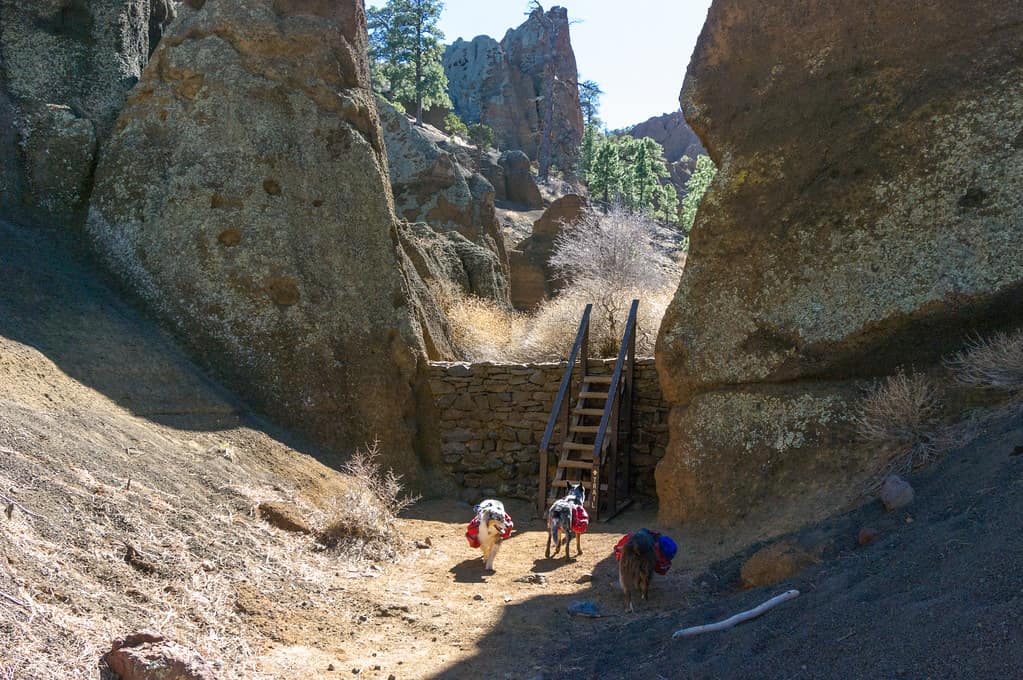
A dog in a harness standing on a rocky trail

The short answer

The Ruffwear Front Range is the pick for most trail dogs: two leash attachment points, four adjustment points, and padding that does not cook the dog on a warm climb. If you need to lift your dog over obstacles, the Web Master with its handle over the shoulders is the one to buy.

Trail & Terminal earns a commission when you buy through our Amazon links, at no extra cost to you. It does not change which products we pick -- see our affiliate disclosure and selection method.

Our picks at a glance

Best dog hiking harnesses -- ranked picks
#ProductBest forKey specPrice
1Ruffwear Front Range HarnessThe default trail harness. Two attachment points, four adjusters, and a padded chest panel that spreads load without trapping heat.most dogs, most trails2 leash points, 4 adjusters, foam-padded chest
2Ruffwear Web Master HarnessFive adjustment points, a third strap behind the ribs, and a handle placed where you can actually lift from. The scrambling harness.lifting and assisting over obstaclesHandle over shoulders, 5 adjusters, 3 straps
3Ruffwear Flagline HarnessThe Web Master's handle on a minimal, ventilated chassis. The right answer for summer trail dogs that still need lifting.hot weather with a handleHandle, 5 adjusters, minimal coverage
4Kurgo Tru-Fit Enhanced Strength HarnessA hiking harness that is also crash-tested for vehicle restraint, with a seat belt tether in the box.trailheads you drive toCrash-tested, 5 adjusters, steel nesting buckles
5Rabbitgoo No-Pull Dog HarnessTwo leash points, four adjusters and a top handle at a fraction of the premium price. Less durable, correctly shaped.a budget harness that fits properly2 leash points, 4 adjusters, top handle

Ranked by the criteria in how we pick. We hold no live prices, so every button goes straight to the current Amazon listing.

Every pick, in full

The picks

1

Best for most dogs, most trails

Ruffwear Front Range Harness

The default trail harness. Two attachment points, four adjusters, and a padded chest panel that spreads load without trapping heat.

This is the harness to buy if you do not have a specific reason to buy a different one. Two attachment points matter more on trail than people expect: the back ring for normal walking and the chest ring for the dog that lunges at squirrels, where a front clip turns the pull sideways instead of letting the dog drag you.

The fit range is the quiet strength. Four independent adjusters let the same harness fit a greyhound and a bulldog, which is unusual, and a harness that fits properly is the only kind that does not chafe. The format comparison -- harness against collar -- is in dog harness vs collar.

Specs

  • Aluminum V-ring on the back and a reinforced webbing loop on the chest
  • Four points of adjustment -- two at the neck, two at the girth
  • Foam-padded chest and belly panel
  • Reflective trim on all sides, with an ID pocket on the back panel

Good for

  • The front attachment point gives you real steering control on a pulling dog
  • Four adjusters mean it fits deep-chested and barrel-chested dogs alike
  • Padding is positioned under the load-bearing straps only, so it does not insulate the whole torso

Bad at

  • No handle -- you cannot lift or assist the dog with this one
  • The back V-ring sits well behind the shoulders, so a hard pull torques the harness
  • Padding still holds water, and a wet panel stays wet all day
2

Best for lifting and assisting over obstacles

Ruffwear Web Master Harness

Five adjustment points, a third strap behind the ribs, and a handle placed where you can actually lift from. The scrambling harness.

The handle placement is the whole product. Lifting a dog by a handle set too far back pivots them nose-down, which is both frightening for the dog and unsafe on a ledge. This handle sits over the shoulders and the load spreads through three straps, so the dog comes up level.

The trade is coverage, and coverage is heat. A lined chest and belly panel plus three body straps means this is the warmest harness in the list, and on a hot day on an exposed trail that is a genuine cost. Buy it for terrain that requires assistance -- rock steps, ladders, getting into a boat or a truck bed -- rather than as a general-purpose harness.

Specs

  • Reinforced handle positioned over the dog's shoulders
  • Five adjustment points across three body straps
  • Third strap behind the ribcage prevents backward escape
  • Aluminum V-ring and a padded, fully lined chest and belly panel

Good for

  • The handle is over the center of mass, so a lift keeps the dog level rather than nose-down
  • The third strap makes it effectively escape-proof for a backing-out dog
  • The most secure harness here for steep scrambles, ladders and boat loading

Bad at

  • Only one leash attachment point -- no front clip for pull control
  • The most coverage of any harness here, so it is the hottest in summer
  • Five adjusters take real time to set up the first time
3

Best for hot weather with a handle

Ruffwear Flagline Harness

The Web Master's handle on a minimal, ventilated chassis. The right answer for summer trail dogs that still need lifting.

This is the harness that resolves the real conflict in this category. You want a handle for assistance, and a handle usually comes attached to a heavily padded harness that overheats the dog. The Flagline carries the handle on a minimal chassis instead, which is the combination most summer trail dogs actually need.

The cost is padding and security. Without a rib strap it will not hold a dog determined to back out of it, and a hard puller will feel narrow webbing more than a wide padded panel. For a well-mannered dog on hot trails, this is the better buy than the Web Master. Heat management is the bigger topic -- see hiking with dogs guide.

Specs

  • Padded handle, foldable flat when not in use
  • Five points of adjustment across a lightweight chassis
  • Minimal body coverage with wide, load-spreading webbing
  • Two leash attachment points, aluminum V-ring and front webbing loop

Good for

  • A handle and a front clip, which no other harness here combines
  • Far less coverage than the Web Master, so dramatically cooler in summer
  • The handle folds flat so it does not flap or snag on brush

Bad at

  • Less padding means a hard-pulling dog feels the webbing more
  • Not escape-proof -- there is no third strap behind the ribs
  • The lightweight build is less durable against repeated abrasion on rock
4

Best for trailheads you drive to

Kurgo Tru-Fit Enhanced Strength Harness

A hiking harness that is also crash-tested for vehicle restraint, with a seat belt tether in the box.

Most trail dogs arrive at the trail in a car, and an unrestrained dog in a vehicle is a danger to itself and to everybody in the cabin. A harness that is crash-tested for restraint and also comfortable for a day's hiking collapses two pieces of equipment into one.

Read the crash-test claim carefully rather than as a blanket statement: it applies at the dog weights the manufacturer specifies, with the tether used as designed. Check your dog is inside that range. The vehicle side of this kit is in best dog car travel accessories.

Specs

  • Crash-tested to a vehicle restraint standard at the manufacturer's stated dog weights
  • Five adjustment points with steel nesting buckles
  • Padded chest plate and a dedicated front leash loop
  • Includes a seat belt tether loop and carabiner

Good for

  • One harness for the drive and the hike, which removes a swap at the trailhead
  • Steel nesting buckles are considerably stronger than plastic side-release ones
  • Front and back leash points, like the Front Range

Bad at

  • No handle, so it cannot assist or lift
  • Heavier and stiffer than the dedicated hiking harnesses
  • The padded chest plate is warm, and it is not removable
5

Best for a budget harness that fits properly

Rabbitgoo No-Pull Dog Harness

Two leash points, four adjusters and a top handle at a fraction of the premium price. Less durable, correctly shaped.

The gap between a cheap harness and an expensive one is durability and hardware, not geometry. This one has the right geometry: two attachment rings, four adjusters so it can actually be made to fit, and a mesh lining that breathes.

What it does not have is a handle you should trust with the dog's whole weight. The top handle is for steering and for grabbing in traffic, and the stitching behind it is not built for a vertical lift over a rock step. Buy it as a good walking and easy-trail harness, not as a scrambling one.

Specs

  • Front and back metal leash attachment rings
  • Four adjustment points at the neck and chest
  • Padded top handle and soft mesh-lined panels
  • Reflective strips and a quick-release buckle design

Good for

  • Has the three features that matter -- two leash points, four adjusters, a handle
  • Mesh lining breathes better than solid foam padding
  • Cheap enough to own a spare, which matters with a dog that swims

Bad at

  • The handle is placed for control, not for lifting -- do not hoist a dog with it
  • Hardware and stitching are the weak point and will wear faster
  • Sizing runs inconsistent, so measure the girth rather than trusting breed guidance

01 — Compare

The picks at a glance

Three specifications separate these harnesses: whether there is a handle you can lift from, how many leash attachment points there are, and how much of the dog the harness covers -- which is to say how hot it is.

PickLeash pointsHandleCoverageBest for
Ruffwear Front Range2NoModerateMost trail dogs
Ruffwear Web Master1Lift-rated, over shouldersHighScrambling, lifting
Ruffwear Flagline2Lift-rated, folds flatLowHot weather plus handle
Kurgo Tru-Fit2NoModerate-highCar plus trail
Rabbitgoo No-Pull2Control onlyModerateBudget, easy trail

02 — The difference

Why a hiking harness is not a walking harness

Three things change when a harness goes on trail, and a harness designed for sidewalks addresses none of them.

The first is the handle, and specifically where it sits. A handle over the shoulders lets you lift a dog level over a rock step, into a boat or out of water. A handle set further back pivots the dog nose-down, which is unsafe and which the dog will remember. Many harnesses have a top strap that looks like a handle and is only rated for grabbing, not lifting -- the distinction is in the stitching and the reinforcement, and it is worth checking before you need it.

The second is heat. Dogs cool almost entirely by panting and a little through their paws; they do not sweat through their skin. Fabric across the chest and belly reduces the surface area available for the limited radiant cooling they do get, and a padded harness on a hot climb is a real thermal load. On summer trails, less coverage is better even though more padding feels kinder.

The third is water. Padded panels hold water, and a harness that soaks through at a stream crossing stays heavy and wet for hours, which chafes. Mesh and open webbing drain; closed-cell foam and fleece lining do not.

  • Check whether the handle is rated for lifting or only for holding. Marketing copy often does not say; stitching density and a reinforced bar tack do.
  • In summer, choose less coverage. Padding is comfort on a walk and heat on a climb.
  • Four or more adjustment points, or the harness will not fit a deep-chested dog correctly.
  • A front leash attachment point is the single most effective anti-pull feature there is.
  • Reflective trim on all sides, not just the back panel -- dogs on trail are seen from the side.

03 — Fit

Fitting it, and the two-finger rule

A harness that does not fit is worse than a collar, because it chafes continuously in the same places. Fitting it correctly takes five minutes and is the difference between a harness the dog tolerates and one it ignores.

Measure the girth -- the circumference of the chest at its deepest point, just behind the front legs -- and buy from that number, not from the breed on the sizing chart. Breed-based sizing is unreliable because body shape within a breed varies enormously.

Once it is on, you should be able to slide two fingers flat under every strap, and no more. Tighter chafes; looser lets the harness rotate, which puts the leash attachment off-center and lets a determined dog back out of it. Check the fit again after the first long hike, because the straps bed in, and again seasonally as the coat thickens and thins.

Should the leash clip to the front or the back on trail?

Back for normal trail walking, because it keeps the line out from underfoot. Front when you need control -- near a trailhead, around other dogs, or with a dog that lunges. Clipping to the front on open trail means the leash crosses in front of the dog's legs, which trips both of you.

Can my dog carry a pack instead?

A dog pack is a harness plus panniers, and it is a different purchase with its own load rules -- a healthy adult dog should carry well under a quarter of its body weight, and only after conditioning. See best dog hiking backpacks.

Should a puppy wear a hiking harness?

A harness yes, a load-bearing one no. Growth plates in a young dog are still open and carrying or lifting loads can damage them, so a puppy wears a harness for control only, and the hiking should be short. Ask a veterinarian about your specific breed and age before long days.

Do I still need a collar?

Yes, for ID tags, because harnesses come off and tags should not. Keep the collar on with tags and clip the leash to the harness. Full argument in dog harness vs collar.

04 — Honest limits

What we did not test, and what that means

We have not fitted these harnesses to dogs and we have not load-tested any handle. Attachment points, adjustment point counts, padding descriptions, handle placement and hardware materials come from each manufacturer's published specifications. Where we say a handle is lift-rated, that reflects the manufacturer's own stated design intent for that model.

The crash-test claim on the Kurgo harness is the manufacturer's, applies at the dog weights they specify, and we have not verified it independently. The thermoregulation points -- that dogs cool by panting rather than through the skin -- are standard veterinary guidance, not a product claim.

We publish no prices. Every buy link opens a live Amazon search for the model named, where current price, size availability and stock are visible. Our criteria are at how we pick.

Questions

Frequently asked

What is the best dog harness for hiking?
The Ruffwear Front Range for most dogs -- two leash attachment points, four adjusters and padding that does not overheat the dog. If you need to lift your dog over obstacles, the Web Master's shoulder-mounted handle is the reason to choose it instead.
Does a hiking harness need a handle?
Only if your terrain requires lifting -- rock steps, ladders, boats, truck beds. A handle adds bulk and usually padding, which means heat. Check whether the handle is rated for lifting or only for holding before you rely on it.
Do dog harnesses make dogs hot?
Yes, and it matters. Dogs cool by panting rather than sweating through the skin, so fabric over the chest and belly is a thermal load. On summer trails choose the minimum coverage that fits securely.
How tight should a dog hiking harness be?
You should be able to slide two fingers flat under every strap and no more. Tighter chafes; looser lets the harness rotate and lets a determined dog back out of it. Re-check after the first long hike.
Should I attach the leash to the front or the back of the harness?
Back for open trail, so the line stays clear of the dog's legs. Front for control near trailheads, other dogs or traffic -- a front clip turns a pull sideways instead of letting the dog pull you forward.
Can I use a walking harness for hiking?
For easy, graded trail, yes. The gaps show up on technical ground: no lift-rated handle, often only one leash point, and padding designed for cool weather that traps heat on a climb.

Back up a level

This page sits in Trail Dog -- kit for the dog that comes along.

Read next