Skip to content
Trail & Terminal

01 — Camp / Roundup

Best family camping tents

A family tent is bought on the sleeping capacity printed on the box and regretted on the floor plan. The number on the box is the first thing to ignore.

By Brijon M.Last updated How we pick
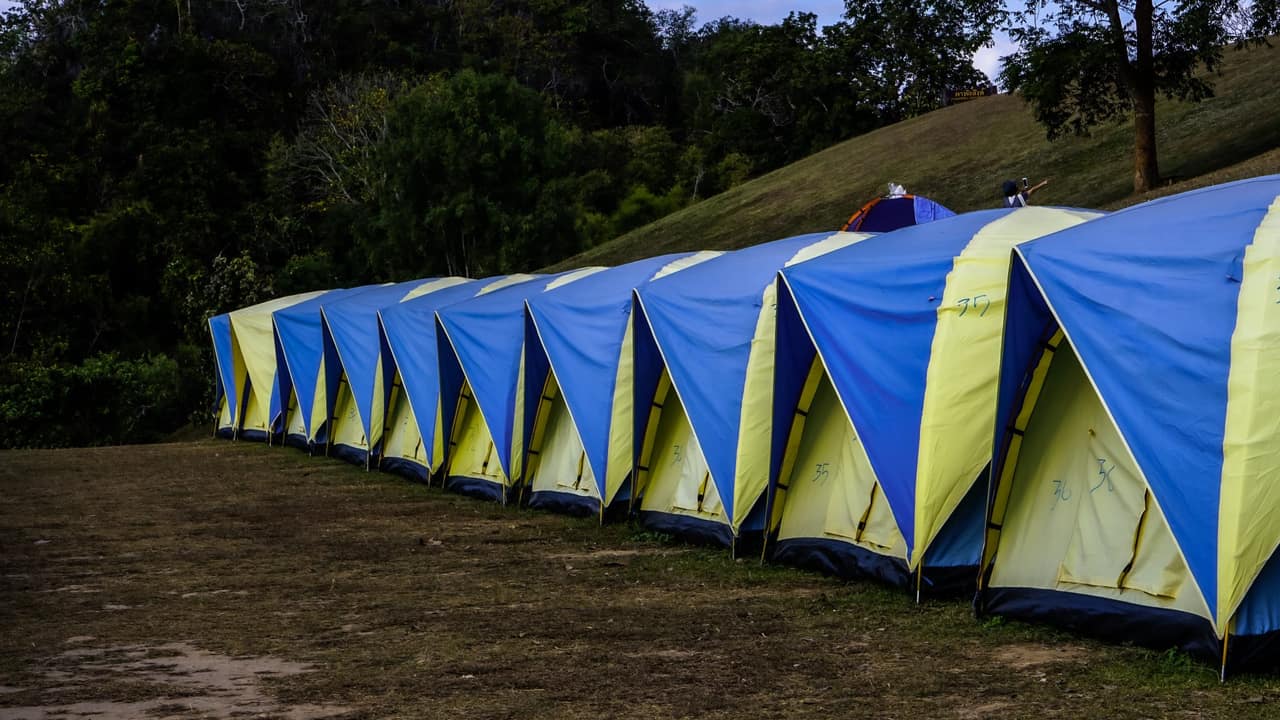
A large dome tent pitched on flat ground at a family campsite

The short answer

The Coleman Skydome 6-Person is the pick for most families: about 100 square feet of floor, a pitch one adult can finish in five minutes, and a rainfly that reaches close to the ground. If you want full standing room for a week-long trip, the Eureka Copper Canyon LX 6 is the better buy.

Trail & Terminal earns a commission when you buy through our Amazon links, at no extra cost to you. It does not change which products we pick -- see our affiliate disclosure and selection method.

Our picks at a glance

Best family camping tents -- ranked picks
#ProductBest forKey specPrice
1Coleman Skydome 6-Person TentThe sensible default. Pre-attached pole hubs, a five-minute pitch, and enough floor for four people plus the gear that comes with them.most families, most weekends~10 x 10 ft floor, 72 in peak height
2CORE 9 Person Instant Cabin TentThe poles stay attached and the frame unfolds like an accordion. Up in about a minute, with near-vertical walls and a room divider.the fastest possible setup14 x 9 ft floor, 78 in peak height
3Eureka Copper Canyon LX 6Straight walls and a seven-foot ceiling. The tent that stops feeling like a tent on day four of a week-long trip.standing room and long trips10 x 10 ft floor, 84 in peak height
4Coleman WeatherMaster 6-Person Tent with Screen RoomA 6-person sleeping area with a full screen room on the front. The screen room is the reason to buy it.rain, bugs and somewhere to sit~11 x 9 ft sleeping area plus screen room
5Kodiak Canvas Flex-Bow Deluxe 8-PersonHydra-Shield duck canvas on a steel flex-bow frame. Heavy, expensive, and the last family tent most buyers ever purchase.cold weather and tents that outlive the car10 x 14 ft floor, 78 in peak height

Ranked by the criteria in how we pick. We hold no live prices, so every button goes straight to the current Amazon listing.

Every pick, in full

The picks

1

Best for most families, most weekends

Coleman Skydome 6-Person Tent

The sensible default. Pre-attached pole hubs, a five-minute pitch, and enough floor for four people plus the gear that comes with them.

This is the tent to buy if you have not bought one before. The pitch is the headline feature and it deserves to be: pole hubs are pre-attached, there are no sleeves to thread, and the whole thing goes up in about five minutes once you have done it twice. For a family arriving at a campsite at dusk with tired children, that is worth more than any spec on the box.

The dome geometry is the quieter reason to pick it. A dome sheds crosswind instead of catching it, which matters because the cabin-style tents that look roomier in the store are the ones that flex alarmingly in a gust. Floor area is around 100 square feet -- two queen pads with a walkway, or four pads and a gear pile. For honest capacity math, see what size tent do I need.

Specs

  • Roughly 100 square feet of floor area
  • 72-inch center height -- most adults can stand under the peak
  • Pre-attached pole hubs, no sleeves to thread
  • Full-coverage fly with taped seams and welded floor corners

Good for

  • Pitches genuinely fast, and one adult can do it alone while everyone else unpacks
  • The dome shape sheds wind far better than a cabin tent of the same capacity
  • The fly reaches close to the ground, which is the best single predictor of a dry night

Bad at

  • Six-person rating means four people comfortably -- plan on two fewer than the label
  • Standing room exists only in the middle; the walls slope in hard
  • The included stakes are thin and bend in packed ground, so budget for better ones
2

Best for the fastest possible setup

CORE 9 Person Instant Cabin Tent

The poles stay attached and the frame unfolds like an accordion. Up in about a minute, with near-vertical walls and a room divider.

The instant frame is not marketing. Pitching means unfolding the frame, extending four telescoping legs until they click, and staking out. It is the difference between a job and a chore, and with small children underfoot that difference shapes the whole first evening.

The trade is weather coverage. The fly on instant cabin tents covers the roof rather than the full tent, so wind-driven rain reaches the mesh upper walls. In fair weather that mesh is the best thing about the tent -- it ventilates far better than a fully enclosed dome. In three days of rain it is a liability, and the fix is a cheap tarp rigged above the roof. Buy it for summer trips in dry regions, not shoulder season in the mountains.

Specs

  • Roughly 126 square feet of floor area
  • 78-inch peak height with near-vertical walls
  • Instant frame -- poles pre-attached, unfolds and extends
  • Removable room divider and a ground-level vent

Good for

  • A genuine one-minute pitch, which no hubbed dome tent can match
  • Near-vertical walls mean the floor area is usable right out to the edges
  • The divider makes it two rooms, which is the real reason families size up to nine

Bad at

  • The partial fly leaves mesh upper walls exposed -- in driving rain you will want a tarp overhead
  • Heavy and bulky folded; this is a car camping tent and nothing else
  • Instant frames have more hinges to fail, and a cracked hinge is not a field repair
3

Best for standing room and long trips

Eureka Copper Canyon LX 6

Straight walls and a seven-foot ceiling. The tent that stops feeling like a tent on day four of a week-long trip.

This is the family tent people buy second, after a week in a dome tent taught them what sloped walls cost. A seven-foot ceiling and straight walls change how the space works: two cots fit along one wall with a path between them, children get dressed standing up, and a rainy afternoon inside is tolerable rather than grim.

What you give up is wind performance. Vertical walls are flat surfaces and a gust pushes on all of them, so this tent needs its guy lines in a way the Skydome does not. Choose it for established campgrounds with some tree shelter and for trips measured in days rather than nights. If you also want a sheltered place to cook and sit, the WeatherMaster below is the other direction to go.

Specs

  • 100 square feet with near-vertical walls throughout
  • 84-inch peak height -- full standing room for almost anyone
  • Steel and fiberglass frame, freestanding pitch
  • Large zippered windows on all four sides plus a mesh roof panel

Good for

  • You can stand up and dress, which is the biggest quality-of-life gain in a family tent
  • Usable floor right out to the walls, so a cot or air mattress fits without wasting a corner
  • Built for repeat seasons -- the frame is heavier and stiffer than the budget competition

Bad at

  • Catches wind badly; in an exposed site it needs every guy line staked out
  • The fly does not extend far down the walls, so windows have to be shut before rain
  • Heavy, and the packed bundle takes real trunk space
4

Best for rain, bugs and somewhere to sit

Coleman WeatherMaster 6-Person Tent with Screen Room

A 6-person sleeping area with a full screen room on the front. The screen room is the reason to buy it.

The screen room is not an accessory, it is the product. On a rainy or buggy trip the thing a family runs out of first is somewhere to be that is neither a sleeping bag nor a downpour, and this tent builds that space in instead of asking you to carry a separate canopy.

Measure your site before you buy. The sleeping area plus screen room is a long footprint, and a lot of campground tent pads are sized for a 10-by-10 dome. Check the pad dimensions on your reservation, and if the number is not published, assume it is small. The rest of a wet-weather kit matters as much as the tent -- see what to pack for camping.

Specs

  • Roughly 99 square feet of enclosed sleeping area
  • Attached screen room adds about 60 square feet of covered space
  • 68-inch peak height in the sleeping area
  • Hinged door and a weatherproofed floor with welded corners

Good for

  • The screen room is dry, bug-free sitting space -- the thing families actually run out of
  • Keeps wet boots, coolers and the stove out of the sleeping area
  • Coleman's weather sealing on the main body is genuinely good for the money

Bad at

  • The combined footprint is long, and plenty of campground pads will not take it
  • Two structures to pitch, so setup takes noticeably longer than a plain dome
  • The screen room floor is not a sleeping surface -- do not count it toward capacity
5

Best for cold weather and tents that outlive the car

Kodiak Canvas Flex-Bow Deluxe 8-Person

Hydra-Shield duck canvas on a steel flex-bow frame. Heavy, expensive, and the last family tent most buyers ever purchase.

Canvas solves the problem nylon cannot. A nylon tent is a vapor barrier, so six people breathing inside one on a cold night produce condensation that rains back down at dawn. Canvas passes moisture through, which is why a canvas tent in October feels dry when a dome tent feels like a cave. On top of that it insulates: warmer at night, much cooler in afternoon sun.

The costs are real and worth stating plainly. It weighs around 70 pounds, it takes two people to pitch, and it has to be weathered -- wetted down once so the cotton fibers swell and seal the stitch holes -- before you trust it in rain. If you camp two weekends a year, buy the Skydome. If you camp monthly, in cold weather, and want to stop replacing tents, this is the one. Pair it with the numbers in what R-value sleeping pad do I need.

Specs

  • 140 square feet of floor on a 10-by-14-foot footprint
  • 10 oz Hydra-Shield duck canvas with a 16 oz reinforced vinyl floor
  • Steel flex-bow frame with 1-inch steel uprights
  • Four large windows and two D-shaped doors

Good for

  • Canvas breathes, so interior condensation is dramatically lower than in any nylon tent
  • Warmer on cold nights and markedly cooler in afternoon sun than a synthetic tent
  • With basic care this is a decade-plus tent, not a three-season purchase

Bad at

  • Around 70 pounds packed -- two people to carry it, and a real chunk of the trunk
  • Needs weathering before its first hard rain, which catches new owners out
  • Costs several times what the Coleman does, and most families do not camp enough to justify it

01 — Compare

The picks at a glance

Floor area and peak height decide how the tent feels to live in. Pitch time decides whether you enjoy the first hour of the trip. Both are printed on the box; only one of them is usually honest.

PickFloor areaPeak heightPitchBest for
Coleman Skydome 6~100 sq ft72 in~5 minMost families
CORE 9 Instant Cabin~126 sq ft78 in~1 minFastest setup
Eureka Copper Canyon LX 6100 sq ft84 in~10 minStanding room, long trips
Coleman WeatherMaster 6~99 sq ft + screen room68 in~15 minRain and bugs
Kodiak Flex-Bow Deluxe 8140 sq ft78 in~10 min, two peopleCold weather, long ownership

02 — Sizing

Why the person rating on the box is wrong

A tent's person rating is the number of standard sleeping pads that fit edge to edge on the floor with nothing else inside. No luggage, no boots, no space to walk, no room for a dog. It is a packing density figure, not a comfort figure.

The working rule for families is to subtract two. A six-person tent is a comfortable four-person tent; an eight-person tent sleeps six with gear. If you use air mattresses rather than pads, subtract two more -- a queen air mattress occupies far more floor than two pads do, and it needs clearance at the sides to inflate.

Peak height is the spec that most changes the experience and the one nobody checks. Below about 68 inches you are kneeling to dress. At 72 inches an average adult can stand in the middle only. At 84 inches with straight walls you can stand anywhere, which across a seven-day trip is the difference between a shelter and a room.

  • Count pads, not people: measure your actual sleeping pads or mattresses and lay those numbers against the stated floor dimensions.
  • Add a gear corner: budget roughly 10 square feet for duffels, boots and a lantern, more if the weather turns.
  • Check the campground pad size before buying anything with a screen room or a 14-foot footprint.
  • If anyone in the family is over six feet, check the floor's short dimension -- several 6-person tents are 100 inches, not 120.

03 — Weather

What actually keeps a family tent dry

Rain performance in this category comes down to three things, and the marketing copy mentions none of them.

How far down the fly reaches

A fly that covers only the roof leaves mesh walls exposed, and wind-driven rain goes straight through mesh. Full-coverage flies that reach within a few inches of the ground are the strongest single predictor of a dry night. That is the main reason the Skydome outperforms instant cabin tents in bad weather despite being the cheaper tent.

Whether the floor is a bathtub

A bathtub floor is one piece of coated fabric that curves several inches up the walls, so no seam sits on wet ground. Welded rather than stitched corners are better still. If a tent's floor seams run along the ground line, water will find them in a long rain regardless of the hydrostatic head rating.

Whether you can ventilate in the rain

Six people breathing in a closed tent put out a surprising amount of water vapor, and if the only vents are windows you have to shut in rain, it condenses on the ceiling and drips. Look for ground-level vents and a mesh roof panel under a solid fly. This is the specific problem canvas does not have. For still, humid nights, see best camping fans.

04 — Honest limits

What we did not test, and what that means

We have not pitched these five tents side by side and we have not run a rain-tower test on any of them. Floor dimensions, peak heights, fabric weights and frame materials above come from each manufacturer's published specifications. Pitch times are the figures each brand states, cross-checked against the consistent reports of owners, and written as approximations because they depend heavily on practice.

We publish no prices here. Family tents are discounted hard in late summer and marked back up in spring, so any figure we printed would be wrong within weeks. Every buy link goes to a live Amazon search for that specific model, where the current price and stock status are visible. Our selection criteria are at how we pick.

Questions

Frequently asked

What size tent does a family of four need?
A 6-person tent, around 100 square feet. A 4-person tent fits four pads and nothing else -- no luggage, no walking space, no dog. Subtract two from the person rating and you get the realistic comfortable capacity.
Are instant tents worth it?
For summer camping in dry regions, yes -- a one-minute pitch is a real benefit. In sustained rain they are weaker, because the fly covers the roof rather than the whole tent and leaves mesh upper walls exposed.
Is a cabin tent or a dome tent better for families?
Cabin tents give usable standing room and better floor use; dome tents handle wind far better and pitch faster. Choose cabin for long trips in sheltered campgrounds, dome for exposed sites and shorter stays.
How many square feet per person in a camping tent?
Plan on 20 to 25 square feet per person for comfort, plus about 10 square feet for shared gear. That puts a family of four at 90 to 110 square feet, which is a 6-person tent.
Do I need to seam seal a new family tent?
Most modern nylon tents ship with taped seams and do not need it. Canvas is the exception: it needs weathering, meaning a thorough soaking so the cotton swells and closes the needle holes, before its first real rain.

Back up a level

This page sits in Camp -- campsite kit: shelter, sleep, kitchen, light and power.

Read next