Skip to content
Trail & Terminal

01 — Camp / Roundup

Best camping gear for kids

Children do not need miniature versions of adult gear. They need the two or three items that decide whether the night works, built to be dropped.

By Brijon M.Last updated How we pick
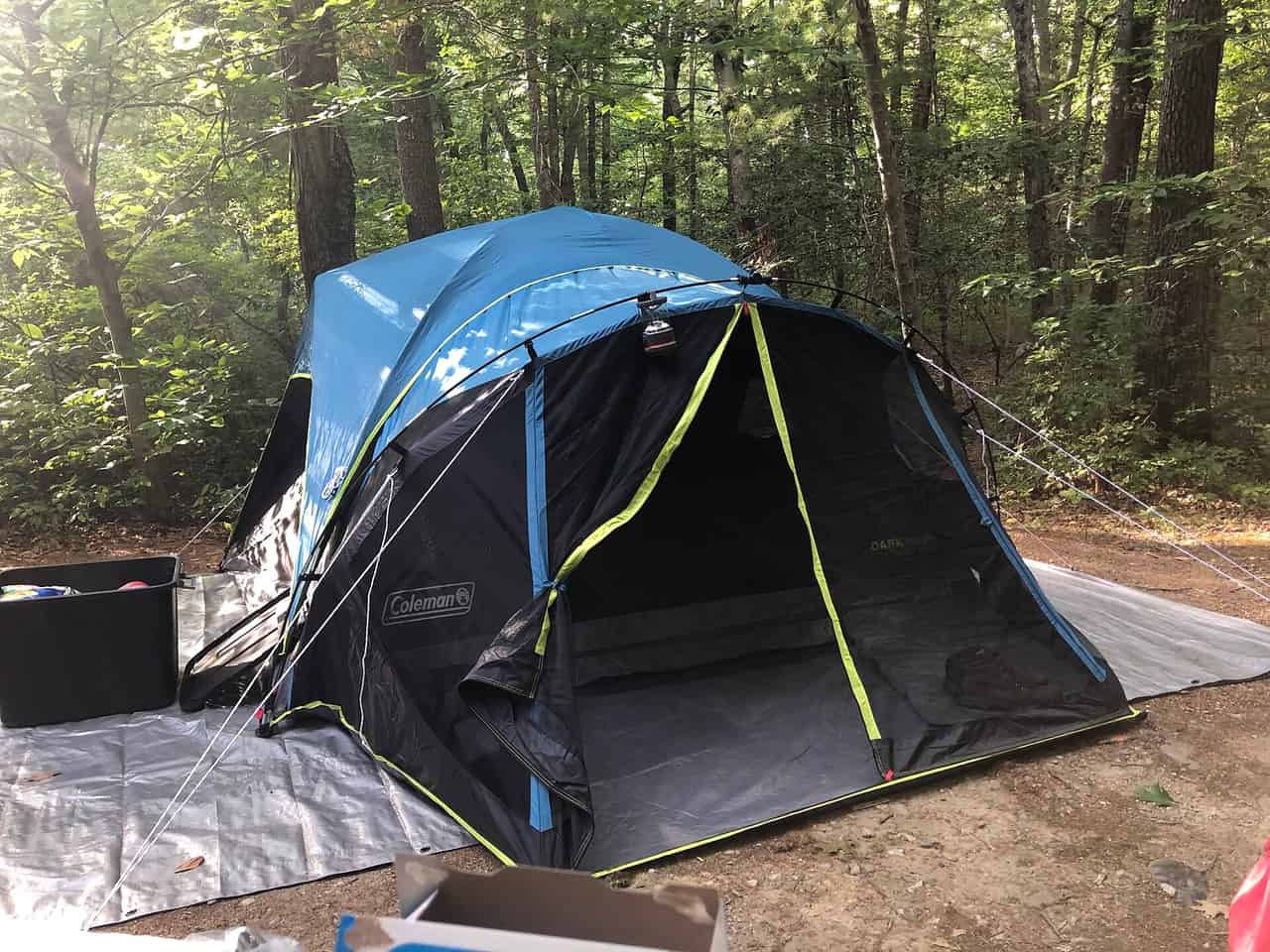
A basic camping setup with a tent, chair and stove at a campsite

The short answer

Start with the Coleman Kids 50 sleeping bag and a Therm-a-Rest Z Lite Sol pad underneath it. A cold child is the single most common reason a family camping trip ends early, and insulation from the ground matters more than the bag rating on the label.

Trail & Terminal earns a commission when you buy through our Amazon links, at no extra cost to you. It does not change which products we pick -- see our affiliate disclosure and selection method.

Our picks at a glance

Best camping gear for kids -- ranked picks
#ProductBest forKey specPrice
1Coleman Kids 50 Sleeping BagA child-length bag with a comfort rating in a range kids actually camp in, cheap enough that outgrowing it is not a disaster.the first thing to buy50F comfort, kid length
2Therm-a-Rest Z Lite SolClosed-cell foam. It cannot puncture, cannot deflate at 2am, and a child can drag it across gravel without consequence.a pad a child cannot destroyR-value 2.0, foam
3Osprey Jet 12 Kids' DaypackA real suspension system scaled to a short torso, with Osprey's warranty behind it. The one place where buying child-specific genuinely buys something.a pack sized to a child's back12 liters, kid torso
4Petzl Tikkina HeadlampTwo buttons, no modes to get lost in, and bright enough to be genuinely useful rather than a toy.the thing they will not put downThree AAA batteries
5CamelBak eddy+ Kids Water BottleA bite valve and straw, which in practice gets far more water into a child than a screw cap does.water they will actually drink14 oz, bite valve
6Coleman Kids Quad ChairA scaled-down quad-fold chair. Unremarkable, and the thing that stops a child standing in the fire ring out of boredom.a seat that is theirsKid-height quad fold

Ranked by the criteria in how we pick. We hold no live prices, so every button goes straight to the current Amazon listing.

Every pick, in full

The picks

1

Best for the first thing to buy

Coleman Kids 50 Sleeping Bag

A child-length bag with a comfort rating in a range kids actually camp in, cheap enough that outgrowing it is not a disaster.

The reason to buy a kid-length bag rather than hand down an adult one is physics, not marketing. A sleeping bag warms you by trapping air that your body heats; an adult bag around a small child has two extra feet of air at the bottom that never gets warm, and the child spends the night heating a space they are not in.

This is the first purchase in the category and the one that most often fixes a miserable night. Pair it with a pad -- the bag alone does almost nothing against cold ground. The adult equivalents are in <a href="/trail/best-sleeping-bags">best sleeping bags</a>, and the reasoning behind fill choice is in <a href="/trail/down-vs-synthetic-sleeping-bag">down vs synthetic</a>.

Specs

  • Rated to roughly 50F comfort
  • Cut short so there is less dead air to heat
  • Machine washable polyester shell and fill
  • Roll-up carry sack included

Good for

  • Short length means a child's body heat fills the bag instead of fighting it
  • Washable after the inevitable spill
  • Cheap enough to replace at the next growth spurt

Bad at

  • 50F is a summer-and-shoulder-season rating, not a cold-weather bag
  • Synthetic fill, so it packs large -- fine in a car, hopeless in a daypack
  • Zipper is light-duty and snags on the shell if hurried
2

Best for a pad a child cannot destroy

Therm-a-Rest Z Lite Sol

Closed-cell foam. It cannot puncture, cannot deflate at 2am, and a child can drag it across gravel without consequence.

Give a child an inflatable pad and you will spend a weekend re-inflating it. Foam removes the entire failure mode. It is less comfortable than an air pad, and on a child who weighs forty pounds that difference is far smaller than it is for an adult.

The number that matters here is R-value, which measures resistance to heat loss into the ground and is the single most misunderstood spec in camping. <a href="/camp/what-r-value-sleeping-pad-do-i-need">What R-value sleeping pad do I need</a> works through it, and <a href="/camp/best-sleeping-pads">best sleeping pads</a> covers the adult options.

Specs

  • Closed-cell foam, accordion fold
  • R-value around 2.0
  • Weighs about 14 oz in the regular length
  • Reflective coating on one face

Good for

  • Nothing to inflate, nothing to puncture, nothing to fail
  • Doubles as a sit pad, a changing mat and a seat at the picnic table
  • Cheap, and a child-length section can be cut from a regular one

Bad at

  • Thin and firm -- comfort is noticeably worse than an inflatable pad
  • Bulky folded; it rides on the outside of a pack, not inside
  • R-value 2.0 is a three-season figure, not a winter one
3

Best for a pack sized to a child's back

Osprey Jet 12 Kids' Daypack

A real suspension system scaled to a short torso, with Osprey's warranty behind it. The one place where buying child-specific genuinely buys something.

A child carrying their own water, snack and layer is a child who complains less, and a school backpack does not do this well: the straps are set for a longer torso, so the weight hangs off the shoulders instead of riding the hips.

Keep the load light regardless of the pack. The usual guidance is to stay under about ten percent of body weight for a child, which on a fifty-pound seven-year-old is five pounds -- water, a snack and a fleece, and nothing else. Adult sizing is covered in <a href="/trail/best-hiking-daypacks">best hiking daypacks</a>.

Specs

  • 12 liter capacity
  • Torso length sized for roughly ages 6 to 10
  • Hydration sleeve
  • Covered by Osprey's All Mighty Guarantee

Good for

  • Hip belt actually sits on a child's hips rather than their ribs
  • Light enough empty that the pack is not most of the load
  • Repaired or replaced free under warranty, which outlasts the child

Bad at

  • Costs several times what a school backpack does
  • 12 liters is outgrown quickly -- expect two or three seasons
  • No rain cover included at this size
4

Best for the thing they will not put down

Petzl Tikkina Headlamp

Two buttons, no modes to get lost in, and bright enough to be genuinely useful rather than a toy.

Buy one per child and accept that it will be worn at the dinner table. A headlamp is the single piece of camping gear children engage with most, and a cheap novelty one with a blue-white beam and a fiddly switch sours the whole experience.

The Tikkina sits at the bottom of a serious range, which means it inherits the build quality without the price. Skip the three-dollar multipack lamps entirely. Full options in <a href="/camp/best-headlamps">best headlamps</a>, and lantern alternatives in <a href="/camp/best-camping-lanterns">best camping lanterns</a>.

Specs

  • Runs on three AAA cells or Petzl's rechargeable Core
  • Around 300 lumens on the top setting
  • Single button, three brightness levels
  • Washable headband

Good for

  • Simple enough that a six-year-old operates it without help
  • Made by a climbing-hardware company, so it survives being dropped
  • AAA cells mean a dead lamp is fixed from the glovebox, not from a charger

Bad at

  • No red night-vision mode at this tier
  • Not rechargeable out of the box -- the Core cell is sold separately
  • Beam is a flood, so it is poor for picking out a trail marker at distance
5

Best for water they will actually drink

CamelBak eddy+ Kids Water Bottle

A bite valve and straw, which in practice gets far more water into a child than a screw cap does.

Dehydration is behind a surprising share of the meltdowns that end a day hike, and the fix is almost always mechanical rather than motivational: make drinking require no decision. A bite valve does that; a screw cap a child has to ask an adult to open does not.

Buy the replacement valve pack at the same time. Insulated adult bottles are in <a href="/trail/best-water-bottles-for-hiking">best water bottles for hiking</a>, and the brand question is settled in <a href="/trail/hydro-flask-vs-yeti-vs-stanley">Hydro Flask vs Yeti vs Stanley</a>.

Specs

  • 14 oz capacity
  • Bite-valve straw lid
  • Dishwasher safe, BPA free
  • Replaceable bite valve and straw

Good for

  • Kids drink from a straw without being told to
  • Spill-resistant when knocked over in a tent
  • Parts are sold separately, so a chewed valve is a dollar, not a new bottle

Bad at

  • The straw and valve need real cleaning or they grow things
  • Uninsulated -- water is ambient temperature within an hour
  • 14 oz is small for a full day out and needs refilling
6

Best for a seat that is theirs

Coleman Kids Quad Chair

A scaled-down quad-fold chair. Unremarkable, and the thing that stops a child standing in the fire ring out of boredom.

This is the least technical item here and the one families most often report back on. A child with their own chair sits in it. A child without one stands, circles the fire, and gets told off.

It is a two-or-three-season purchase, so buy accordingly -- do not spend on a premium packable version. The adult comparison, including where packed size is worth paying for, is in <a href="/camp/best-camping-chairs">best camping chairs</a>.

Specs

  • Steel quad-fold frame, child height
  • Cup holder in the armrest
  • Carry bag with shoulder strap
  • Supports roughly 100 lb

Good for

  • Low seat height means feet reach the ground, which is why they stay in it
  • Folds small enough for a child to carry their own chair to the fire
  • Cheap enough that two is not a decision

Bad at

  • Fabric tears at the frame corners within a couple of seasons
  • Outgrown around age ten
  • Bulky folded compared with a packable adult chair

01 — The brief

What changes when the camper is a child

Almost every list of kids' camping gear is an adult list with smaller numbers. That is the wrong model. Children lose heat faster than adults because they have more surface area per unit of body mass, they cannot reliably tell you they are cold until they are miserable, and they treat equipment as something to be climbed on.

Those three facts set the whole priority order. Insulation first, because a cold child ends the trip. Durability second, because a failed air pad at midnight is a failed night for everyone. Everything else -- the chair, the bottle, the headlamp -- is about keeping a child occupied and self-sufficient, which is worth far more than its price suggests.

The two categories where buying child-sized is wasted money are tents and cookware. A child does not need their own tent; they need to be in yours, where you can hear them. Tent sizing is worked through in what size tent do I need.

02 — Compare

The picks at a glance

Six items, ranked by how much difference each makes to whether the trip works. The first two are the ones to buy if you buy nothing else.

PickWhat it is forKey numberRough life
Coleman Kids 50 Sleeping BagWarmth50F comfortUntil outgrown, 2-3 yrs
Therm-a-Rest Z Lite SolGround insulationR-value 2.0Effectively indefinite
Osprey Jet 12Carrying their own load12 L2-3 seasons, warrantied
Petzl TikkinaLight~300 lumensYears
CamelBak eddy+ KidsHydration14 ozYears, valve is consumable
Coleman Kids Quad ChairSomewhere to sit~100 lb limit2-3 seasons

03 — The one that matters

How to keep a child warm enough to sleep

If you fix one thing, fix this. The order of operations is ground first, then bag, then clothing -- which is the reverse of what most people try.

  1. 01Put a pad under every child, every night, even in summer. Ground conducts heat away far faster than air does.
  2. 02Dry clothes for sleeping, always. Clothes worn during the day hold moisture you cannot feel, and that moisture spends the night evaporating off a child.
  3. 03A hat. A disproportionate amount of a child's heat loss is from the head, and a thin beanie costs nothing.
  4. 04No cotton next to the skin if you can avoid it -- it holds sweat against the body and stays cold.
  5. 05A hot water bottle or an insulated flask of warm water in the foot of the bag an hour before bed, if the night is marginal.
  6. 06Check them before you go to sleep yourself. A child who has wriggled half out of a bag will not wake up and fix it.

04 — Skip these

What not to buy

The kids' camping aisle is full of products that exist because they photograph well on a box, not because anyone needed them.

A separate kids' tent

Children sleeping in their own tent is a scenario parents imagine and almost never execute. A pop-up play tent is not weatherproof and a real small tent is money spent on a shelter nobody wants to use. Put everyone in one tent that is a size larger than the head count suggests -- the reasoning is in what size tent do I need.

Kid-branded cookware and multi-tools

A child-sized mess kit is an adult mess kit with a cartoon on it, and the plastic is usually worse. Use the family cookset and give them a job within it. Options in best camping cookware.

Cheap multipack headlamps and lanterns

The three-dollar lamps have a blue-white beam, a switch that cycles through a strobe mode, and a battery door that pops open when dropped. They sour the piece of gear children like most. Buy one decent lamp each instead.

05 — Budget

A sensible order to buy in

If you are starting from nothing, the first two items on this page cost less than a single mid-range tent and fix the most common failure. Build out from there as the trips get longer.

For families filling in the adult half of the kit at the same time, best camping gear for beginners is the parallel list, and best camping gear under $50 covers the categories where fifty dollars genuinely buys the top of the market.

Questions

Frequently asked

What camping gear do kids actually need?
A sleeping bag cut to their length, a pad under it, a light of their own, and water they can drink without asking. Everything beyond that is comfort. Insulation from the ground is the item most often missing from a family's kit.
What temperature sleeping bag do kids need for camping?
For summer and shoulder-season camping in most of the US, a 50F comfort rating plus a pad is enough. Ratings assume a pad underneath -- without one, the number on the label does not apply at all.
Can a kid use an adult sleeping bag?
It works but it is colder. An adult bag leaves two feet of air a child's body never warms. If you are using one, stuff the foot of the bag with spare clothing to close the dead space.
How much weight should a child carry hiking?
A common guideline is up to about ten percent of body weight. On a fifty-pound child that is five pounds, which in practice is water, a snack and a layer. A pack any heavier gets carried by an adult within a mile.
Do kids need their own tent for camping?
No, and it usually goes unused. A tent one size larger than your head count costs less than a second tent, keeps everyone within earshot, and gives you somewhere dry to put gear.

Back up a level

This page sits in Camp -- campsite kit: shelter, sleep, kitchen, light and power.

Read next