Skip to content
Trail & Terminal

02 — Trail / Guide

How to choose trekking poles

Four choices decide whether a pair of poles helps or annoys you: length, lock type, material, and grip. Three of them are settled in a minute.

By Brijon M.Last updated How we pick
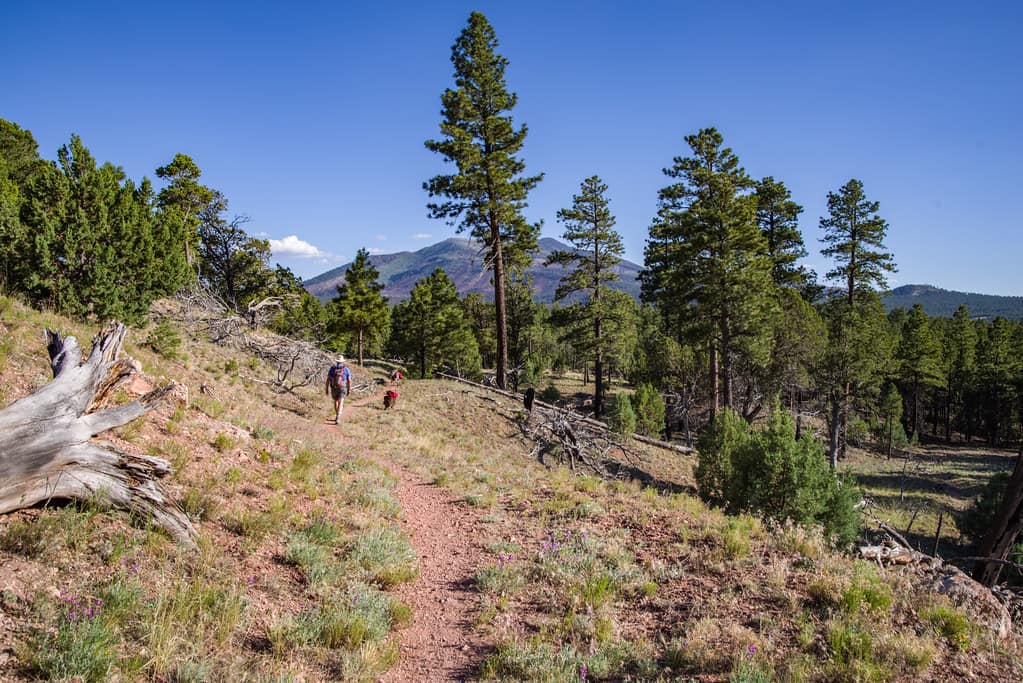
A pair of trekking poles leaning against a rock on a mountain trail

The short answer

Set length so your elbow sits at 90 degrees with the tip on the ground -- roughly your height multiplied by 0.68. Choose flick locks over twist locks, aluminum unless weight is critical, and cork grips if you sweat. Length is the one that matters most.

01 — The formula

What length trekking poles do I need?

Stand on flat ground, hold the pole with the tip beside your foot, and your elbow should sit at a right angle with the forearm parallel to the ground. That is the correct length, and it is the only test you need.

As a starting figure, multiply your height in centimeters by about 0.68. Someone 175 cm (5 ft 9 in) lands around 120 cm; someone 165 cm (5 ft 5 in) lands around 112 cm; someone 185 cm (6 ft 1 in) lands around 125 cm. Then check the elbow angle, because torso and arm proportions vary more than the formula allows for.

Almost all poles adjust, so the number you want is a range that includes your figure comfortably in the middle. A pole adjusting from 100 to 135 cm suits a far wider span of people than one adjusting from 115 to 135 cm, and the extra range is what lets you change length on steep ground.

Your heightStarting pole lengthAdjustment range to look for
Under 5 ft 1 in100 cm90 - 120 cm
5 ft 1 in - 5 ft 7 in110 cm100 - 125 cm
5 ft 8 in - 5 ft 11 in120 cm105 - 135 cm
6 ft and over125 - 130 cm110 - 140 cm

02 — Technique

Adjust on hills -- this is why poles adjust

The adjustment is not a one-time fitting. On a sustained climb, shorten both poles by about 5 to 10 cm so you are not reaching upward with each plant. On a sustained descent, lengthen them by the same amount so you are not stooping to reach the ground below you.

Descending is where poles earn their keep. Published research on trekking pole use has found meaningful reductions in loading at the knee on downhill walking, which is the load that causes most of the joint pain people take poles for in the first place. Getting the downhill length right is therefore the single highest-value adjustment.

On a traverse across a slope, set the uphill pole shorter than the downhill one. Few people bother and it makes a noticeable difference on long sidehill sections.

03 — Mechanism

Lock type matters more than material

The lock is the part that fails and the part you use constantly, so it deserves the attention usually spent on carbon versus aluminum.

  • External lever locks, often called flick locks, clamp the shaft from outside. They work with cold or gloved hands, you can see whether they are closed, and the clamping force is adjustable with a screw when they loosen. This is what to buy.
  • Internal twist locks expand a plug inside the shaft. They are lighter and cheaper and they slip -- usually under load, usually on a descent, usually when wet. Avoid.
  • Folding or tent-pole-style poles use an internal cord and assemble in seconds. They pack far shorter, which is their whole advantage, and they adjust over a much smaller range.
  • Fixed-length poles exist for trail running and are a bad idea for hiking, because you cannot adjust for gradient.
  • Check that the lock is serviceable. A lever lock with an adjustment screw is repairable in the field with a multi-tool; a sealed mechanism is not.

04 — Materials

Carbon or aluminum, and the grip question

Carbon fiber poles are lighter -- typically a few ounces per pair -- and damp vibration better. Aluminum poles are heavier, cheaper and fail differently: an overloaded aluminum pole bends and still works, while an overloaded carbon pole can snap without warning. On technical ground where a pole may get wedged in rock, that difference is the argument for aluminum.

Most people should buy aluminum. The weight saving from carbon is real and small, and it costs a lot per ounce. Buy carbon if you are counting grams for long-distance walking, or if you have a shoulder or wrist issue where a few ounces per swing genuinely accumulates.

Grips come in three materials. Cork molds to your hand over time and handles sweat best, which makes it the right choice for warm climates and long days. EVA foam is soft, cheap and absorbs sweat but degrades faster. Rubber insulates well in cold and wet and gets slippery in heat, so it suits winter and shoulder season.

Look for an extended grip -- a section of foam below the main grip. On steep ground you can choke down onto it without stopping to adjust the length, which is the most useful feature on this list after the lock type.

Straps are not a handle

The strap carries the load, not your grip. Put your hand up through the loop from below, then down onto the grip, so the strap passes across your palm. Done correctly you can hold the pole loosely and still push hard through the strap, which is what stops your hands cramping after six hours.

Tips, baskets and what gets you a fine

Carbide tips grip rock and ice; rubber tip protectors go over them for pavement, slickrock and anywhere a metal tip would scar the surface. Small trekking baskets stop the tip sinking in mud; large snow baskets are for powder. Several parks ask for rubber tips on slickrock, so carry them.

One pole or two?

Two. A single pole helps with balance and does little for load, and it puts an asymmetric load into your body over a long day. The exception is carrying something in one hand, where a single pole is better than none. The field is in best trekking poles.

05 — Honest limits

When poles are worth it and when they are not

Poles are clearly worth carrying on sustained descents, on loose or uneven ground, on stream crossings, and with a heavy pack. In all four the benefit is physical rather than psychological: less load through the knees, a wider base of support, and two extra points of contact when a foot slips.

They are less useful on flat, well-graded trail, where they mostly occupy your hands. Many people carry them collapsed on easy ground and deploy them for the descent, which is a perfectly reasonable way to use a pair.

They are a genuine nuisance for scrambling, where you need your hands, and on any trail with ladders or chains. Poles that fold short and stow on a pack are worth more in that terrain than poles that are a few ounces lighter. If you are building a day kit around them, day hike checklist has the rest.

What to buy

The gear we would buy for this

Trail & Terminal earns a commission when you buy through our Amazon links, at no extra cost to you. It does not change which products we pick -- see our affiliate disclosure and selection method.

1

Best for the default pair for most hikers

Black Diamond Trail Ergo Cork

Aluminum, flick locks, cork grips angled forward 15 degrees. Nothing clever, everything right.

This is the pole to buy if you do not want to think about it further. Aluminum shafts bend rather than snap, the lock type is the one that works, and the grip material is the one that still works at hour six in July.

The extended grip below the main one is the detail worth noticing: on a short steep pitch you choke down onto the foam instead of stopping to shorten the pole. Compare against the rest of the field in <a href="/trail/best-trekking-poles">best trekking poles</a>.

Specs

  • Aluminum shafts, telescoping
  • FlickLock Pro external lever locks
  • Cork grips with a 15 degree forward angle
  • Extended foam grip below the main grip

Good for

  • Lever locks adjust with gloves on and are serviceable with a multi-tool
  • Cork handles sweat better than foam over a long day
  • Angled grip keeps the wrist neutral on descents

Bad at

  • Heavier than carbon, by a few ounces per pair
  • Telescoping, so the collapsed length is long for stowing on a pack
  • Cork takes a few trips to mold to your hand
2

Best for packing short and carrying light

Black Diamond Distance Carbon Z

Carbon, folding, and short enough collapsed to disappear into a pack. Fixed-length within each size, which is the trade.

The folding design solves one specific problem very well: a pole you need some of the time and need out of the way the rest of it. If your hiking involves hands-on sections, this is the format.

Measure carefully before ordering, because you are committing to a length. Use the elbow test, not the height formula alone, and size down rather than up if you are between options -- short poles are more useful on climbs than long ones are on descents.

Specs

  • Carbon fiber shafts
  • Z-fold with internal cord, assembles in seconds
  • Collapses to roughly 13 to 16 inches
  • Sold in fixed lengths rather than one adjustable pole

Good for

  • Collapsed size makes them realistic to carry on scrambles
  • Very light, which matters on a long thru-hike
  • Deploys and stows faster than any telescoping pole

Bad at

  • No adjustment for gradient -- you buy a length and keep it
  • Carbon can snap rather than bend if wedged in rock
  • Expensive for what is effectively a fixed-length pole
3

Best for carbon at a budget price

Cascade Mountain Tech Carbon Fiber Poles

Carbon shafts and lever locks for a fraction of the premium price. The accessories are generous and the warranty is thinner.

The honest position on these is that they are a great deal and a shorter-lived one. The shafts are fine; the hardware is where the cost was taken out, and lever mechanisms are what eventually loosen.

For somebody trying poles for the first time, or carrying a spare pair, that tradeoff is clearly worth it. For a pole you want to repair in ten years, it is not. The warranty question across brands is in <a href="/camp/outdoor-gear-brands-worth-buying">outdoor gear brands worth buying</a>.

Specs

  • Carbon fiber shafts, telescoping
  • External lever locks
  • Cork or EVA grips depending on version
  • Ships with multiple tip and basket sets

Good for

  • Carbon weight at close to aluminum pricing
  • Lever locks rather than the twist locks usual at this price
  • Comes with the tips and baskets that premium brands sell separately

Bad at

  • Lock levers and plastic parts are the weak point over years
  • Warranty and spare parts support is nothing like Black Diamond's or LEKI's
  • Carbon at this price means less confidence in a wedged-pole situation
4

Best for a pole you will still own in a decade

LEKI Makalu Lite COR-TEC

Aluminum, external locks, and LEKI's spare-parts ecosystem behind it. The buy-once option.

The argument here is the same one that applies to packs and stoves: a product with a parts catalog has a different lifespan from one without. A pole whose lock can be replaced for a few dollars is a pole you keep.

If you hike often and dislike replacing things, this is the tier. If you hike a few times a year, it is more pole than the use justifies and the first option on this page is the better buy.

Specs

  • Aluminum shafts, telescoping
  • External lever locks
  • COR-TEC cork and rubber grip blend
  • Spare tips, baskets and lock parts widely available

Good for

  • Spare parts availability turns a broken pole into a repair
  • Grip blend handles both sweat and cold better than pure cork or rubber
  • LEKI's locks hold their setting unusually well over years

Bad at

  • Costs noticeably more than functionally similar aluminum poles
  • Heavier than any carbon option
  • Grip shape suits some hands and not others -- try before committing if you can

Questions

Frequently asked

What length trekking poles do I need for my height?
Multiply your height in centimeters by about 0.68 as a starting point, then check it: with the tip on the ground beside your foot, your elbow should be at 90 degrees and your forearm level. Adjust from there.
Should trekking poles be longer or shorter going uphill?
Shorter uphill, by roughly 5 to 10 cm, so you are not reaching up with each plant. Longer downhill by the same amount, so you are not stooping. Descending is where poles do the most work.
Are carbon trekking poles worth it?
Only if you are counting ounces. Carbon saves a few ounces per pair and damps vibration, but it can snap under a sideways load where aluminum bends. For most hikers aluminum is the better buy.
Flick lock or twist lock trekking poles?
Flick locks, every time. External lever locks work with gloves, show you at a glance whether they are closed, and the clamping force can be retightened. Twist locks slip under load, usually on a descent.
Do trekking poles actually help your knees?
On descents, measurably. Published studies have found reduced loading at the knee when poles are used downhill, which is the load behind most of the joint pain people buy poles to address. On flat ground the benefit is small.
Cork, foam or rubber grips?
Cork for warm weather and long days, because it handles sweat and molds to your hand. Rubber for cold and wet, because it insulates. Foam is the cheap middle option and wears out faster than either.

Back up a level

This page sits in Trail -- what you carry on your back: packs, poles, water, warmth.

Read next