Skip to content
Trail & Terminal

06 — Trail Dog / Roundup

Best dog boots for hiking

Almost every dog boot works standing still. The only question that matters is whether it is still on the paw two miles later.

By Brijon M.Last updated How we pick
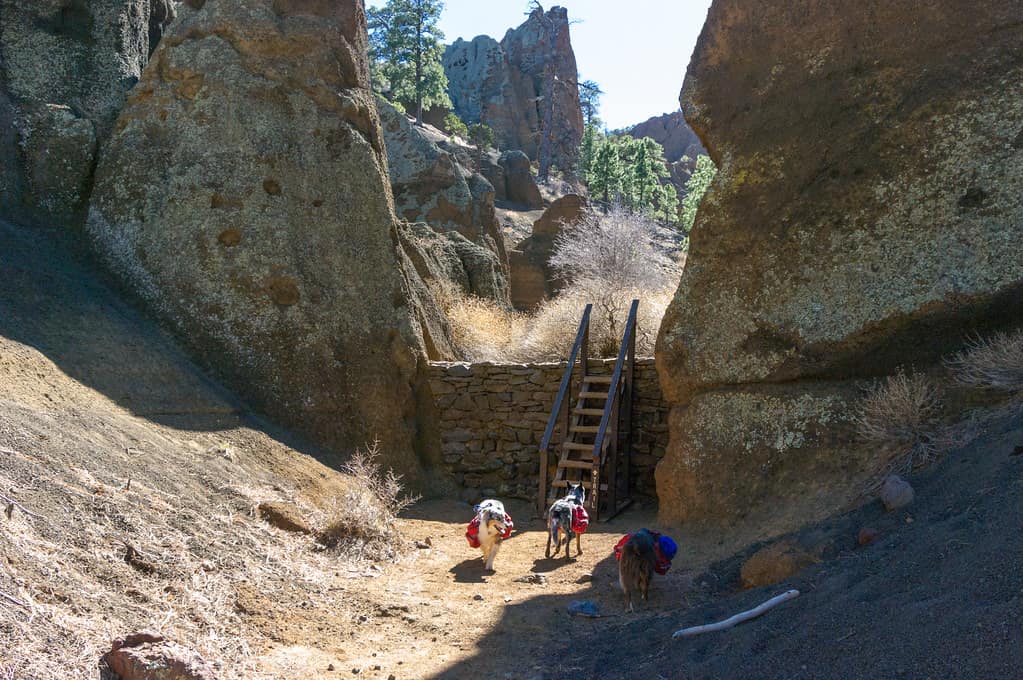
A dog wearing a harness on a rocky mountain trail

The short answer

Ruffwear Grip Trex is the pick for rock and trail: a Vibram sole, a wide opening that clears a dewclaw, and the hook-and-loop closure that most reliably stays shut. Measure the paw while the dog is standing with weight on it -- sizing is the whole game.

Trail & Terminal earns a commission when you buy through our Amazon links, at no extra cost to you. It does not change which products we pick -- see our affiliate disclosure and selection method.

Our picks at a glance

Best dog boots for hiking -- ranked picks
#ProductBest forKey specPrice
1Ruffwear Grip Trex Dog BootsA real Vibram outsole on a breathable mesh upper. The boot that most consistently stays on a moving dog.rock, scree and summer trailVibram sole, mesh upper
2Ruffwear Polar Trex Winter Dog BootsAn insulated, water-resistant upper on a winter outsole. The right answer when the hazard is cold and salt rather than rock.snow, ice and road saltInsulated, water-resistant
3QUMY Dog BootsA rugged rubber sole and two wide straps for a fraction of the premium price. The sizing is the risk.trying boots without committingRubber sole, two straps
4Kurgo Blaze Cross Dog ShoesA shoe rather than a boot -- shorter cuff, more flexible sole, and a noticeably easier introduction for a reluctant dog.a lower-profile boot a dog accepts fasterLow cuff, flexible sole
5Muttluks Original Fleece-Lined BootsLeather sole, fleece lining, no rigid structure. Comfortable, warm, and not a trail boot.a soft boot for sensitive pawsLeather sole, fleece lined

Ranked by the criteria in how we pick. We hold no live prices, so every button goes straight to the current Amazon listing.

Every pick, in full

The picks

1

Best for rock, scree and summer trail

Ruffwear Grip Trex Dog Boots

A real Vibram outsole on a breathable mesh upper. The boot that most consistently stays on a moving dog.

Dog boots are mostly a retention problem rather than a materials problem, and Grip Trex solves retention better than most: a wide opening that does not catch the dewclaw, a strap that cinches above the joint, and a sole stiff enough that the boot keeps its shape rather than rolling off.

The Vibram outsole is the other real difference. On sharp rock and hot granite a soft rubber pad wears through in a season; this one does not. Pair it with the rest of a trail kit from <a href="/trail-dog/best-dog-hiking-gear">best dog hiking gear</a> and a loaded pack from <a href="/trail-dog/best-dog-hiking-backpacks">best dog hiking backpacks</a>.

Specs

  • Vibram outsole with a hiking lug pattern
  • Breathable air-mesh upper
  • Wide opening with a hook-and-loop cinch
  • Sold in pairs so you can mix sizes front and rear

Good for

  • The sole is a genuine hiking outsole, not a rubber pad
  • Mesh upper drains and dries, so stream crossings are not a problem
  • Sold in pairs, which matters because most dogs have larger front paws

Bad at

  • Mesh offers no insulation at all -- this is not a snow boot
  • Expensive, and you need two pairs for four paws
  • The cinch strap needs re-checking at every break on a long day
2

Best for snow, ice and road salt

Ruffwear Polar Trex Winter Dog Boots

An insulated, water-resistant upper on a winter outsole. The right answer when the hazard is cold and salt rather than rock.

Winter is the season dogs most often need boots and the season owners are least likely to have them. The two hazards are different: ice balls packing between the toes, and road salt, which is caustic enough to crack and burn pads.

A gaiter-style cuff addresses the first by keeping snow out of the top of the boot, which is where ice balls start. If you are camping in it rather than walking in it, the rest of the cold-weather kit is in <a href="/camp/winter-camping-gear-list">winter camping gear list</a>.

Specs

  • Water-resistant insulated upper with a gaiter cuff
  • Winter-pattern Vibram outsole
  • Taller cuff keeps snow out
  • Hook-and-loop closure over the gaiter

Good for

  • The taller cuff is what actually keeps snow from packing in at the ankle
  • Protects pads from road salt and de-icer, which cause real chemical burns
  • Insulation makes long winter outings possible for short-coated dogs

Bad at

  • Far too warm for anything above about 50F
  • Taller cuff takes longer to put on, four times over
  • Water-resistant is not waterproof in deep slush
3

Best for trying boots without committing

QUMY Dog Boots

A rugged rubber sole and two wide straps for a fraction of the premium price. The sizing is the risk.

There is a strong case for buying cheap boots first. A meaningful share of dogs will not tolerate boots at all, and finding that out for forty dollars is better than finding it out for a hundred and forty.

The honest limits are durability and sizing consistency. Measure the paw properly, order, check the fit on day one, and be prepared to exchange. If the dog takes to them and the sole wears out, that is the signal to buy the Vibram-soled option.

Specs

  • Thick anti-slip rubber outsole
  • Two wide hook-and-loop straps
  • Reflective strip on the upper
  • Sold as a set of four

Good for

  • Four boots for less than one premium pair
  • Two straps hold better than one on dogs with slim ankles
  • Cheap enough to replace when the sole wears rather than repairing

Bad at

  • The upper is stiff and takes longer for a dog to accept
  • Sizing runs inconsistent -- measure carefully and expect to exchange
  • Rubber sole wears noticeably faster on abrasive rock
4

Best for a lower-profile boot a dog accepts faster

Kurgo Blaze Cross Dog Shoes

A shoe rather than a boot -- shorter cuff, more flexible sole, and a noticeably easier introduction for a reluctant dog.

Dogs refuse boots mostly because of the cuff: something gripping above the joint is unfamiliar in a way a sole underfoot is not. A low-cut shoe removes most of that objection, which is why it is often the boot a reluctant dog accepts.

The tradeoff is retention. At a trot on uneven ground, a low cuff comes off more often than a tall one. These are the right choice for walks, pavement and moderate trail, and the wrong choice for a long day in scree.

Specs

  • Flexible rubber sole with a tread pattern
  • Low cuff with a single wide strap
  • Reflective trim
  • Sold as a set of four

Good for

  • Lower profile is far less alarming to a dog on first wear
  • Flexible sole lets the paw spread naturally, which improves the gait
  • Quick to get on, which matters when you are doing it four times

Bad at

  • Short cuff means less retention at speed -- these come off more than tall boots
  • Flexible sole protects less against sharp rock
  • No insulation, so no use in snow
5

Best for a soft boot for sensitive paws

Muttluks Original Fleece-Lined Boots

Leather sole, fleece lining, no rigid structure. Comfortable, warm, and not a trail boot.

Included because not every paw problem is a trail problem. For an older dog with thin pads on winter sidewalks, or a dog recovering from a pad injury, a soft lined boot is the right tool and a rigid hiking boot is not.

Do not take these up a mountain. The leather sole wets through and offers little against sharp rock. For paw injuries on the trail, a boot over a dressing is a legitimate field fix -- see <a href="/trail-dog/hiking-with-dogs-guide">hiking with dogs</a> and carry a kit from <a href="/trail/best-first-aid-kits">best first aid kits</a>.

Specs

  • Treated leather sole
  • Fleece lining
  • Stretchy cuff with a single strap
  • Sold in sets of four, sized by paw width

Good for

  • The softest option here, which suits older dogs and sensitive paws
  • Fleece lining makes short winter walks genuinely comfortable
  • Stretchy cuff grips without a hard edge

Bad at

  • Leather sole gives far less protection than rubber on rock
  • Soaks through quickly in wet snow or standing water
  • Not durable enough for regular trail miles

01 — The case

When a dog actually needs boots

Dog paws are tougher than most owners assume and less tough than most dogs believe. Pads build up resilience with regular use on varied ground, and a dog that walks on grass all week has soft pads on Saturday regardless of breed.

There are four situations where boots are genuinely worth the trouble. Hot surfaces: asphalt and bare rock in summer can exceed 140F, which burns pads in minutes. Sharp ground: lava, scree, shale and sharp granite cut pads. Ice and salt: snow packs into ice balls between the toes, and road de-icer is chemically caustic. And injury: a torn or worn pad needs covering to heal while the dog keeps walking.

Outside those, boots are usually unnecessary and sometimes counterproductive. A dog's paws grip better bare on most surfaces, and a boot that is rolling around on the paw is worse than no boot at all.

02 — Compare

The picks at a glance

Match the boot to the hazard. A summer rock boot and a winter snow boot are different products and most dogs who need one do not need both.

PickSoleCuffBest hazard
Ruffwear Grip TrexVibram hiking lugMid, single cinchRock, scree, hot ground
Ruffwear Polar TrexWinter VibramTall gaiterSnow, ice, road salt
QUMY Dog BootsThick rubberMid, two strapsGeneral use on a budget
Kurgo Blaze CrossFlexible rubberLowWalks, pavement, easy trail
Muttluks OriginalTreated leatherStretch cuffSensitive paws, short winter walks

03 — Sizing

How to measure a dog's paw

Sizing is where most dog boot purchases fail, and the method is specific enough to be worth following exactly.

  1. 01Put the paw on a sheet of paper and press the dog's weight onto it. A loaded paw spreads noticeably wider than an unloaded one, and the loaded width is the number you need.
  2. 02Trace around the paw, then measure the widest point of the tracing in millimeters.
  3. 03Measure a front paw and a rear paw. Most dogs have wider front paws, which is why boots sold in pairs are more useful than boots sold in fours.
  4. 04Trim the nails before measuring. A long nail adds length that disappears after a trim and leaves you with a loose boot.
  5. 05Compare against the manufacturer's chart rather than a generic size. Dog boot sizing is not standardized in any way between brands.
  6. 06If you are between sizes, go up and cinch the strap. A tight boot restricts the paw spreading and causes more refusals than a slightly loose one.

04 — Introduction

Getting a dog to accept boots

A dog's first reaction to boots is usually a high-stepping walk that looks like a malfunction. That passes, and how quickly it passes depends almost entirely on how the boots are introduced.

Start indoors, one boot at a time

Put one boot on in the house, feed a treat, take it off after a minute. Build to four boots indoors over several sessions, then to a short walk on familiar ground. Attempting the first wear at a trailhead is how a dog decides boots are bad.

Check the strap every time you stop

Boots loosen as the dog moves and the paw works inside them. Make re-cinching part of every water break. A boot that has worked half off is both a lost boot and a tripping hazard.

Carry a spare, and do not panic about a lost one

Boots come off on the trail, usually one, usually in deep mud or snow. Carry one spare rather than a full set, and accept that a dog can finish a hike on three booted paws. A paw-sized dressing in your kit covers the rest -- see best dog camping gear.

05 — Honest limits

What boots do not fix

Boots protect pads. They do not protect against heat exhaustion, which is the far more common and far more serious summer risk for a hiking dog, and they do not substitute for turning around.

The useful summer test is the back of your hand on the surface for seven seconds. If you cannot hold it there, the ground is too hot -- and that is a signal to change the time of day you are walking, not just to put boots on. A booted dog on 140F rock is still a dog in dangerous air temperature.

Boots also do not replace conditioning. Pads toughen with regular varied use, and a dog who hikes most weekends needs boots far less often than one who does not. The broader trail-safety picture is in hiking with dogs.

Questions

Frequently asked

Do dogs really need boots for hiking?
Only in four situations: hot surfaces, sharp rock, snow and road salt, or an existing pad injury. On ordinary trail a conditioned dog grips better barefoot, and a poorly fitted boot is worse than none.
How do I measure my dog's paw for boots?
Stand the dog on paper with weight on the paw, trace it, and measure the widest point. Measure a front and a rear paw separately -- front paws are usually wider -- and trim the nails first.
Why do my dog's boots keep falling off?
Almost always sizing or strap placement. The strap must cinch above the ankle joint rather than on it, and the boot must be snug enough that the paw cannot rotate. Re-check the straps at every break.
How hot is too hot for a dog's paws?
Press the back of your hand to the surface for seven seconds. If you cannot hold it, it is too hot. Asphalt and bare rock can exceed 140F in summer sun and burn pads within minutes.
Are dog boots necessary in snow?
Often more useful than in summer. Snow packs into ice balls between the toes and road de-icing salt is chemically caustic. An insulated boot with a tall cuff addresses both; a low shoe does not.
How long does it take a dog to get used to boots?
Usually a few short indoor sessions over a week. Start with one boot at a time, pair it with treats, and build to a familiar walk before the first trail outing.

Back up a level

This page sits in Trail Dog -- kit for the dog that comes along.

Read next