Skip to content
Trail & Terminal

01 — Camp / Roundup

Best tent heaters

A tent heater is the only piece of camping gear that can kill you in your sleep. That single fact should drive the purchase, and usually it does not.

By Brijon M.Last updated How we pick
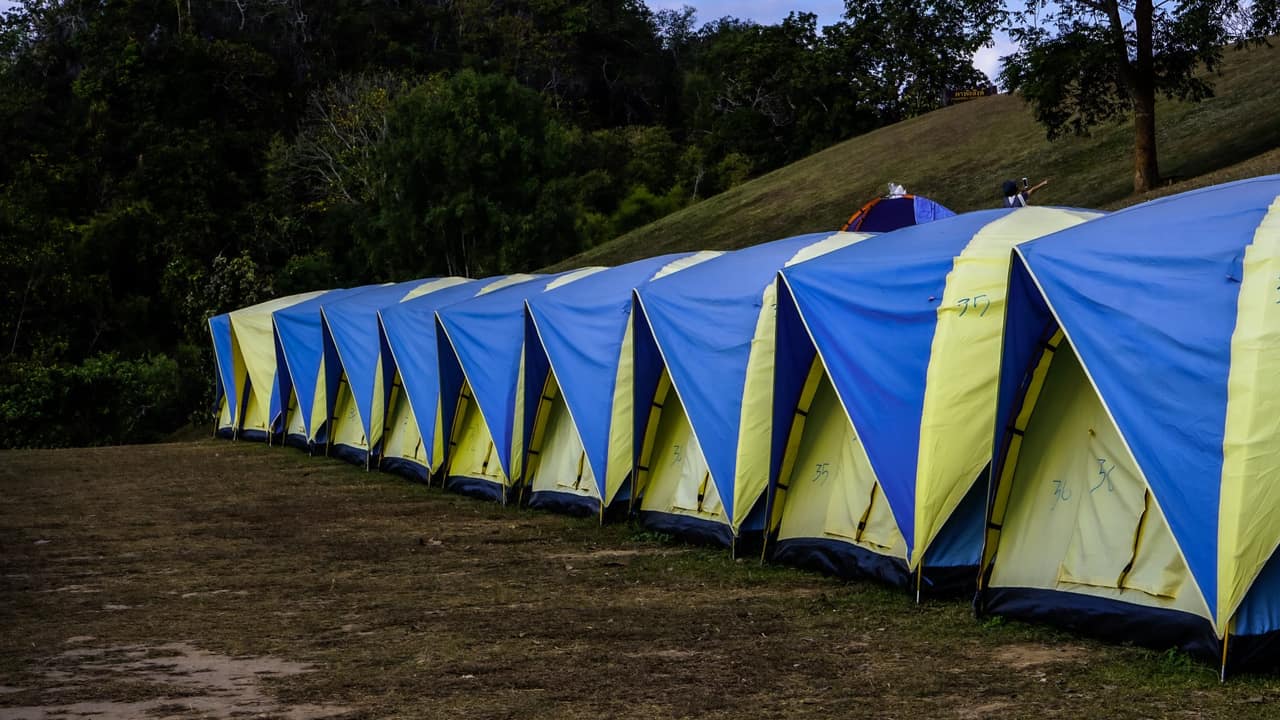
A dome tent pitched on flat ground at a cold-weather campsite

The short answer

The Mr. Heater Portable Buddy is the pick for most campers: 4,000 to 9,000 BTU, an oxygen depletion sensor, a tip-over shutoff, and 1 lb propane cylinders you can buy anywhere. On a powered site, an electric ceramic heater is strictly safer because it produces no carbon monoxide at all.

Trail & Terminal earns a commission when you buy through our Amazon links, at no extra cost to you. It does not change which products we pick -- see our affiliate disclosure and selection method.

Our picks at a glance

Best tent heaters -- ranked picks
#ProductBest forKey specPrice
1Mr. Heater Portable Buddy (MH9BX)The default propane tent heater. Two heat settings, both safety shutoffs, and fuel you can buy at any hardware store or gas station.most campers on unpowered sites4,000-9,000 BTU, radiant propane
2Mr. Heater Little Buddy (MH4B)A 3,800 BTU single-setting heater for small spaces. Less heat, less fuel burn, less carbon monoxide, and a smaller footprint in the tent.small tents and minimum output3,800 BTU, roughly 95 sq ft
3Mr. Heater Big Buddy (MH18B)Three output settings up to 18,000 BTU and a battery-powered fan. Far too much heater for a backpacking tent, and the right answer for a big one.large canvas tents and group shelters4,000 / 9,000 / 18,000 BTU
4Vornado VH200 Whole Room HeaterAn electric ceramic heater with tip-over and overheat shutoffs. Produces zero carbon monoxide, which makes every propane concern on this page disappear.powered campsites, cabins and RVs1,500 W electric ceramic
5Kidde Battery-Operated Carbon Monoxide AlarmNot a heater. The item that makes a propane heater a defensible decision rather than a gamble, and it costs a fraction of the heater.buying alongside any propane heaterBattery CO alarm, digital display

Ranked by the criteria in how we pick. We hold no live prices, so every button goes straight to the current Amazon listing.

Every pick, in full

The picks

1

Best for most campers on unpowered sites

Mr. Heater Portable Buddy (MH9BX)

The default propane tent heater. Two heat settings, both safety shutoffs, and fuel you can buy at any hardware store or gas station.

This is the heater nearly everyone ends up with, and the reasons are good ones. It is radiant rather than forced-air, which matters in a tent: a fan heater spends its output warming air that leaks straight out through the mesh, while a radiant panel warms the surfaces and people in front of it. It carries both safety shutoffs that matter -- an oxygen depletion sensor that cuts the gas when oxygen in the space drops, and a tip-over switch -- and neither needs a battery to work.

Treat the manufacturer's "indoor safe" rating carefully. It means the burner is clean enough for use in a ventilated indoor space, not that a sealed tent is an engineered environment. Run it to take the edge off before bed, with vents open, with a CO alarm inside the tent, and shut it off before you sleep. The rest of a cold-weather kit matters more than the heater does -- see winter camping gear list and the R-value rules in what R-value sleeping pad do I need.

Specs

  • 4,000 BTU low and 9,000 BTU high settings
  • Manufacturer-rated for spaces up to roughly 225 square feet
  • Oxygen depletion sensor (ODS) and accidental tip-over shutoff
  • Runs on 1 lb cylinders, or a 20 lb tank with a hose and fuel filter

Good for

  • Radiant heat warms you directly rather than slowly heating the air, which is the right mechanism in a drafty tent
  • Both safety shutoffs are mechanical and do not depend on batteries
  • 1 lb propane cylinders are the single most widely available camping fuel in the US

Bad at

  • Produces carbon monoxide, which means ventilation and a CO alarm are not optional extras
  • Runs a 1 lb cylinder down in roughly three hours on high, so an evening takes more fuel than people plan for
  • The grille gets genuinely hot -- this is a burn hazard with kids, dogs or sleeping bags nearby
2

Best for small tents and minimum output

Mr. Heater Little Buddy (MH4B)

A 3,800 BTU single-setting heater for small spaces. Less heat, less fuel burn, less carbon monoxide, and a smaller footprint in the tent.

Buying the smaller heater is usually the smarter call, and most people do the opposite. Heat output is not the binding constraint in a backpacking or two-person tent -- the volume is tiny and the real problem is draft, not capacity. A 9,000 BTU heater in a small tent is a heater you will run on low anyway, having carried the extra weight and bulk.

The output matters for a second reason. Combustion byproducts scale with fuel burned, so a 3,800 BTU heater puts less carbon monoxide into the space per hour than a 9,000 BTU one. That is not a license to skip ventilation, but it does mean the smaller heater has more margin for a mistake. The honest limit is cold: at the bottom of the range this will not make a cold tent warm, it will make it less cold.

Specs

  • 3,800 BTU single output, no high setting
  • Rated for spaces up to roughly 95 square feet
  • Oxygen depletion sensor and tip-over shutoff
  • Screws directly onto a 1 lb propane cylinder

Good for

  • Less output means less fuel burn and less combustion byproduct in a small space
  • Runs significantly longer on a 1 lb cylinder than the Portable Buddy on high
  • Small enough to sit in a corner of a two-person tent without being in the way

Bad at

  • No high setting -- in a genuinely cold tent it takes the edge off and no more
  • Taller and narrower than the Portable Buddy, so it is easier to knock over
  • Still a combustion heater, so every ventilation and CO rule applies unchanged
3

Best for large canvas tents and group shelters

Mr. Heater Big Buddy (MH18B)

Three output settings up to 18,000 BTU and a battery-powered fan. Far too much heater for a backpacking tent, and the right answer for a big one.

There is a real use case here that the smaller heaters do not cover: a canvas wall tent, a large family dome, or a screen house being used as a cooking and sitting space in cold weather. These are volumes where 9,000 BTU disappears, and where there is usually enough height and ventilation for a bigger burner to be reasonable.

Everything about this unit becomes a liability in a small tent. The output is more than a two-person nylon tent can safely absorb, the physical size makes clearance hard to maintain, and the fan adds a battery dependency. If you car camp in a big shelter, this is the pick. If you do not, the Portable Buddy is the one. Power for the fan is the same problem as power for everything else at a campsite -- see best portable power stations.

Specs

  • Three settings: 4,000, 9,000 and 18,000 BTU
  • Rated for spaces up to roughly 450 square feet
  • Accepts two 1 lb cylinders, or a 20 lb tank with a hose
  • Optional fan runs on D batteries or a power adapter

Good for

  • Genuinely heats a large canvas wall tent or a screen house, which the smaller units cannot
  • Dual cylinder capacity roughly doubles unattended run time
  • The fan moves heat into corners instead of leaving a hot zone directly in front

Bad at

  • Heavy and bulky -- this is a car camping item and nothing else
  • 18,000 BTU in a small nylon tent is dangerous, not generous
  • The fan needs batteries or power, so part of the value depends on a separate purchase
4

Best for powered campsites, cabins and RVs

Vornado VH200 Whole Room Heater

An electric ceramic heater with tip-over and overheat shutoffs. Produces zero carbon monoxide, which makes every propane concern on this page disappear.

If you have a power hookup, this is the honest recommendation, and it is a straightforwardly safer product than anything that burns fuel. The dangerous failure modes of a propane heater -- carbon monoxide accumulation and oxygen depletion -- do not exist for a resistive electric heater. The remaining risks are fire and burns, and both shutoffs plus the cool-touch case address them directly.

The reason this is not the top pick is simply that most tent camping is not on a powered site, and electric heat cannot practically be run off a battery. A 1,500 W heater draws a 1,000 Wh power station flat in well under an hour, which is why the answer to "can I run a space heater off my power station" is effectively no. On a hookup site, in a camper, or in a cabin, it is the better buy.

Specs

  • 1,500 W high and 750 W low settings
  • Adjustable thermostat
  • Tip-over switch and automatic overheat shutoff
  • Cool-touch exterior case

Good for

  • No combustion, so no carbon monoxide, no oxygen depletion and no fuel to carry
  • Thermostat means it cycles rather than running flat out, which an unregulated propane heater cannot do
  • Cool-touch case is a meaningfully different burn risk from a glowing propane grille

Bad at

  • Needs a 120 V hookup -- useless on an unpowered site and impractical on battery power
  • 1,500 W is a large share of a typical 20 A campsite circuit, so running it alongside other draws can trip the breaker
  • Forced air is a poor match for a drafty tent; it suits a cabin, camper or hard-sided space
5

Best for buying alongside any propane heater

Kidde Battery-Operated Carbon Monoxide Alarm

Not a heater. The item that makes a propane heater a defensible decision rather than a gamble, and it costs a fraction of the heater.

We have put this in the picks rather than in a footnote on purpose. Every year brings news reports of campers killed by carbon monoxide in a tent or camper, usually from a heater or a stove brought inside to warm up, and in essentially every case the space had no CO alarm in it.

Hang or place it at roughly head height near where you sleep, not on the tent floor and not directly beside the heater. Test it before the trip rather than at the campsite. If it alarms, the response is to get out and open the tent, in that order -- not to investigate. The CDC's guidance on carbon monoxide from fuel-burning appliances is linked at the bottom of this page and is worth five minutes before your first cold trip.

Specs

  • Electrochemical CO sensor, battery powered
  • Digital display showing current CO level in ppm on display models
  • Audible 85 dB alarm
  • Test button and end-of-life warning

Good for

  • Carbon monoxide is colorless and odorless -- an alarm is the only way to detect it
  • Battery operation means it works in a tent with no power at all
  • A display model shows rising levels before the alarm threshold, which is the useful early warning

Bad at

  • Sensors have a service life of several years and then need replacing, not just new batteries
  • Placement matters and is easy to get wrong -- too low or buried in a corner and it reads late
  • An alarm detects a problem, it does not prevent one. Ventilation is still the primary control

01 — Safety

Read this before you buy any of them

Carbon monoxide is produced whenever propane burns. It is colorless, odorless, and it kills by binding to hemoglobin in place of oxygen, which is why victims typically become confused and sleepy rather than alarmed. A tent is a small, low, poorly ventilated volume, which is the worst possible environment for a combustion appliance.

None of that means a propane tent heater is automatically unsafe. It means the margin for error is thin and the rules are not optional.

One more consideration if you camp in cold weather away from a road: carbon monoxide exposure and hypothermia are both situations where the response is evacuation rather than treatment, and most winter campsites have no cell coverage. A way to call for help is part of the same purchase decision -- see best satellite communicators.

  1. 01Never sleep with a combustion heater running. Warm the tent before bed, shut the heater off, and rely on your sleeping bag and pad overnight. This single rule removes most of the risk.
  2. 02Ventilate deliberately, not incidentally. Open a low vent and a high vent so air actually moves through -- a zipped tent with one cracked door is not ventilation.
  3. 03Put a battery CO alarm inside the tent at about head height. It is the only detection method available to you.
  4. 04Maintain clearance. Keep at least three feet between the heater and any fabric, sleeping bag, clothing or gear, and sit it on a hard flat surface, never on a sleeping pad.
  5. 05Never use a camp stove, grill or charcoal as a heater. Stoves have no oxygen depletion sensor and produce far more carbon monoxide than a heater rated for enclosed use.
  6. 06Store propane cylinders outside the tent, and check the connection with soapy water rather than a flame.

02 — Compare

The picks at a glance

Fuel type is the first decision and it is made for you by the campsite: if there is a power hookup, take the electric option; if there is not, you are choosing an output level.

PickFuelOutputRated areaBest for
Mr. Heater Portable BuddyPropane (1 lb)4,000-9,000 BTU~225 sq ftMost unpowered sites
Mr. Heater Little BuddyPropane (1 lb)3,800 BTU~95 sq ftSmall tents
Mr. Heater Big BuddyPropane (1 lb x2 / 20 lb)4,000-18,000 BTU~450 sq ftCanvas and group tents
Vornado VH200Electric (120 V)750 / 1,500 WRoom-sizedHookup sites, campers, cabins
Kidde CO AlarmBatteryDetection onlyThe tentBuying with any propane heater

03 — Sizing

How to size a tent heater

BTU ratings on heaters are given for insulated indoor rooms, and a tent is neither insulated nor sealed. Treat the manufacturer's square footage as a ceiling rather than a target.

The practical rule is to buy less heater than the rating suggests. A four-person dome tent is about 60 to 70 square feet with very poor insulation, and a 3,800 BTU unit is already meaningful in that space. Going bigger does not make the tent warm -- a nylon tent cannot hold heat -- it just burns more fuel and produces more combustion byproduct in the same small volume.

Fuel planning is where most trips go wrong. A 1 lb propane cylinder runs the Portable Buddy for roughly three hours on high or around five to six on low, which is one cold evening per cylinder, not one weekend. If you expect to run a heater for a couple of hours each evening across a three-night trip, plan for three or four cylinders, or carry a 20 lb tank with a hose and an inline fuel filter.

04 — The honest answer

When to skip the heater entirely

For a large share of cold-weather camping, the heater is the wrong purchase, and saying so is more useful than selling one.

If you are cold at night, fix the ground first

Most cold nights in a tent are conduction problems, not air temperature problems. You lose heat into the ground far faster than into the air, and a sleeping pad with too low an R-value will leave you cold inside a bag rated well below the overnight temperature. Doubling your pad's R-value does more for sleep quality than any heater, costs less than the Portable Buddy, and carries no risk at all. The numbers are in what R-value sleeping pad do I need.

If you are backpacking, there is no version of this that works

A heater plus fuel is several pounds, it cannot be run while you sleep, and a one-person tent is the least forgiving volume there is for a combustion appliance. The backpacking answer is a warmer bag, a better pad and dry layers -- see how to choose a sleeping bag.

If the real problem is condensation, a heater makes it worse

Propane combustion produces water vapor along with heat. Running a propane heater in a closed tent adds moisture to a space that is already struggling with it, and you wake up to wet walls and a damp sleeping bag. More ventilation is the fix for both problems at once, which is another reason the vents stay open.

If you have a power hookup, stop considering propane

On a site with electricity there is no argument for a combustion heater. An electric ceramic unit with a thermostat and a tip-over switch does the same job with none of the carbon monoxide risk. The only reason propane dominates this category is that most campsites have no power.

05 — Honest limits

What we did not test, and what that means

We have not measured carbon monoxide concentrations in a tent with these heaters running, and we would not publish a number if we had -- the result depends entirely on tent volume, vent position, wind and burner condition, which makes any single figure misleading rather than reassuring. The guidance above follows published safety advice from the CDC and the Consumer Product Safety Commission, both linked below, plus each manufacturer's own stated ratings and shutoffs.

Output figures, rated areas and safety features come from manufacturer specifications. Run times are approximate and vary with setting, ambient temperature and cylinder condition, which is why they are written as ranges.

We do not print prices for these. Heaters are heavily discounted in fall and marked back up in deep winter, so any number we published would be wrong within weeks. Every buy link goes to a live Amazon search for the specific model, where you see the current price and whether it is actually in stock. Our selection method is at how we pick.

Questions

Frequently asked

Is it safe to use a propane heater in a tent?
It can be, with an indoor-rated heater that has an oxygen depletion sensor, deliberate cross ventilation, a battery carbon monoxide alarm inside the tent, and the heater shut off before you sleep. Without all four, it is not.
Can I sleep with a tent heater on?
No. Shut any combustion heater off before you sleep. Carbon monoxide poisoning causes drowsiness and confusion rather than alarm, so a sleeping person is unlikely to recognize it. Warm the tent, then turn it off.
What size tent heater do I need?
Less than the rating suggests. A four-person dome is roughly 60 to 70 square feet, where a 3,800 BTU unit is already meaningful. Oversizing burns more fuel and adds combustion byproducts without making a thin nylon tent warm.
How long does a 1 lb propane cylinder last in a tent heater?
Roughly three hours on high and five to six on low for a 9,000 BTU heater. That is one cold evening per cylinder, so plan several for a multi-night trip or use a 20 lb tank with a hose and fuel filter.
Can I run an electric heater off a portable power station?
Not usefully. A 1,500 W heater drains a 1,000 Wh power station in well under an hour. Electric heat only makes sense with a mains hookup; on battery, put the energy into lighting and charging instead.
Are battery powered tent heaters any good?
No. Heating is extremely energy-hungry, and battery-only heaters either produce almost no usable heat or run for minutes. Products marketed this way are generally small fans with a heating element and are not worth buying.
Can I use a camping stove to heat my tent?
Never. Camp stoves have no oxygen depletion sensor and produce far more carbon monoxide than a heater certified for enclosed use. Bringing a stove or grill into a tent to warm up is the single most common cause of camping CO deaths.

Back up a level

This page sits in Camp -- campsite kit: shelter, sleep, kitchen, light and power.

Read next