Skip to content
Trail & Terminal

01 — Camp / Roundup

Best camping hammocks

A hammock packs to the size of a grapefruit and replaces a tent, a pad and a groundsheet. It also gets colder than any of them if you buy the hammock and stop there.

By Brijon M.Last updated How we pick
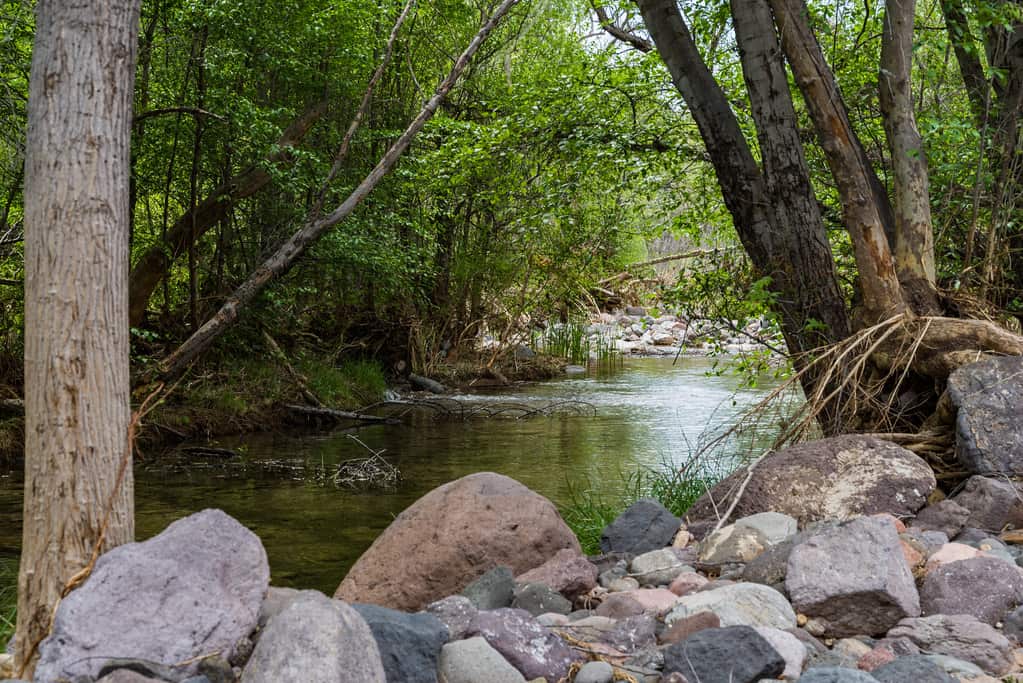
A hammock strung between two trees in a forest

The short answer

The ENO DoubleNest is the camping hammock to buy first: it is the cheapest way to find out whether you sleep well in one. If you already know you do, the Hennessy Expedition Asym Zip is the complete shelter. Budget for straps and insulation either way.

Trail & Terminal earns a commission when you buy through our Amazon links, at no extra cost to you. It does not change which products we pick -- see our affiliate disclosure and selection method.

Our picks at a glance

Best camping hammocks -- ranked picks
#ProductBest forKey specPrice
1ENO DoubleNest HammockThe default for a reason. Cheap enough to experiment with, big enough to sleep diagonally, and it packs into its own attached pocket.most people, first hammockDouble width, ~20oz
2Hennessy Hammock Expedition Asym ZipHammock, bug net and rain tarp as one integrated system. The closest thing to a tent replacement on this list.a complete shelter in one bagIntegrated net + tarp
3Kammok Roo DoubleBetter fabric and better hardware than the ENO at a higher price. Buy it if you already know you are a hammock sleeper.the nicest fabricDouble width, ripstop
4OneTigris COSMITTO Backpacking TentThe pick for a trip where you cannot be sure there are two trees. A hammock without anchors is a bag of fabric.when the trees run outFreestanding backup
5Therm-a-Rest Z Lite SolA closed-cell foam pad inside the hammock is the cheapest fix for the cold back that ends most first hammock nights.the insulation you will forget to buyFoam, no puncture risk

Ranked by the criteria in how we pick. We hold no live prices, so every button goes straight to the current Amazon listing.

Every pick, in full

The picks

1

Best for most people, first hammock

ENO DoubleNest Hammock

The default for a reason. Cheap enough to experiment with, big enough to sleep diagonally, and it packs into its own attached pocket.

If you have never slept in a hammock, buy this one and find out before spending more. Some people sleep better in a hammock than on the ground, some sleep worse, and some cannot get past the feeling of being wrapped. No review can tell you which you are. The DoubleNest is cheap, hard to damage in normal use, and holds its resale value if the answer turns out to be no.

The double width is the part that matters. In a gathered-end hammock you sleep diagonally across the fabric, not along the centerline -- that is what flattens the curve and keeps your shoulders from being squeezed. A single-width hammock cannot do it. Budget for straps separately: tree-friendly webbing is what you want, and a rope or thin cord will damage bark and is banned at many sites.

Specs

  • 70D nylon taffeta, double-width panel
  • Manufacturer-stated 400lb capacity
  • Integrated stuff pocket -- nothing to lose
  • Aluminum wiregate carabiners included

Good for

  • Double width lets you lie diagonally, which is the only comfortable way to sleep in a gathered-end hammock
  • Packs smaller than a two-person tent's poles alone
  • Replacement parts and compatible accessories are everywhere

Bad at

  • Straps are sold separately, which is a genuine annoyance at this price
  • No bug net and no rain cover -- both are extra purchases
  • Fabric is pleasant in summer and gives you nothing in the cold
2

Best for a complete shelter in one bag

Hennessy Hammock Expedition Asym Zip

Hammock, bug net and rain tarp as one integrated system. The closest thing to a tent replacement on this list.

This is the pick for someone who already knows hammock camping works for them and wants to stop buying parts. The Expedition arrives as a shelter: hammock, net, tarp, straps, stuff sack. Pitched, it is drier than most people expect, because the tarp is sized for the hammock rather than being a generic square you have to learn to rig.

The asymmetric cut is the real engineering. Instead of asking you to find the diagonal, the fabric is cut so the flat lie is where your body naturally ends up. It also means there is a correct way round, which takes one night to learn. Note the weight capacity: Hennessy rates models by load, and the Expedition is the lighter-duty option -- size up the model if you are near the limit.

Specs

  • Asymmetric cut -- designed for the diagonal lie
  • Permanently attached no-see-um netting with a side zip
  • Hex tarp, tree straps and stuff sack included
  • Manufacturer-stated 250lb capacity on the Expedition

Good for

  • One purchase, one bag, nothing else to buy before your first night out
  • Asymmetric cut does the diagonal geometry for you rather than asking you to find it
  • Attached net means no separate bug sock to thread on in the dark

Bad at

  • Lower stated weight capacity than the ENO -- check it against your own before buying
  • The attached net is permanent, so there is no bare-hammock lounging mode
  • More expensive than a hammock plus straps, and less modular later
3

Best for the nicest fabric

Kammok Roo Double

Better fabric and better hardware than the ENO at a higher price. Buy it if you already know you are a hammock sleeper.

The honest summary is that this is a better-made version of the same thing. Over a weekend of lounging you will not care. Over a season of sleeping in it you will: the fabric breathes differently against skin, the ends do not rack sideways, and the suspension points are reinforced where cheap hammocks eventually fray.

The decision is simple. If you are still finding out whether you like hammocks, the ENO is the rational purchase. If you have already slept in a borrowed hammock for three nights and liked it, buy this instead and skip the upgrade cycle. Either way you still need straps, and the same tree-friendly webbing works with both.

Specs

  • LunarWave ripstop nylon, manufacturer-stated 500lb capacity
  • Reinforced hanging points
  • Stitch pattern at the gathered ends resists racking
  • Integrated stuff pocket

Good for

  • Fabric has more give and less clamminess than standard 70D taffeta
  • Hardware and stitching are visibly a tier up
  • Higher stated capacity suits larger sleepers and two-person lounging

Bad at

  • Noticeably more expensive than the DoubleNest for the same basic function
  • Still no net, tarp or straps in the box
  • The fabric upgrade is a comfort difference, not a capability difference
4

Best for when the trees run out

OneTigris COSMITTO Backpacking Tent

The pick for a trip where you cannot be sure there are two trees. A hammock without anchors is a bag of fabric.

Every honest hammock roundup needs this entry. A hammock requires two anchors roughly twelve to fifteen feet apart, strong enough to hold you, and permitted for hanging. Beaches, desert sites, alpine sites above treeline and plenty of tidy established campgrounds supply none of that. People discover this at dusk.

If your trips are mostly forest, ignore this and hang happily. If they are mixed, the realistic answer is a small freestanding tent in the car as the fallback, or on your back when the route is uncertain. See our <a href="/camp/best-camping-tents">camping tents</a> roundup for the full tent comparison, and <a href="/camp/tent-vs-hammock-camping">tent vs hammock camping</a> for the head to head.

Specs

  • Freestanding two-pole pitch
  • Full rainfly with vestibule
  • Packs small enough to carry alongside a hammock
  • Taped seams

Good for

  • Works above treeline, on sand and in established sites with no hangable trees
  • Small enough that carrying it as insurance is realistic
  • Cheap relative to the trip it rescues

Bad at

  • Not a hammock -- this is the admission that hammocks have a hard dependency
  • Carrying both is weight and volume you would rather not spend
  • Single-wall sections hold condensation in humid weather
5

Best for the insulation you will forget to buy

Therm-a-Rest Z Lite Sol

A closed-cell foam pad inside the hammock is the cheapest fix for the cold back that ends most first hammock nights.

This is the pick that will actually change your first hammock night. A sleeping bag's insulation is crushed flat underneath you by your own weight, exactly as it is on the ground -- except in a hammock the cold air is on all sides, so the effect is worse. People buy a hammock, sleep in a 20-degree bag at 55 degrees, and wake up cold through the back, convinced hammocks do not work.

An underquilt hung outside the hammock is the correct answer and the expensive one. A closed-cell foam pad inside is the cheap answer and it works down to surprisingly cool nights. Try the pad first; buy the underquilt when you know you are hanging in genuinely cold weather. Our <a href="/camp/best-sleeping-pads">sleeping pads</a> roundup covers the inflatable alternatives if you want one pad for both ground and hammock.

Specs

  • Closed-cell foam -- cannot deflate or puncture
  • Accordion fold, flat packed
  • Reflective ThermaCapture coating on one face
  • Trimmable to hammock width

Good for

  • Solves compressed-insulation cold spots for a fraction of an underquilt's price
  • Zero failure modes, which matters when it is your only insulation
  • Doubles as a sit pad and a windscreen backer at camp

Bad at

  • Slides around inside a hammock -- an underquilt is genuinely better
  • Bulky on the outside of a pack, since foam does not compress
  • Narrow for broad shoulders unless you place it carefully

01 — The brief

What a camping hammock has to do

A lounging hammock and a camping hammock are the same object used two different ways, and almost every bad hammock review comes from confusing them. In the backyard you lie along the centerline for twenty minutes and it is pleasant. For a whole night you have to lie diagonally, insulate underneath yourself, and keep rain and insects off. Those three requirements are what separate the picks above from the striped cotton thing in a department store.

The format's real advantage is packed volume, which is the constraint this site cares about. A double hammock plus straps occupies less space in a trunk than a two-person tent's poles. There is no groundsheet, no pad required on rough ground, and no hunt for a flat pitch -- a slope, roots and rocks are all irrelevant if two trees are standing in the right place.

The format's real cost is that comfort depends on three purchases, not one. The hammock is the cheap part. Tree-friendly straps and insulation are what make it a bed instead of a novelty, and they are what the cheapest complete kits leave out.

02 — Comparison

At a glance: how these five compare

Specifications below are manufacturer-stated. Capacities in particular vary by model within the same product family, so check the figure on the listing you are actually buying.

PickWidthStated capacityIncludedBest when
ENO DoubleNestDouble400lbHammock, carabinersYou are finding out if hammocks suit you
Hennessy Expedition Asym ZipAsymmetric single250lbNet, tarp, strapsYou want one bag and no shopping list
Kammok Roo DoubleDouble500lbHammock, hardwareYou already know you sleep in one
OneTigris COSMITTOn/a -- tentn/aTent, fly, polesThere may be no trees
Therm-a-Rest Z Lite SolPadn/aPad onlyAny night under about 60F

03 — Suspension

Straps, not rope, and why sites care

The suspension is the one place where the cheap option is genuinely wrong rather than merely worse. Thin rope or paracord concentrates load into a narrow band that cuts through bark and damages the living layer underneath, which is why a growing number of state parks and national forest districts require wide webbing straps -- commonly one inch or wider -- and ban rope outright.

Practically, this means a pair of tree-friendly webbing straps is not an accessory, it is part of the hammock. Daisy-chain straps with sewn loops are the easiest to live with: you pick a loop, clip the carabiner, and adjust by moving one loop rather than retying anything in the dark.

  • Hang angle, not hang height. Aim for roughly 30 degrees from horizontal on each strap. A hammock pulled tight and flat is the single most common comfort mistake -- it squeezes your shoulders inward.
  • Sit height. Set the lowest point about chair height off the ground. Getting in and out is where hammock mishaps happen.
  • Ridgeline. A fixed ridgeline between the ends makes the lie repeatable from night to night instead of something you re-find each time.
  • Trunk size. Straps want healthy trees roughly six inches or more in diameter. A sapling will bend, and a dead tree will drop a branch on you.

04 — Insulation

Why your back gets cold, and the two ways to fix it

This is the thing that ends most first hammock nights early, and it is pure physics rather than a product defect. Your body weight compresses the sleeping bag's fill flat underneath you, so insulation rated to 20 degrees is, under you, almost nothing. On the ground a sleeping pad solves it. In a hammock the problem is identical and slightly worse, because moving air surrounds you on all sides instead of just above.

There are exactly two fixes. An underquilt hangs outside the hammock, so nothing compresses it -- this is the correct answer and the one experienced hangers use. A closed-cell foam or inflatable pad inside the hammock is the cheap answer; it works, it slides around, and it is how most people should start.

Rough temperature guidance

Treat these as starting points, not ratings. Nights above roughly 70F need nothing underneath. From about 70F down to 55F, a foam pad or a cheap reflective pad is usually enough. Below 55F, people consistently report wanting a real underquilt, and below about 40F an underquilt stops being optional.

The reason the numbers feel high compared with ground camping is that air moves under a hammock all night. Add a wind break, or pitch lower and more sheltered, and the same insulation goes noticeably further.

The cheap test before you spend

Before buying an underquilt, try one night with a foam pad and a sleeping bag you already own, in your yard or at a site you can leave. You will learn in one night whether your cold spots are at the shoulders, the hips or the calves, and that tells you what length underquilt to buy. A three-quarter-length quilt plus a pad under the calves is a common and cheaper endpoint than a full-length one.

05 — Skip list

What we would skip

  • The cheapest complete kits. The hammock in them is fine. The straps are thin, the net is loose, and the tarp is small enough that rain reaches the hammock ends.
  • Single-width hammocks. You cannot lie diagonally in one, and the diagonal is the whole technique.
  • Hammock stands for camping. They exist, they weigh a great deal, and at that point a tent is smaller and cheaper.
  • Spreader-bar hammocks. The flat-looking ones with wooden bars at each end are tippy and have no place camping. They are porch furniture.
  • Rope suspension. Damages trees, is banned at a growing number of sites, and is harder to adjust than webbing.

06 — Criteria

How we ranked these

Ranked for sleeping a full night, in order of who should buy which: the cheapest way to answer the "do I like this" question first, the complete-shelter option second, the upgrade third, and the two items most hammock roundups omit -- a fallback shelter and insulation -- fourth and fifth. Full method on how we pick.

We have not field-tested these hammocks. Picks rest on published specifications, construction details visible in listings, long-run owner reports, and the land-management strap rules that decide what is permitted. Where capacities are quoted they are the manufacturer's own figures.

Questions

Frequently asked

Is a hammock better than a tent for camping?
It is better on rough, sloped or rocky ground and in forests, and worse anywhere without two sound trees. It packs smaller than a tent and needs no flat pitch, but it needs insulation underneath you in all but the warmest weather.
Do you need a sleeping pad in a hammock?
Yes, below roughly 70F, unless you have an underquilt. Your weight crushes a sleeping bag's fill flat underneath you, so the bag's rating does not apply there. A foam pad inside or an underquilt outside both fix it.
How far apart should the trees be for a camping hammock?
Roughly 12 to 15 feet for a standard gathered-end hammock, with trunks about six inches or more in diameter. Closer trees work if you hang higher; much farther apart and you run out of strap.
Can two people sleep in a double hammock?
They can sit in one comfortably, but almost nobody sleeps well two-up: you roll into the middle and neither person can lie diagonally. Double width exists so one person can lie across the fabric diagonally.
Do camping hammocks damage trees?
Rope and thin cord do, by cutting into bark. Wide webbing straps spread the load and are what many parks now explicitly require. Use straps at least one inch wide on healthy trees, and move your spot rather than reusing a worn one.

Back up a level

This page sits in Camp -- campsite kit: shelter, sleep, kitchen, light and power.

Read next