Skip to content
Trail & Terminal

01 — Camp / Roundup

Best camping coffee makers

Camp coffee is a volume problem disguised as a taste problem. Every method here works; they differ in how much space and washing up they cost you.

By Brijon M.Last updated How we pick
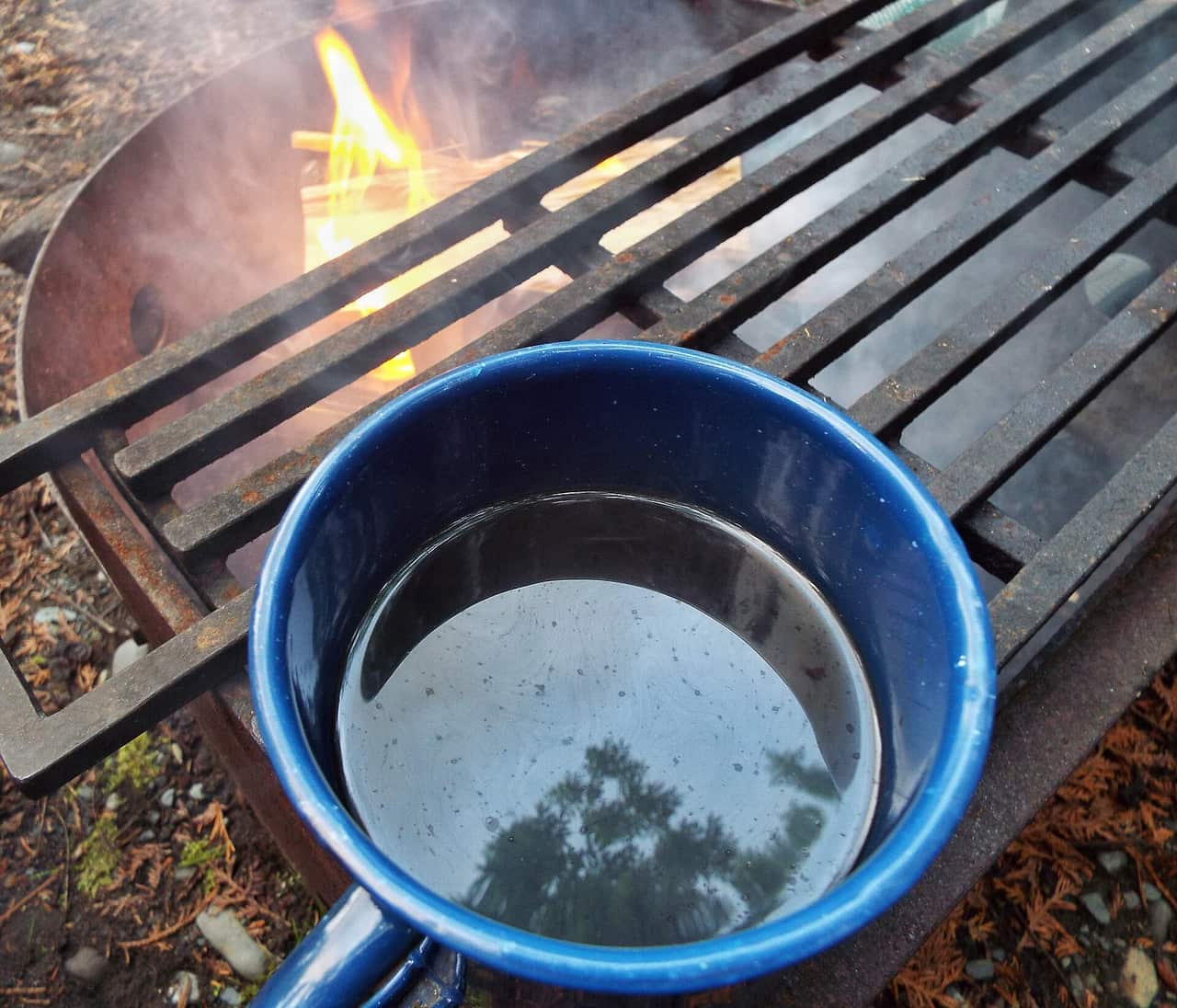
A coffee pot and enamel mug beside a camp stove at a campsite

The short answer

The AeroPress Go makes the best single cup for the space it takes and cleans up in one push, because the grounds eject as a dry puck. For two or more people, a collapsible pour-over cone over a mug is smaller and cheaper still. Skip anything with a glass carafe.

Trail & Terminal earns a commission when you buy through our Amazon links, at no extra cost to you. It does not change which products we pick -- see our affiliate disclosure and selection method.

Our picks at a glance

Best camping coffee makers -- ranked picks
#ProductBest forKey specPrice
1AeroPress Go Coffee MakerBest cup-to-volume ratio in camp coffee. The grounds eject as a dry puck, which is the real camping advantage.one great cup1 cup, nests in its mug
2GSI Outdoors Collapsible JavaDripA pour-over cone that collapses nearly flat and sits on a mug or a pot. The cheapest good coffee per cubic inch at camp.smallest packed sizeCollapses flat
3Jetboil FlashNot a coffee maker -- the thing that makes coffee possible before everyone gives up. Hot water in about two minutes.the water, which is the real bottleneck~100s per 500ml
4Bialetti Moka ExpressHard to break, no filters, no electricity, and the strongest cup here. Also the worst packer on the list.strong coffee for two, car campingStovetop, 3 or 6 cup
5Stanley Adventure Base Camp Cook SetThe pragmatic group answer: boil in the pot you already carry, brew in it, and skip owning a coffee maker at all.coffee for four without a dedicated brewerPot plus nesting cups

Ranked by the criteria in how we pick. We hold no live prices, so every button goes straight to the current Amazon listing.

Every pick, in full

The picks

1

Best for one great cup

AeroPress Go Coffee Maker

Best cup-to-volume ratio in camp coffee. The grounds eject as a dry puck, which is the real camping advantage.

This is the pick for a solo camper or a couple taking turns. The brew method is forgiving in a way pour-over is not: steep time covers for a grind you did not measure and water you did not temperature-check, which is the realistic condition at a campsite at 6am.

The reason it beats everything else on this list for camping specifically is the cleanup. Press the plunger over a trash bag and the used grounds come out as a compacted dry puck. Nothing else here does that -- a french press leaves you holding a cylinder of wet silt, and pour-over leaves a soaked paper cone. Everything nests into the mug, so it occupies one mug of trunk volume.

Specs

  • Press brewer, paper or metal filter
  • Packs inside its own 15oz mug
  • Polypropylene body -- no glass
  • Scoop and stirrer included

Good for

  • Spent grounds come out as a dry puck you can pack out -- no slurry to deal with
  • Rinse-clean in seconds with a splash of water
  • Full immersion plus pressure makes a good cup from mediocre beans

Bad at

  • One cup at a time, so it is slow for a group of four
  • Shorter chamber than the full-size AeroPress means a smaller brew
  • Paper filters are a consumable you will forget
2

Best for smallest packed size

GSI Outdoors Collapsible JavaDrip

A pour-over cone that collapses nearly flat and sits on a mug or a pot. The cheapest good coffee per cubic inch at camp.

If packed volume is your deciding constraint, this wins. Collapsed, it is a disc. It has no consumables, so there is no paper-filter problem, and it will brew into whatever vessel you already own rather than requiring its own.

The honest limitation is the pour. Pour-over coffee responds to a slow, controlled stream, and a 1.5L camp pot with a wide mouth gives you a gush. The fix is cheap: brew in two or three additions, pausing between, and accept that the result is good camp coffee rather than cafe coffee. Pair it with the cookware in our <a href="/camp/best-camping-cookware">camping cookware</a> roundup if your pot pours badly.

Specs

  • Silicone cone with a rigid rim
  • Reusable mesh filter -- no paper needed
  • Sits on a mug or on a wide pot mouth
  • Dishwasher safe at home

Good for

  • Packs essentially flat, which is the whole argument for it
  • No consumables, so nothing to forget and nothing to run out of
  • Scales to a group by brewing straight into a pot

Bad at

  • Pour-over wants a steady kettle pour -- a wide camp pot is clumsy to pour from
  • Mesh filter lets more fines through than paper, so the cup is less clean
  • Wet mesh needs rinsing well or it holds old coffee oils
3

Best for the water, which is the real bottleneck

Jetboil Flash

Not a coffee maker -- the thing that makes coffee possible before everyone gives up. Hot water in about two minutes.

Every method on this list needs hot water, and the time between waking up and holding coffee is set almost entirely by how fast you can boil. This is why an integrated canister stove belongs in a coffee roundup: it turns a fifteen-minute wait on a cold two-burner propane stove into about two minutes.

Treat it as a water boiler and not a cooking stove. The simmer control is coarse and the narrow base makes a frying pan precarious. If your camp has one stove and it has to do breakfast too, see the <a href="/camp/best-camping-stoves">camping stoves</a> roundup instead and brew with the pour-over cone above.

Specs

  • Integrated heat exchanger on the cup
  • Manufacturer-stated boil in roughly 100 seconds for 500ml
  • Push-button igniter
  • Canister and burner nest inside the cup

Good for

  • The fastest route from zero to hot water, which is what mornings are actually limited by
  • Fuel efficient enough that one small canister covers a weekend of coffee
  • Everything nests into the cup, so it is one object in the bag

Bad at

  • Poor simmer control -- it is a boiler, not a stove, so it cooks badly
  • Canister fuel performs worse in cold and cannot be flown with
  • The press attachment is sold separately if you want to brew in the cup itself
4

Best for strong coffee for two, car camping

Bialetti Moka Express

Hard to break, no filters, no electricity, and the strongest cup here. Also the worst packer on the list.

This is the car-camping pick, and the argument for it is reliability. There is nothing to break, nothing to run out of, and nothing to clean beyond a rinse. It makes a concentrated brew you can drink as is, lengthen with hot water, or turn into something milky -- so one pot satisfies people who want different drinks.

The reason it is fourth rather than first on a site about gear that packs small is the shape. A moka pot is a rigid, handled object with a wide base. If you are driving and have a crate, that is a non-issue. If you are choosing one coffee method to carry on your back, it is disqualifying -- take the collapsible cone.

Specs

  • Cast aluminum body, no glass or plastic in the brew path
  • No paper filters -- permanent metal basket
  • Works on any flat-topped camp stove burner
  • Available in 1, 3, 6 and 9 cup sizes

Good for

  • No consumables at all, and nothing on it that breaks if the bin shifts
  • Makes concentrated coffee that takes milk or water well, so it suits a mixed group
  • The 3-cup size is cheap and widely available

Bad at

  • Rigid shape with a handle -- nothing nests inside it
  • Needs a stable flat burner, so it is awkward on a narrow canister stove
  • Aluminum should not be scrubbed or dishwashed, which complicates camp cleanup
5

Best for coffee for four without a dedicated brewer

Stanley Adventure Base Camp Cook Set

The pragmatic group answer: boil in the pot you already carry, brew in it, and skip owning a coffee maker at all.

The method nobody sells you: put coarse grounds in the pot, pour in water just off the boil, wait four minutes, splash in a little cold water to settle the grounds, and pour carefully. It is how camp coffee was made for a century and it needs no device at all.

It earns its place here because for a group of four at a drive-in site, the fastest path to everyone having coffee is one big pot, not four presses in sequence. The cup is not as good -- there will be grit. The tradeoff is that you own zero extra items. Our <a href="/camp/camping-meals">camping meals</a> guide uses the same pot for the rest of breakfast.

Specs

  • Stainless pot with nesting cups and bowls
  • Vented lid that doubles as a strainer
  • Everything nests into the pot volume
  • Dishwasher safe stainless

Good for

  • One object covers boiling, brewing and serving for a group
  • Stainless tolerates camp abuse and real scrubbing, unlike aluminum
  • The vented lid strains coarse grounds well enough for pot-brewed coffee

Bad at

  • Pot-brewed coffee is gritty -- there are always fines in the last inch of the mug
  • No pressure or fine filtration, so the cup is the weakest here on clarity
  • Stainless is heavy for its volume compared with aluminum or titanium

01 — The real variable

Pick your method by space and cleanup, not taste

Every method here makes coffee that a reasonable person is happy to drink at 7am outdoors. Blind-taste differences between a good pour-over, an AeroPress and a moka pot are real but small, and they are swamped by the two variables you actually notice at a campsite: how much room the thing takes in the car, and how unpleasant it is to clean with cold water and no sink.

That reframing changes the answer. The highest-rated home brewers -- french presses, gooseneck kettles, glass carafes -- score badly on both. A french press is a rigid cylinder that packs nothing inside it and leaves you with a slurry of wet grounds and a mesh screen to pick clean. A glass carafe in a trunk is a question of when, not if.

So the ranking above is built on packed volume first, cleanup second, cup quality third. On a site about gear that packs small, the cone that collapses to a disc is a more honest recommendation than the device that wins a blind tasting.

02 — Comparison

At a glance: five methods compared

Cleanup difficulty assumes what you really have: a bottle of water, no sink, and a bag you have to carry the waste out in.

MethodServesPacked sizeCleanupConsumables
AeroPress Go1 cupOne mugEasiest -- dry puck ejectsPaper filters
Collapsible pour-over cone1 to 4 via a potFlat discRinse the meshNone
Jetboil Flash (water only)n/a -- boilerNests to one cupRinseGas canister
Bialetti Moka Express2 to 6 small cupsBulky, rigidRinse only, no soapNone
Pot plus coarse grounds4 plusAlready in your kitGrounds in the potNone

03 — Technique

Grind, water and the two things worth getting right

You cannot grind at camp without carrying a grinder, so buy ground coffee matched to your method and accept the staleness. Pre-ground for a press or pour-over is coarse; standard supermarket pre-ground is usually medium-fine and will over-extract in a press, which is why cheap camp coffee tastes bitter rather than weak.

Water temperature matters less than people think and water quantity matters more. Water just off a boil is fine for every method here. What ruins camp coffee is eyeballing the ratio: two level tablespoons of grounds per 8oz of water is the figure to remember, and a camp mug is usually 10 to 12oz rather than 8.

  • Buy the grind for the method. Coarse for a press, pot or cone; fine for a moka pot. One wrong bag undoes everything else.
  • Measure once at home. Pre-portion grounds into a zip bag per morning. It removes the only decision you have to make before caffeine.
  • Carry the waste out. Grounds are food waste. Binning or packing them out is best, scattering thinly and well away from camp is acceptable at many sites, and a dumped pile beside a pitch is what attracts animals.
  • Keep the coffee out of the sun. Not for safety -- just because heat in a trunk flattens roasted coffee fast.

04 — Skip list

What we would skip

Anything with a glass carafe

A glass french press or pour-over carafe in a vehicle is a broken glass incident waiting for a speed bump. If you love the french press method, buy an insulated stainless one and accept that it still packs badly.

Single-serve pod machines and 12V drip makers

A 12V drip coffee maker pulls real current, takes many minutes, and makes weak coffee because it cannot get the water hot enough on car power. Pod machines need either mains power or a battery with a meaningful draw, and they generate waste you have to carry out. Both solve a problem a cheap cone already solved.

Hand grinders, for most people

Grinding at camp is genuinely better coffee and a genuinely annoying item: heavy for its size, awkward to clean, and it adds two minutes of effort to the part of the day with the least patience available. If you are the kind of person who will enjoy it, you already own one.

Percolators, unless you already like them

A stainless percolator is rugged and nostalgic and makes coffee by repeatedly boiling it, which extracts harshly. People who grew up on them like them. Very few people come to them new and prefer them.

05 — Criteria

How we ranked these

Ranked on packed volume and cleanup difficulty first, because those are what you notice at a campsite, with cup quality as the tiebreaker. Full method on how we pick.

We have not field-tested these as a set. Picks rest on published specifications, the physical format of each device, and consistent long-run owner reports about what breaks and what is unpleasant to clean. Boil times quoted are manufacturer figures measured under ideal conditions; real times at altitude or in wind are longer.

Questions

Frequently asked

What is the best way to make coffee while camping?
An AeroPress for one or two people, because the used grounds eject as a dry puck and cleanup is a rinse. For a group, brew in the pot you already carry with a collapsible pour-over cone, or make coarse-ground coffee directly in the pot.
Can you use a french press for camping?
Yes, but choose an insulated stainless one -- glass does not survive a trunk. Even then it packs badly, since nothing nests inside a press, and the wet grounds are the messiest cleanup of any method here.
How do you make coffee camping without any equipment?
Coarse grounds straight in the pot, water just off the boil, four minutes, then a splash of cold water to sink the grounds before you pour. It is gritty in the last inch of the mug and it needs nothing you are not already carrying.
What do you do with coffee grounds at a campsite?
Pack them out with your trash where you can. Grounds are food waste, so a pile left by a pitch attracts animals. Scattering thinly and well away from camp and water is acceptable at many sites, but check the local rules first.
Is a 12V camping coffee maker worth it?
Rarely. They draw real current from the vehicle, take many minutes, and cannot get water hot enough on car power, so the coffee is weak. A collapsible cone and a stove do the job faster for a fraction of the cost and space.

Back up a level

This page sits in Camp -- campsite kit: shelter, sleep, kitchen, light and power.

Read next