Skip to content
Trail & Terminal

03 — Road Trip / Roundup

Best travel coffee makers

A travel brewer has to work with a hotel kettle and survive a suitcase. That rules out most of what gets recommended for camping.

By Brijon M.Last updated How we pick
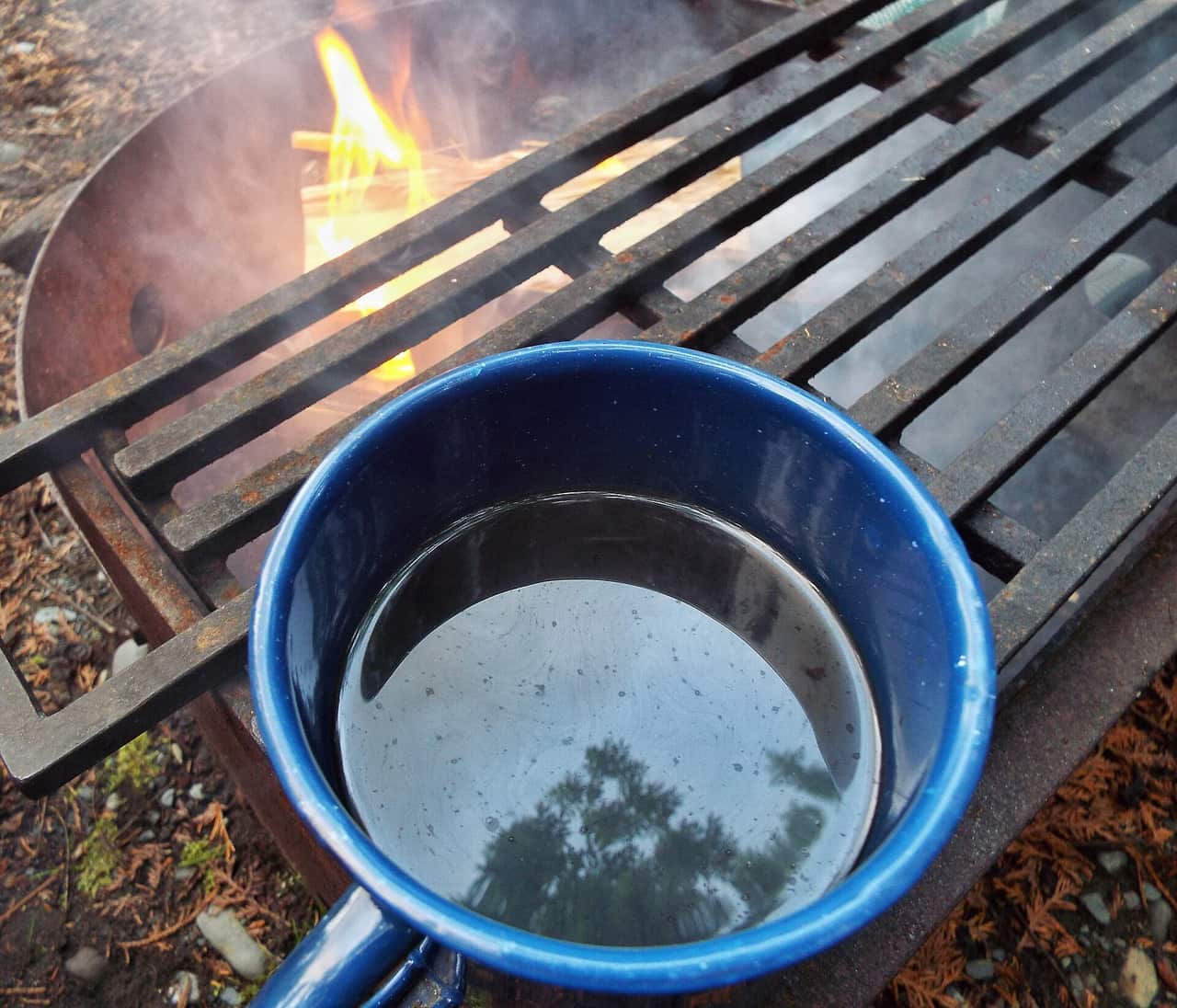
A coffee pot and enamel mug beside a camp stove at a campsite

The short answer

The AeroPress Go is the pick for most travel: it brews a genuinely good cup from hot tap or kettle water, packs inside its own mug, and has nothing to break. If you want espresso-style coffee with no power at all, the Wacaco Nanopresso is the alternative.

Trail & Terminal earns a commission when you buy through our Amazon links, at no extra cost to you. It does not change which products we pick -- see our affiliate disclosure and selection method.

Our picks at a glance

Best travel coffee makers -- ranked picks
#ProductBest forKey specPrice
1AeroPress GoThe whole brewer nests inside its own 15 oz mug. Brews in a minute from any hot water, and there is nothing in it that can break.almost every kind of travelPacks into its own mug
2Wacaco NanopressoA hand pump that reaches genuine espresso pressure. No electricity, no stove, just hot water and a forearm.espresso with no power source~18 bar, hand pumped
3GSI Outdoors Collapsible JavaDripA silicone pour-over cone that folds nearly flat and uses a permanent mesh filter. No paper to run out of.filter coffee for more than one personCollapses flat, mesh filter
4Stanley Adventure All-in-One Boil + Brew French PressA stainless pot that boils water and then presses coffee in it, with two nesting cups. One object, whole job.a road trip where you boil your own waterBoils and brews, nests 2 cups
5Bialetti Moka Express 3-CupAluminum, ninety years old as a design, and makes strong coffee on any stovetop. For rentals, not for backpacks.rentals and apartments with a hobStovetop, 3 small cups

Ranked by the criteria in how we pick. We hold no live prices, so every button goes straight to the current Amazon listing.

Every pick, in full

The picks

1

Best for almost every kind of travel

AeroPress Go

The whole brewer nests inside its own 15 oz mug. Brews in a minute from any hot water, and there is nothing in it that can break.

The reason this is the default travel brewer is that it removes every variable except hot water. There is no glass, no gasket that perishes, no grinder dependency, and the entire kit occupies the volume of the mug you were taking anyway.

Brew it as a concentrate -- less water, longer steep -- and dilute in the mug if you want American-style volume. That trick also makes it work from a hotel kettle that overshoots on temperature. The camp-stove version of this question is in <a href="/camp/best-camping-coffee-makers">best camping coffee makers</a>.

Specs

  • Brewer, filters, stirrer and scoop pack inside a 15 oz mug
  • Around 11 oz packed
  • Paper microfilters, 350 included
  • Brews one cup, roughly 8 oz, in about a minute

Good for

  • Works with any hot water source -- kettle, hotel urn, thermos
  • Clean-up is one push into a bin and a rinse
  • Polypropylene body; nothing to crack in a bag

Bad at

  • One cup at a time, so it is slow for two people
  • Paper filters are a consumable you have to remember to pack
  • Smaller chamber than the full-size AeroPress, so a strong cup needs the concentrate method
2

Best for espresso with no power source

Wacaco Nanopresso

A hand pump that reaches genuine espresso pressure. No electricity, no stove, just hot water and a forearm.

This is a genuine espresso maker that fits in a coat pocket, and that is an unusual thing to be able to say. If what you miss on the road is a short strong coffee with crema rather than a mug of filter, nothing else here comes close.

Be realistic about the grind. Pre-ground supermarket coffee is too coarse and produces a thin, sour shot. Either carry a hand grinder or buy coffee ground for espresso, and accept the pod adapter as a convenient fallback.

Specs

  • Hand-pumped piston reaching around 18 bar
  • Roughly 11 oz, fits in a jacket pocket
  • Takes ground coffee, with an optional pod adapter
  • Water chamber holds about 80 ml

Good for

  • Real crema, which no other pack-size brewer here produces
  • Needs no power at all -- usable on a plane tray table with cabin hot water
  • Built well enough that it survives being thrown in a bag

Bad at

  • Produces one small espresso shot, not a mug of coffee
  • Fiddly to clean properly, with several small parts
  • Needs a fine, consistent grind to work well, which is hard to travel with
3

Best for filter coffee for more than one person

GSI Outdoors Collapsible JavaDrip

A silicone pour-over cone that folds nearly flat and uses a permanent mesh filter. No paper to run out of.

Pour-over is the most forgiving brew method to travel with because the equipment is passive -- there is no pressure, no seal and no timing to get exactly right. The collapsible format removes the one real objection, which is that a rigid cone is an awkward shape in a bag.

The permanent filter is the feature that matters on a long trip. Paper filters are small, light and the single most commonly forgotten item in a travel coffee kit. Brewing for a group at a campsite is a different problem -- see <a href="/road-trip/car-camping-gear-checklist">car camping gear checklist</a>.

Specs

  • Silicone cone that collapses to about an inch
  • Permanent stainless mesh filter
  • Sits on a mug or a carafe
  • Dishwasher safe

Good for

  • No consumables at all -- nothing to forget or run out of
  • Scales to a carafe, so it serves two or three people
  • Packs almost flat, unlike anything rigid

Bad at

  • Mesh lets more oils and fines through than paper, which some people dislike
  • Needs a steady pour, so a hotel kettle with a wide spout is awkward
  • Silicone picks up odors from whatever it is packed next to
4

Best for a road trip where you boil your own water

Stanley Adventure All-in-One Boil + Brew French Press

A stainless pot that boils water and then presses coffee in it, with two nesting cups. One object, whole job.

This is the pick for a road trip rather than a flight, and specifically for a road trip where you are stopping and cooking. It removes the usual two-object problem of a kettle plus a brewer.

The weakness is the same as any french press: cleaning wet grounds without a sink. Pack them out rather than tipping them at a site. If you are already carrying a stove, compare against the stove-based options in <a href="/camp/best-camping-stoves">best camping stoves</a>.

Specs

  • Stainless steel pot, around 32 oz
  • Integrated press plunger
  • Two insulated cups nest inside
  • Dishwasher safe, no plastic in the brew path

Good for

  • Boils the water and brews the coffee in the same vessel
  • Serves two properly rather than one at a time
  • Stainless construction survives a trunk indefinitely

Bad at

  • Needs a heat source -- a camp stove, a burner or a fire
  • Bulky and heavy compared with everything else here
  • French press grounds in the pot make clean-up the worst on this page
5

Best for rentals and apartments with a hob

Bialetti Moka Express 3-Cup

Aluminum, ninety years old as a design, and makes strong coffee on any stovetop. For rentals, not for backpacks.

The moka pot is here for a specific and common kind of travel: a rental apartment or a cabin with a hob and nothing else. It needs no consumables, it packs reasonably flat if you unscrew it, and it is cheap enough to leave behind.

Take it off the heat as soon as it starts gurgling, and never fill the basket past level or tamp it. Both mistakes produce the bitter, burnt cup that gives moka pots their undeserved reputation.

Specs

  • Aluminum stovetop percolator
  • Three-cup size, roughly 130 ml total
  • No electricity, no filters, no plastic
  • Replaceable gasket and filter plate

Good for

  • Makes properly strong coffee without power, pods or paper
  • Costs very little and lasts decades
  • Replaceable gasket means it is repairable rather than disposable

Bad at

  • Needs a stovetop -- no use in a hotel room with only a kettle
  • Aluminum does not work on induction hobs without an adapter
  • Easy to scorch the coffee if you walk away from it

01 — The brief

What makes a travel brewer different from a camp brewer

The two problems look alike and they are not. A camping coffee maker can assume a stove, a group, and a bag with room in it. A travel coffee maker usually has to assume none of those: a hotel room with a kettle, an airport with hot water, a rental car with a 12V socket, and a suitcase where every cubic inch is contested.

That reframes the whole ranking. Brew quality per ounce of luggage is the metric, and the heat source becomes the first filter. Anything that needs a flame is out for flights and most hotel stays, which eliminates the percolators and kettle-based systems that dominate camping lists.

The second filter is durability. A glass carafe or a ceramic cone is a lovely thing at home and a bad bet in a checked bag. Everything on this page is either unbreakable or packs inside something that protects it. For the stove-based version of this question, see best camping coffee makers.

02 — Compare

The picks at a glance

The decisive column is the heat source. Work out what you will actually have access to, then pick within that row.

PickHeat source neededMakesPacked size
AeroPress GoAny hot water1 cup, ~8 ozInside its own 15 oz mug
Wacaco NanopressoAny hot water1 espresso shotJacket pocket
GSI JavaDripAny hot water1 - 3 cupsFolds to about 1 inch
Stanley Boil + BrewStove or burner2 cupsBulky, cups nest inside
Bialetti Moka 3-CupStovetop hob3 small cupsFlat if unscrewed

03 — Grind and beans

The part nobody plans for: the coffee itself

The brewer is usually the easy half. Carrying good coffee in a drinkable state is the half that gets skipped, and it matters more to the result than the choice of device.

  • Ground coffee goes stale fast once the bag is open. For trips under about four days, grind at home into a small airtight container and accept the loss.
  • For longer trips, a small hand grinder is the single biggest quality upgrade in a travel kit -- and it is also the bulkiest thing you will carry.
  • Match the grind to the method. Espresso-style brewers need fine and consistent; pour-over wants medium; french press wants coarse. One grind does not serve all three.
  • Measure by weight if you can. A small folding scale weighs almost nothing and removes the main source of inconsistency when you are brewing in an unfamiliar cup.
  • Hotel kettles boil, and boiling water over-extracts most methods. Pour it, wait thirty to forty-five seconds, then brew.
  • Instant coffee has improved enormously and is a legitimate backup. Carry a few sachets for the mornings you are catching a 5am flight.
  • Pack coffee in your carry-on. Ground coffee is permitted through US security, and a checked bag that goes missing takes your whole kit with it.

04 — The decision

Matching the brewer to the trip

Three travel patterns cover almost everybody, and each has a clear answer.

Hotels and flights

AeroPress Go. Hot water is always available, the kit is self-contained, and nothing in it will be questioned at security. If you want espresso rather than filter, the Nanopresso does the same job in the same conditions. Add it to the kit in carry-on essentials.

Road trips and car camping

The Stanley Boil + Brew if you are carrying a stove anyway, because it collapses two objects into one. If you are not, bring the AeroPress and boil water however you already boil it -- see road trip essentials list.

Rentals, cabins and long stays

The moka pot, for a week or more somewhere with a hob. It is cheap, it needs no consumables, and it makes enough for two people without repeated brewing. For a short rental stay, the AeroPress is still less hassle.

05 — Not picked

What we left out, and why

Single-serve pod machines are excellent at home and bad at travel: they are mains-powered, bulky, and tie you to a pod format you may not be able to buy where you are going. Battery-powered brewers exist and all of them spend most of their battery heating water, which is a poor use of the cells and a slow way to make coffee.

Travel kettles are worth mentioning as a companion rather than a competitor. If you stay in places without one, a small dual-voltage kettle plus an AeroPress is a complete system. Check the voltage carefully -- a 120V kettle on 230V is a fire, and a 230V kettle on 120V simply never boils.

12V car kettles are the road-trip answer to the same problem, and they are slow: expect ten to fifteen minutes for a mug. Plan for that rather than being surprised by it. The power side of a road-trip kit is in best portable power stations, and plug standards abroad are in travel adapters by country.

Questions

Frequently asked

What is the best coffee maker for travel?
The AeroPress Go for most trips. It brews a genuinely good cup from any hot water, packs entirely inside its own mug, and has no glass or gasket to fail in a bag. For espresso, the Wacaco Nanopresso.
Can I make coffee in a hotel room without a coffee maker?
Yes -- any hot water source plus a brewer that does not need heat of its own. A kettle, the bathroom tap at its hottest, or hot water from the breakfast urn all work with an AeroPress or a pour-over cone.
Can you take a coffee maker and ground coffee on a plane?
Yes. Ground coffee and travel brewers are permitted in carry-on bags under US TSA rules. Pack the coffee in your carry-on rather than checked, so a delayed bag does not cost you the whole kit.
Is a travel coffee maker worth it?
If you drink coffee daily and travel more than a few times a year, yes -- it pays for itself quickly against hotel coffee and queues. If you travel rarely, good instant coffee is a reasonable alternative.
What is the difference between a travel and a camping coffee maker?
A camping brewer assumes a stove and a group. A travel brewer has to work from a hotel kettle, survive a suitcase, and usually serve one person. That rules out glass, ceramic and anything needing a flame.
Do I need a grinder to travel with coffee?
Not for short trips -- grind at home into an airtight container. For a week or more, a hand grinder is the single biggest improvement you can make to travel coffee, at the cost of real bag volume.

Back up a level

This page sits in Road Trip -- car camping and long drives: sleep, power, mounts, snacks.

Read next