Skip to content
Trail & Terminal

03 — Road Trip / Guide

Best road trip snacks

The constraint is not taste. It is heat, mess and whether you can eat it one-handed without stopping.

By Brijon M.Last updated How we pick
Snacks and a cooler packed in a car for a long drive

The short answer

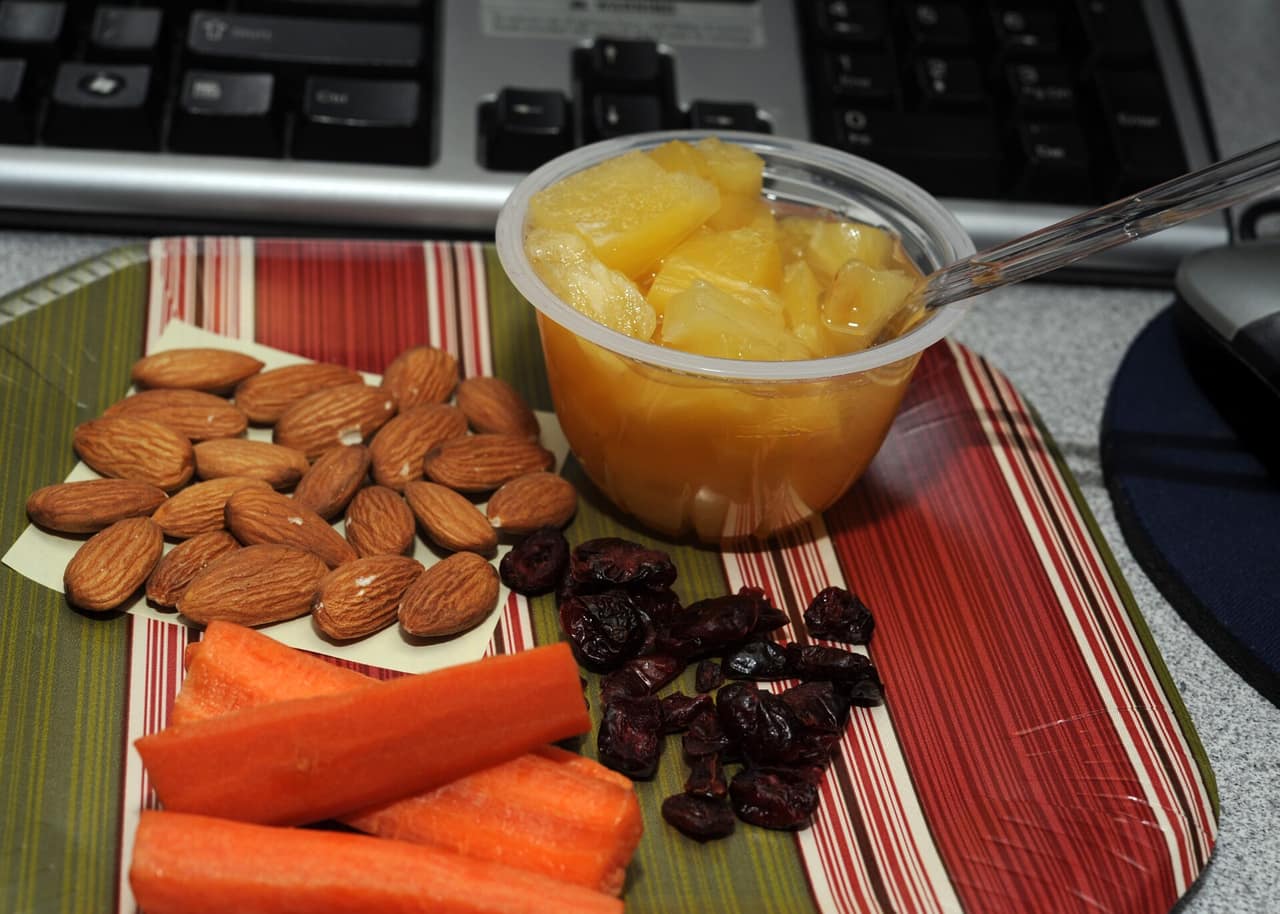
Pack snacks that tolerate heat, do not melt or crumble, and can be eaten without a plate: nuts, jerky, dried fruit, hard cheese, rice cakes, pretzels, apples and whole carrots. Keep anything that melts or spoils in the cooler.

01 — The problem

The three constraints

Road trip snack lists usually read like a shopping list. The useful framing is a set of constraints, because what works in a kitchen fails in a car.

  1. 01Heat. A parked car reaches temperatures far above ambient. Chocolate melts, cheese sweats, anything with a chocolate coating becomes a liquid, and some things spoil. Pack for the inside of a car in sun, not for the outside temperature.
  2. 02Mess. One hand on the wheel, no plate, no table. Anything that crumbles, flakes, drips or requires two hands is the wrong choice, and the footwell remembers.
  3. 03Steadiness. Sugar spikes and crashes are worse on a long drive than hunger. Snacks with protein, fat and fiber keep energy level; a bag of candy does the opposite at exactly the wrong time.

02 — Pack these

What travels well

SnackWhy it worksWatch out for
Nuts and seedsProtein and fat, heat-stable, no mess, one-handedSalted versions make you thirsty; portion them out
Jerky and meat sticksProtein, shelf-stable, no refrigeration neededVery salty; pair with water
Dried fruitSweet, keeps indefinitely, no messConcentrated sugar -- pair with nuts rather than eating alone
Hard cheeseProtein and fat, tolerates a few hours out of a coolerSweats in heat; keep it in the cooler on a hot day
Rice cakes and pretzelsDry, light, do not melt, satisfying to eatMostly carbohydrate; pair with protein
Apples, oranges, whole carrotsRobust, hydrating, no preparation, compostableApples bruise under weight; keep them on top
Nut butter sachetsProtein and fat in a single serving with no spoonMessy if squeezed hard; eat at a stop
Hard bars with low chocolate contentDense, convenient, keep wellAnything chocolate-coated melts; check before buying
PopcornLight, low calorie density, pleasant to graze onCrumbs. Genuinely the messiest thing on this list

03 — Leave these

What to skip

  • Anything chocolate-coated. It will melt, and then it will be on the seat. This is the single most common road trip snack mistake.
  • Yogurt and dairy outside a cooler. Spoils fast in a warm car, and spilled yogurt in a footwell is a smell that lasts.
  • Flaky pastries and crisps in large bags. Crumbs everywhere, and they compress to nothing useful.
  • Anything needing a spoon or a plate. You will not eat it until a stop, at which point you could have eaten something better.
  • Soft fruit -- bananas, berries, peaches. Bruises, leaks and goes over quickly in heat.
  • Boiled eggs, unless cooled and in the cooler. They are fine cold and unpleasant warm, and the smell in a closed car is memorable.
  • Large bottles of sugary drinks. They guarantee a sugar crash and more toilet stops. Water is the answer that sounds boring and is correct.
  • Gum and mints as your only snack. Not food, and a long drive on nothing else goes badly.

04 — Method

How to pack it

Organization matters more than selection, because a snack you cannot reach is a snack you will stop and buy again.

  1. 01Split into a cabin bag and a cooler. The cabin bag holds everything shelf-stable, within reach of the passenger. The cooler holds anything that melts or spoils, and stays shut.
  2. 02Portion into small bags or containers before you leave. Eating from a large bag while driving means eating the whole bag. Portioning is both a mess and a moderation control.
  3. 03Put a trash bag in the cabin. This is the item everyone forgets and immediately needs, and it is the difference between a tidy car and a footwell of wrappers.
  4. 04Keep wipes and tissues with the snacks, not in the trunk.
  5. 05Pre-chill the cooler and use block ice. See camping coolers.
  6. 06Put a small soft cooler in the cabin for drinks, so the main cooler stays shut. Every opening costs ice.

05 — Safety

Food safety in a hot car

A car in sun is a worse environment for food than most people assume, and the rules are not different from anywhere else -- they are just harder to meet.

  • Keep cold food at or below 40 degrees. A cheap fridge thermometer in the cooler is the only way to know rather than guess, and it costs almost nothing.
  • Do not leave perishable food in a parked car. Interior temperatures climb fast, and the two-hour rule for food out of refrigeration shortens considerably in heat.
  • Keep raw meat sealed and at the bottom of the cooler, where it is coldest and cannot drip.
  • Do not drain the meltwater if food is in sealed containers -- cold water holds cold better than the air that replaces it.
  • When in doubt, throw it out. Food poisoning on a road trip, far from home, is considerably worse than at home.
  • Pack out all food waste. Including at campsites, where scraps attract wildlife. See camping meals.

06 — Use cases

Snacks for specific situations

Driving with kids

Portion everything into individual containers before you leave, which removes both the mess and the negotiation. Avoid anything with a high sugar content for the obvious reason, and avoid anything that stains.

Dried fruit, cheese sticks, rice cakes, whole fruit and pretzels cover most of it. Keep a trash bag and wipes within reach of an adult, not in the trunk. See what to pack for a road trip.

A long drive on a tight schedule

Protein-forward and dense: jerky, nuts, nut butter sachets, hard bars. The goal is steady energy with no stop, which rules out anything requiring a plate.

Have real food at a planned stop rather than trying to eat a meal while driving. Eating properly once beats grazing badly for six hours.

A drive that ends at a campsite

Plan the first camp meal to need no cooking. Arriving later than planned is the normal case, and a cold first-night meal removes the stove, the fuel, the pan and the washing up from the most chaotic part of the trip.

Sandwiches made at home, a board of cheese and cured meat, or a cold grain salad all work. See camping meals.

A hot-weather drive

More water than you think, in the cabin rather than only in the cooler. Electrolyte tablets if the drive is long. Nothing chocolate, nothing dairy outside the cooler, and nothing that sweats.

Whole fruit earns its place here because it is hydrating as well as food. Keep it on top of the cooler rather than under weight.

What to buy

The gear we would buy for this

Trail & Terminal earns a commission when you buy through our Amazon links, at no extra cost to you. It does not change which products we pick -- see our affiliate disclosure and selection method.

1

Best for the food that cannot ride in the cabin

Coleman 70QT Xtreme Cooler

Capacity matters more than retention on a trip that passes stores. Pre-chill it and keep it shut.

On a road trip you pass stores, so capacity and weight matter more than multi-day retention. Pre-chill it the night before, use block ice with cubes filling gaps, and keep it shaded. See <a href="/camp/best-coolers-for-camping">camping coolers</a>.

Specs

  • Blow-molded body with insulated lid
  • Large internal capacity for its external size
  • Light enough to carry loaded
  • Available with wheels

Good for

  • Far more usable space per unit of external bulk than rotomolded coolers
  • One person can move it loaded
  • Cheap enough to buy generously sized

Bad at

  • Real retention is a day or two, not many days
  • No gasket, so cold escapes on every opening
  • Hinge and lid are the long-term weak points
2

Best for the drinks cooler in the cabin

RTIC Soft Pack 30

A second soft cooler within reach means the main cooler stays shut, which is free ice retention.

Opening a cooler is the biggest controllable factor in how long its ice lasts. A drinks cooler within reach absorbs twenty openings a day so the food cooler gets two. See <a href="/road-trip/hard-cooler-vs-soft-cooler">hard versus soft coolers</a>.

Specs

  • Closed-cell foam insulation
  • Waterproof exterior with a sealed zipper
  • Shoulder strap plus side handles
  • Collapses flat when empty

Good for

  • Takes all the frequent openings so the main cooler is barely disturbed
  • Collapses flat for the drive home
  • Carryable to a picnic table or overlook

Bad at

  • Retention measured in a day
  • Heavy on one shoulder when loaded
  • Stiff zipper is the common failure point
3

Best for water that stays cold in a hot car

Hydro Flask Wide Mouth 32oz

A car is one place an insulated bottle is unambiguously worth the weight.

On a trail the weight of an insulated bottle is a real cost. In a car there is no weight penalty at all, which makes this one of the few places it is unambiguously the right choice. Check it fits your cup holder. See <a href="/trail/hydro-flask-vs-yeti-vs-stanley">the insulated bottle comparison</a>.

Specs

  • Double-wall vacuum insulated stainless steel
  • Powder-coated exterior
  • Leakproof standard cap
  • Lifetime warranty

Good for

  • Water stays cold through a day in a hot car, which plastic bottles do not
  • People drink more when water is cold, which is the actual goal
  • Durable powder coat survives a footwell

Bad at

  • Heavy, which matters on a trail and not in a car
  • Opaque, so it develops odor if neglected
  • Will not fit every cup holder -- check the diameter

Questions

Frequently asked

What are the best snacks for a road trip?
Things that tolerate heat, do not crumble and can be eaten one-handed: nuts, jerky, dried fruit, hard cheese, rice cakes, pretzels, whole apples and carrots. Pair carbohydrate snacks with protein so energy stays steady rather than spiking.
What road trip snacks should I avoid?
Anything chocolate-coated, which will melt; dairy outside a cooler; flaky pastries and large bags of crisps; soft fruit that bruises; and anything needing a spoon or a plate. Large sugary drinks are the other one -- they guarantee a crash and more stops.
How do I keep food cold on a road trip?
Pre-chill the cooler the night before with a sacrificial bag of ice, use block ice with cubes filling the gaps, fill it two parts ice to one part contents, and keep a second small cooler in the cabin for drinks so the food cooler stays shut.
Is it safe to leave food in a hot car?
Not perishable food. Interior temperatures climb fast in sun, and the usual two-hour limit for food out of refrigeration shortens considerably in heat. Keep perishables in a cooler at or below 40 degrees, with a cheap thermometer in it so you know.
What snacks work for kids on a road trip?
Portion everything into individual containers before you leave -- that removes the mess and the negotiation at once. Dried fruit, cheese sticks, rice cakes, whole fruit and pretzels cover most of it. Keep a trash bag and wipes within an adult's reach.

Back up a level

This page sits in Road Trip -- car camping and long drives: sleep, power, mounts, snacks.

Read next