Skip to content
Trail & Terminal

03 — Road Trip / Roundup

Best portable Bluetooth speakers

Sound is the easy part. What separates these is what happens when one gets rained on, dropped on gravel, or asked to last three days away from a socket.

By Brijon M.Last updated How we pick
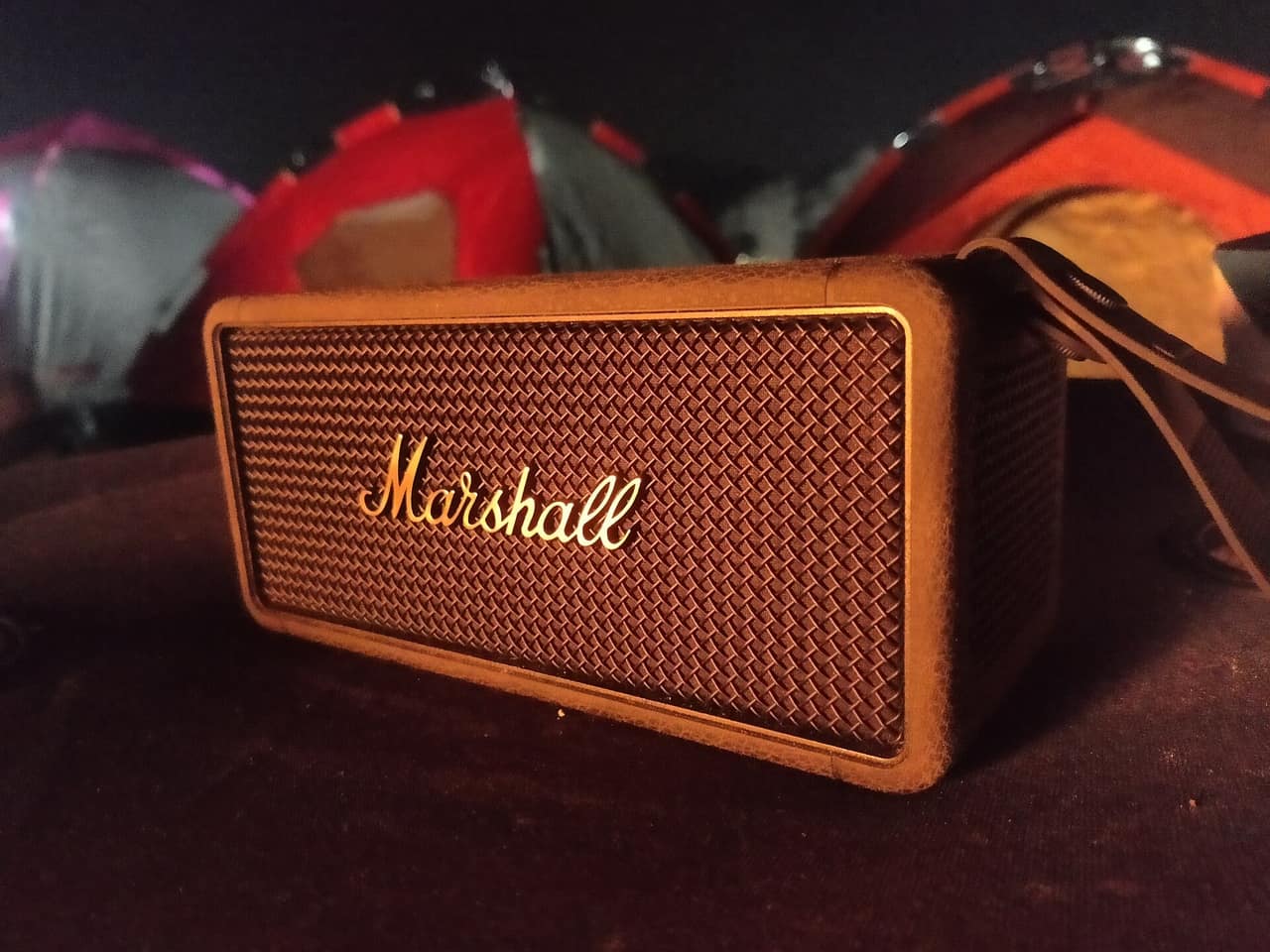
A portable Bluetooth speaker sitting in front of tents at night

The short answer

For most trips the JBL Flip 7 is the right size and the right spec: IP68, a manufacturer-quoted 14 hours, and small enough to live in a door pocket. The UE Wonderboom 4 is the tougher, rounder alternative, and the JBL Charge 6 is the one to buy if you want it to charge your phone too.

Trail & Terminal earns a commission when you buy through our Amazon links, at no extra cost to you. It does not change which products we pick -- see our affiliate disclosure and selection method.

Our picks at a glance

Best portable Bluetooth speakers -- ranked picks
#ProductBest forKey specPrice
1JBL Flip 7The size the category settled on, with the highest ingress rating here and a battery that covers a full day outdoors.the default right answerIP68, 14 h quoted
2Ultimate Ears Wonderboom 4A rubber-armored sphere that floats, throws sound in every direction, and is almost impossible to damage.the one that survives everythingIP67, floats, 14 h quoted
3JBL Charge 6A bigger battery, a bigger sound, and a USB-C port that gives power out instead of only taking it in.the one that charges your phoneIP68, USB-C power out
4Bose SoundLink Flex (2nd Gen)The best-sounding speaker here at this size, with a tuning that automatically adapts to how the speaker is lying.sound quality for the sizeIP67, 12 h quoted
5Marshall Emberton IIIA quoted 32 hours in a brick the size of a paperback, in the only industrial design here that does not look like sports equipment.battery life, by a distanceIP67, 32 h quoted
6Soundcore Boom 2The loudest thing here for the money, with a dedicated subwoofer driver and a body that floats.volume per dollarIPX7, floats, 80 W
7JBL Clip 5An integrated carabiner, an IP67 body and twelve quoted hours in something that weighs less than a full water bottle.the one that clips to a packIP67, 12 h, carabiner
8Tribit StormBox Micro 2A flat brick with an integrated rubber strap, IP67 and twelve quoted hours, for a fraction of the name-brand price.the budget pick that is not a compromiseIP67, 12 h, strap mount
9Sonos Roam 2A portable speaker that becomes part of a home multi-room system when it gets back, over Wi-Fi rather than Bluetooth.households already on SonosIP67, Wi-Fi + Bluetooth

Ranked by the criteria in how we pick. We hold no live prices, so every button goes straight to the current Amazon listing.

Every pick, in full

The picks

1

Best for the default right answer

JBL Flip 7

The size the category settled on, with the highest ingress rating here and a battery that covers a full day outdoors.

This is the size the whole category has converged on, and the Flip has been the reference point for several generations. The seventh version's meaningful change is the ingress rating: IP68 means it is rated for immersion beyond the one meter for thirty minutes that IP67 covers, which in practice means a kayak day or a rainstorm on a picnic table is a non-event rather than a worry.

Treat the battery number the way you treat a car manufacturer's range figure. Fourteen hours is at moderate volume; outdoors, where you turn everything up because there are no walls to reflect sound back at you, it is less. The Playtime Boost mode buys more hours by cutting the low end, which is a genuinely useful option on a long weekend and not something you want on day one. If you want music and a phone charger from the same object, the Charge below does that and this does not. See <a href="/road-trip/best-road-trip-gadgets">road trip gadgets</a> for the rest of the car kit.

Specs

  • IP68 rated for dust and water
  • Manufacturer-quoted 14 hours, extendable with JBL's Playtime Boost mode
  • Cylindrical body, stands upright or lies flat
  • USB-C charging; Auracast multi-speaker pairing

Good for

  • IP68 rather than IP67 -- the difference is depth and duration, and it is the highest rating on this page
  • The cylinder shape fits a car door pocket, a cup holder and a side pocket on a pack
  • Playtime Boost trades some low end for extra hours, which is the right trade on day three

Bad at

  • Bass is modest for the size; it is a clear speaker, not a loud one
  • Playtime Boost noticeably thins the sound, so the headline battery figure is not the figure you will hear
  • Nothing to clip it to without buying the accessory strap
2

Best for the one that survives everything

Ultimate Ears Wonderboom 4

A rubber-armored sphere that floats, throws sound in every direction, and is almost impossible to damage.

The Wonderboom is the speaker to buy if the thing is going to have a hard life. The shape is the engineering: there are no flat panels to crack, no exposed grille corners, and the rubber bumpers at each end take the impact when it goes off the tailgate onto gravel.

The 360-degree arrangement matters more outdoors than it sounds. A forward-firing speaker on a picnic table has a front and a back, and half the group is sitting in the back. This one does not care where it is pointing, which is why it is the one that ends up in the middle of the table. The two honest complaints are that it rolls, and that the tuning is bright enough to get fatiguing at high volume over a long evening. Neither stops it being the toughest thing here.

Specs

  • IP67 rated; buoyant construction
  • Manufacturer-quoted up to 14 hours
  • 360-degree driver arrangement
  • Fabric loop on the top for hanging or clipping

Good for

  • It floats, which no amount of waterproofing substitutes for when it goes in a lake
  • 360-degree output means it does not need aiming at the group
  • The rubber bumper construction shrugs off the drops that crack flat-sided speakers

Bad at

  • Round things roll. On any sloped surface it will end up somewhere you did not put it
  • No aux input and no power-bank function
  • Treble-forward tuning that some people find bright at volume
3

Best for the one that charges your phone

JBL Charge 6

A bigger battery, a bigger sound, and a USB-C port that gives power out instead of only taking it in.

The Charge exists for one specific person: the one who is away from a socket for several days and has already thought about how their phone gets charged. Using it as a power bank is not fast and it is not efficient, but it is there, and on the second night of a camp that is worth more than another few decibels.

The size is the cost. It will not disappear into a door pocket and nobody carries it on a day hike. Think of it as the speaker that lives in the trunk with the rest of the camp kit rather than the one that travels with you. If power is the actual problem rather than a nice extra, a dedicated bank is better at it for less money and less bulk -- see <a href="/camp/best-portable-power-banks-for-camping">power banks for camping</a> and <a href="/road-trip/best-portable-power-stations">portable power stations</a>.

Specs

  • IP68 rated for dust and water
  • USB-C port doubles as a power output for phones
  • Reinforced bumper guards at both ends
  • Auracast multi-speaker pairing

Good for

  • The power-out function genuinely removes an item from the packing list on a weekend trip
  • The largest battery of the JBL portables here, so it is the one that survives a multi-day festival or a three-night camp
  • Fuller low end than the Flip, which matters outdoors where bass disappears first

Bad at

  • Noticeably bigger and heavier; this is a bag speaker, not a pocket speaker
  • Charging a phone from it visibly eats the playtime -- you are choosing between music and battery
  • Rolls on a slope like every cylinder here
5

Best for battery life, by a distance

Marshall Emberton III

A quoted 32 hours in a brick the size of a paperback, in the only industrial design here that does not look like sports equipment.

Battery life is the spec that actually decides whether a speaker gets used on a long trip, and this is where the Emberton is unanswerable: the quoted 32 hours is roughly double the JBL and UE figures, and the stated six-hours-from-twenty-minutes charge means a fuel stop is a full recharge in practice.

The sound signature is the thing to audition if you can. Marshall tunes toward the midrange, which suits rock and acoustic material and is less convincing on bass-led tracks than the Soundcore or the Charge. The IP67 rating is real and the speaker is genuinely rugged, but the vinyl-look finish is the one surface here that looks worse after a season of campsites rather than better.

Specs

  • IP67 rated for dust and water
  • Manufacturer-quoted 32 hours, with a stated 6 hours from a 20-minute charge
  • Dual Class D amplification with Marshall's True Stereophonic 360-degree output
  • Built-in microphone for calls

Good for

  • The quoted battery figure is roughly double most of this page -- it is the one you stop thinking about charging
  • The quick-charge claim is the useful half of that: 20 minutes at a gas station buys an evening
  • Genuinely different industrial design; it does not look like it belongs at a pool party

Bad at

  • Marshall's app and control knob are idiosyncratic and take a few days to stop fighting
  • Mid-forward tuning that flatters guitars and does less for electronic music
  • The textured vinyl finish holds dirt and is awkward to clean after a dusty trip
6

Best for volume per dollar

Soundcore Boom 2

The loudest thing here for the money, with a dedicated subwoofer driver and a body that floats.

Outdoors has no walls, so sound simply leaves. That is why speakers that are plenty loud in a kitchen sound thin on a beach, and it is why raw output is a more honest spec outdoors than it is indoors. The Boom 2 is the answer if the use case is a group of eight around a fire rather than two people in a tent.

The thing to read carefully is the rating. IPX7 means it has been tested for water and not tested for dust, which is a real gap for a speaker that will spend its life on sand, dirt and gravel. Everything else on this page with an IP6-something rating has been tested for both. Turn BassUp off for the first listen and decide for yourself whether you want it back on.

Specs

  • IPX7 rated for water; buoyant
  • Manufacturer-stated 80 W maximum output with a racetrack subwoofer
  • BassUp processing mode
  • Carry handle built into the body

Good for

  • Substantially louder and bassier than anything else on this page at the price
  • Floats, which is the right feature for a speaker that goes to lakes and pools
  • The integrated handle makes it genuinely easy to carry one-handed with a cooler in the other

Bad at

  • IPX7 only -- it is rated for water but carries no dust rating at all, which matters on a dirt campsite
  • BassUp is overdone by default and muddies anything with a lot going on in the low mids
  • Big and obtrusive; this is a speaker for a group, not for a tent
7

Best for the one that clips to a pack

JBL Clip 5

An integrated carabiner, an IP67 body and twelve quoted hours in something that weighs less than a full water bottle.

This is the speaker you take on the hike rather than the one you leave at camp. The integrated carabiner is the whole argument: a speaker that clips to the outside of a daypack travels on every walk, and a speaker that needs to be packed does not.

Be realistic about the sound. It fills a tent, a bathroom and the immediate area around a pack. It does not fill a campsite and it cannot compete with wind or a river. Buy it as a second speaker or as a deliberate choice for travel where every gram counts, not as a primary. It pairs naturally with the kit in <a href="/trail/best-hiking-daypacks">hiking daypacks</a>.

Specs

  • IP67 rated for dust and water
  • Manufacturer-quoted 12 hours
  • Integrated carabiner, not a strap or a loop
  • USB-C charging

Good for

  • The carabiner is part of the body rather than an accessory, so it never gets left at home
  • Light and flat enough to ride on a pack strap or a bike bar without being noticed
  • The same IP67 rating as speakers four times its size

Bad at

  • Small drivers mean small sound -- it is a personal speaker, not a group one
  • Little bass at any volume, and it strains audibly when pushed
  • The carabiner is proper hardware but is not rated for anything but the speaker's own weight
8

Best for the budget pick that is not a compromise

Tribit StormBox Micro 2

A flat brick with an integrated rubber strap, IP67 and twelve quoted hours, for a fraction of the name-brand price.

The budget slot in this category is unusually good, because waterproofing and Bluetooth are both mature and cheap now. What you give up at this price is the final refinement of the tuning, not the ratings, the battery or the build.

The strap is the genuinely clever part and is the reason to choose this over a cheaper no-name alternative: it wraps a bike handlebar, a tent pole, a roof bar or a pack strap, which covers more mounting situations than the carabiner on the Clip. If you want one speaker for a car and a campsite and do not want to spend much, this is the honest recommendation.

Specs

  • IP67 rated for dust and water
  • Manufacturer-quoted 12 hours
  • Integrated rubber strap for bike bars, packs and tent poles
  • Pass-through charging while playing

Good for

  • The strap mounts to round objects a carabiner cannot -- handlebars, tent poles, a roof rack bar
  • Larger battery capacity than its direct name-brand rivals at a much lower price
  • Flat-sided, so it does not roll off anything

Bad at

  • Treble is coarser than the Bose or JBL equivalents, which is where the money was saved
  • The strap is excellent on round bars and useless on anything flat
  • App and firmware support are thinner than the major brands'
9

Best for households already on Sonos

Sonos Roam 2

A portable speaker that becomes part of a home multi-room system when it gets back, over Wi-Fi rather than Bluetooth.

This is the one pick on the page with a conditional recommendation. If there is already a Sonos system in the house, the Roam is the obvious portable because it stops being a separate object the moment it comes home -- it joins the multi-room setup and plays as a zone.

If there is not, it is a well-made, well-rated IP67 speaker with middling battery life that costs more than the JBL and UE options and asks you to make an account before it plays anything. Judged purely as a trip speaker it is beaten on this page by three cheaper things. Judged as part of a system, nothing else here competes.

Specs

  • IP67 rated for dust and water
  • Wi-Fi and Bluetooth; joins an existing Sonos system at home
  • Automatic room tuning
  • USB-C charging, optional wireless charging dock

Good for

  • The only speaker here that is also a home audio component rather than only a travel one
  • Wi-Fi streaming at home sounds better and is more stable than Bluetooth
  • Room tuning makes a real difference indoors in hard-surfaced rental kitchens

Bad at

  • The reason to buy it mostly evaporates if you do not already own Sonos equipment
  • Setup requires the app and an account, which is friction nothing else here imposes
  • Shorter battery life than the dedicated outdoor speakers, and no power-out

01 — Selection criteria

The three specs that actually decide this

Sound quality is the spec everybody shops on and the one that matters least outdoors, because outdoors removes the walls that make a speaker sound good in the first place. Reflected sound is most of what you hear in a room; on a beach or at a campsite it simply is not there, so differences that are obvious on a kitchen counter shrink to almost nothing around a fire.

What does not shrink is whether the speaker still works after the cooler leaked on it, whether it lasts until bedtime on night three, and whether it fits where you need to put it. Those are the three things we ranked on.

  • The ingress rating, read properly. The first digit after IP is dust, the second is water. IPX7 means water-tested and not dust-tested -- a real gap on a dirt campsite. IP67 covers both; IP68 means deeper or longer immersion than IP67's one meter for thirty minutes.
  • Quoted battery, discounted for reality. Manufacturer hours are measured at moderate volume. Outdoors you play louder because nothing reflects back, so plan on noticeably less than the number on the box.
  • Shape, not just size. Cylinders roll off tables and fit cup holders. Flat bricks pack better and stay put. Spheres survive drops and roll worst of all. This decides where the speaker can live more than volume does.
  • How it attaches. An integrated carabiner or strap is the difference between a speaker that comes on the walk and one that stays in the trunk. Accessory straps get left at home.
  • Whether it also does something else. Power-out, Wi-Fi multi-room, a microphone for calls. These remove items from a packing list, which is worth more on a trip than a decibel.

02 — Comparison

At a glance

Battery figures are the manufacturer's own quoted numbers at moderate volume, not measurements of ours. Treat them as a ranking, not a promise.

SpeakerRatingQuoted batteryStands out for
JBL Flip 7IP6814 hThe best all-round size and spec
UE Wonderboom 4IP67, floats14 hToughness and 360-degree output
JBL Charge 6IP68Longest of the JBLsCharges your phone
Bose SoundLink Flex 2IP6712 hBest sound for the size
Marshall Emberton IIIIP6732 hBattery life, by a distance
Soundcore Boom 2IPX7, floatsGroup-lengthRaw volume and bass
JBL Clip 5IP6712 hIntegrated carabiner
Tribit StormBox Micro 2IP6712 hStrap mount, lowest price
Sonos Roam 2IP67ShorterJoins a home Sonos system

03 — The decision

Which one for which trip

The honest version of this recommendation is that the right speaker depends almost entirely on where it spends its nights. Four common patterns cover most people.

Car-based trips with a socket most nights

Battery barely matters here, so buy on sound and size. The Bose SoundLink Flex is the pick: it is the best-sounding thing on this page at its size, it packs flat, and twelve hours covers an evening comfortably when you can charge in the car the next day.

A car charger that actually delivers useful wattage is worth more to this setup than a bigger speaker battery. See road trip gadgets for the charging side of the car kit.

Multi-night camping with no power

This is where the Marshall Emberton III's quoted 32 hours stops being a spec-sheet number and starts being the reason the speaker still works on the last night. The alternative is the JBL Charge 6, which has less battery but hands some of it to your phone.

If you are running several things off stored power -- lights, a phone, a cooler -- the speaker is the wrong place to solve it. A proper bank or station is, and power banks for camping covers that properly.

Water: lakes, pools, kayaks, beaches

Buoyancy beats waterproofing here, because a speaker that sinks is lost regardless of its rating. The UE Wonderboom 4 and the Soundcore Boom 2 both float; the Wonderboom is the one with a dust rating as well, which matters if the water trip has sand attached to it.

Rinse anything that has been in salt water with fresh water afterwards and let it dry fully before charging. Ingress ratings are tested in fresh water, and salt left in a USB-C port is a slow way to kill a speaker that survived the swim.

Hiking and travel where size decides everything

The JBL Clip 5 and the Tribit StormBox Micro 2 are the two picks that genuinely come along rather than staying behind, because both attach to something. The Clip's carabiner suits pack straps and the Tribit's rubber strap suits round bars.

Neither will fill an outdoor space, and that is fine -- the use case is a tent, a hostel bunk or a bathroom. See travel accessories for the rest of the small-kit list.

04 — Skip list

What we would skip

  • Unbranded speakers quoting huge wattage numbers. Peak wattage is unregulated as a marketing term and correlates with nothing you can hear. Ratings and battery capacity are checkable; wattage claims largely are not.
  • Anything with no IP rating at all. If the listing does not state one, assume it has not been tested. For a speaker that lives outdoors that is the whole specification.
  • Solar-charging speakers. The panel is almost always too small to meaningfully charge the battery and adds size, cost and a failure point. Charge it from the car.
  • Speakers with built-in lights as the headline feature. The lights drain the battery that the speaker needs and are worse at lighting than a lantern that costs a tenth as much.
  • Stereo pairs for outdoor use. Stereo separation needs you to sit in one specific spot. Around a fire, nobody does. One 360-degree speaker beats two directional ones.
  • Bluetooth speakers as a car stereo substitute. A speaker rattling in a cup holder at road speed is worse than the car's own system and is a distraction. Use the car's audio while driving.

05 — Criteria

How we ranked these

Ranked on ingress rating first, then manufacturer-quoted battery life, then the physical questions of shape and attachment, and only then on reported sound quality -- because outdoors is where these get used and outdoors flattens sound differences. Every battery figure on this page is the manufacturer's own and is labeled as such. Full method on how we pick.

We have not measured output, run battery tests or taken these in a lake. The picks rest on published manufacturer specifications, published ingress ratings, and consistent patterns in what owners report after a season of outdoor use. We publish no prices -- every button goes to the live listing.

Questions

Frequently asked

What is the best portable Bluetooth speaker for camping?
For most campers the JBL Flip 7: IP68 rated, a quoted 14 hours and small enough to pack without thinking about it. If you are out for several nights with no power, the Marshall Emberton III's quoted 32 hours is the more relevant spec.
What does IPX7 mean compared with IP67?
The first digit after IP is dust protection and the second is water. IPX7 means the speaker was tested for water and not tested for dust at all. IP67 covers both. On a dirt or sand campsite that difference is real, not academic.
Do portable speakers really last as long as the battery claim?
Rarely, outdoors. Manufacturer hours are measured at moderate volume, and outdoors you play louder because there are no walls reflecting sound back at you. Plan on meaningfully less than the quoted figure on any speaker here.
Should a camping speaker float?
If it goes near water, yes -- buoyancy matters more than the IP rating, because a sunken speaker is gone whatever it was rated for. The UE Wonderboom 4 and Soundcore Boom 2 both float; most cylinders on this page do not.
Can a Bluetooth speaker charge my phone?
Some can. The JBL Charge 6's USB-C port works as a power output as well as an input. It is slow and it visibly shortens playtime, so treat it as a backup rather than a replacement for a proper power bank.
Is a more expensive portable speaker worth it outdoors?
Less than indoors. Outdoors removes the reflected sound that makes a good speaker obvious in a room, so the audible gap between a mid-price and a premium speaker narrows sharply. Spend the difference on waterproofing and battery instead.

Back up a level

This page sits in Road Trip -- car camping and long drives: sleep, power, mounts, snacks.

Read next