Skip to content
Trail & Terminal

01 — Camp / Roundup

Best portable camping grills

Cooking area is the number everyone shops on and weight is the number everyone regrets. The useful comparison is how many square inches each pound buys you.

By Brijon M.Last updated How we pick
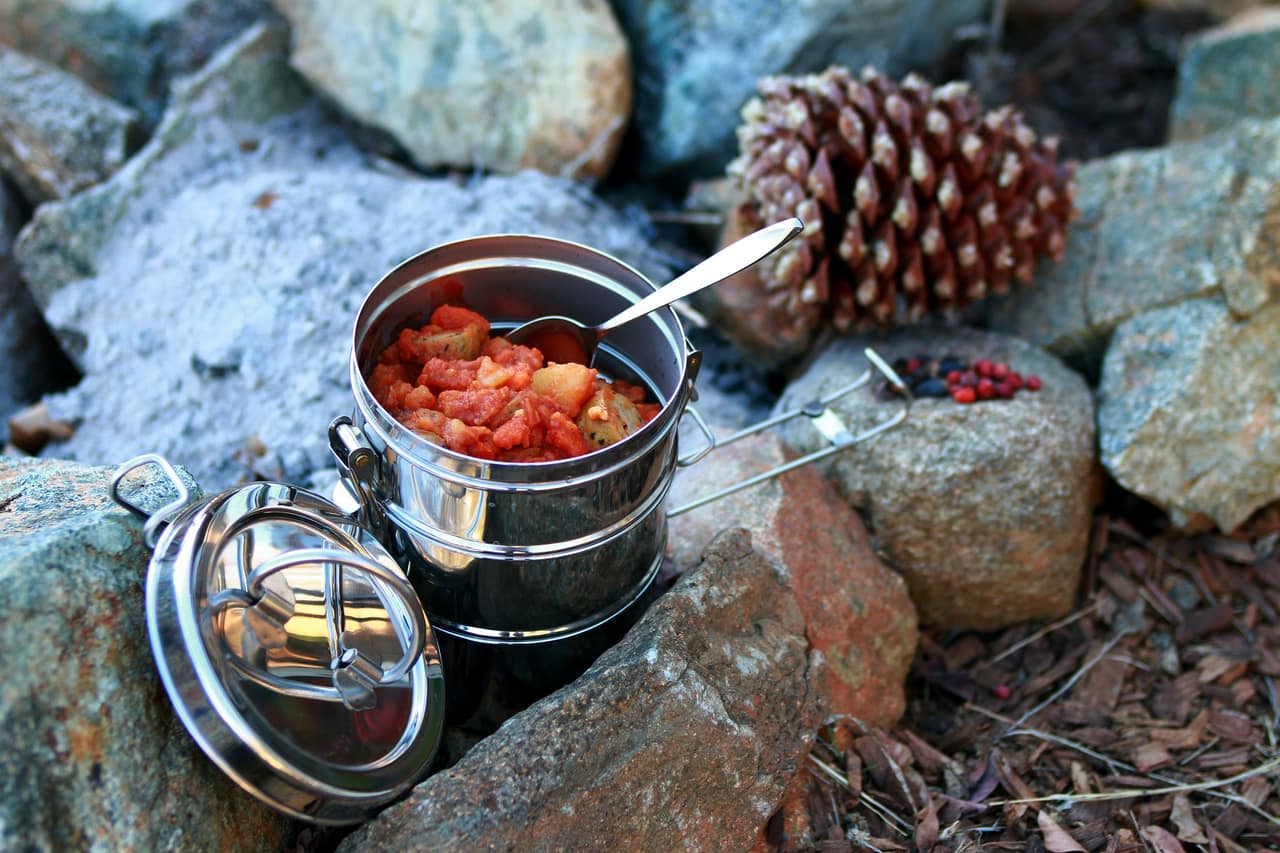
A one-pot meal cooking on a camp stove at a picnic table

The short answer

The Weber Q 1200 is the best portable camping grill for most car campers: 189 square inches of porcelain-enameled cast-iron grates, an 8,500 BTU burner and a 1-pound propane canister. If 31 pounds is too much grill, the Weber Go-Anywhere charcoal at 11.5 pounds does the same job for far less money and more work.

Trail & Terminal earns a commission when you buy through our Amazon links, at no extra cost to you. It does not change which products we pick -- see our affiliate disclosure and selection method.

Our picks at a glance

Best portable camping grills -- ranked picks
#ProductBest forKey specPrice
1Weber Q 1200The grill in this list that behaves most like the one in your yard: cast-iron grates, a sealed lid, and enough stored heat to sear properly.most car campers who want it to cook like a real grill189 sq in, 8,500 BTU, about 31 lb, 1 lb propane canister
2Coleman RoadTrip 225 Portable Tabletop GrillThe most cooking area here per pound, and the only unit with two independent burners -- which is how you cook two things at once.feeding a group, and two-zone cooking225 sq in, 11,000 BTU total, 27.6 lb, two burners
3Weber Go-Anywhere Charcoal Grill11.5 pounds, charcoal, almost nothing to break. The most grill per dollar and per pound in this roundup, if you accept the hassle.the lightest, cheapest grill that still grills160 sq in, charcoal, 11.5 lb, legs lock the lid for transport
4Cuisinart CGG-180T Petit Gourmet13.5 pounds of propane grill. A genuinely small cooking area, but it packs like a cooler bag and lights instantly.the lightest gas option and small sites145 sq in, 5,500 BTU, 13.5 lb, 1 lb propane canister
5Blackstone On The Go 17" Tabletop GriddleNot a grill -- a flat top. The best unit here for eggs, pancakes, onions and smash burgers, and the wrong one for steak over flame.camp breakfast and anything that falls through a grate267 sq in flat top, 12,500 BTU, 38 lb, grease management

Ranked by the criteria in how we pick. We hold no live prices, so every button goes straight to the current Amazon listing.

Every pick, in full

The picks

1

Best for most car campers who want it to cook like a real grill

Weber Q 1200

The grill in this list that behaves most like the one in your yard: cast-iron grates, a sealed lid, and enough stored heat to sear properly.

The Q 1200 is the pick because grilling is mostly a heat-storage problem, not a heat-output problem. A thin steel grate over a burner loses its temperature the instant you lay cold meat on it, which is why cheap grills produce gray food with no crust. Cast iron holds enough energy to keep searing through the first minute, and that is the whole difference.

What you pay for it is weight and bulk, and that is a real cost on a car-camping trip where the trunk is the binding constraint. Think of this as a grill you bring when grilling is the point of the evening, and keep a stove for everything else -- see best camping stoves for the boil-water-and-fry side of camp cooking.

Specs

  • 189 square inches of primary cooking area
  • 8,500 BTU-per-hour stainless steel burner
  • Porcelain-enameled cast-iron cooking grates
  • Electronic ignition with an infinite-control valve
  • Runs on a 1-pound disposable propane canister; an adapter hose is needed for a 20 lb tank
  • About 31 lb; folding side tables and a carry handle; roughly 25.5 in H x 40.9 in W x 16.5 in D with the lid open

Good for

  • Cast iron holds heat, so the grates stay hot when cold food hits them -- the difference between searing and steaming
  • A properly sealing lid means you can cook with it closed, which makes chicken thighs and thick cuts realistic rather than a gamble
  • Weber's parts and warranty support is the best in this category by a wide margin, and burners and grates are genuinely replaceable years later

Bad at

  • At about 31 pounds it is the heaviest unit here that is not a griddle, and it is an awkward shape in a loaded trunk
  • A 1-pound canister is a short run time at full output -- plan on carrying several, or buy the adapter hose for a 20 lb tank
  • 189 square inches is a two-to-four-person grill. A group of six will be cooking in shifts
2

Best for feeding a group, and two-zone cooking

Coleman RoadTrip 225 Portable Tabletop Grill

The most cooking area here per pound, and the only unit with two independent burners -- which is how you cook two things at once.

This is the value pick in gas, and the two-burner layout is the reason rather than the price. Single-burner portables force everything through one temperature, which means the last batch is cold by the time the first is cooked. Two zones solve a real logistical problem at a campsite with four hungry people.

The honest caveat is that it is a tabletop unit, so your packing list needs a surface. If you do not already have one, that is a second item and a second chunk of trunk space -- see best camping tables. Factor that in before concluding it is lighter than the Weber.

Specs

  • 225 square inches of porcelain-coated cast-iron grates
  • Adjustable output quoted from 2,500 up to 11,000 BTU per hour
  • Two independently adjustable burners
  • Instastart push-button ignition
  • Runs on a 1-pound propane cylinder (not included); ships fully assembled
  • 27.6 lb; about 27.1 in W x 18.6 in D x 14 in H

Good for

  • More grate area than the Weber in a lighter package -- the best square-inches-per-pound ratio of the gas grills here
  • Two burners give you a hot zone and a holding zone, which is how you get burgers and buns off the grill at the same time
  • Porcelain-coated cast iron at this price is unusual, and it brings the heat-retention advantage down a price bracket

Bad at

  • Build quality is a clear step below Weber -- the lid, hinges and latches are the parts owners report problems with first
  • Tabletop only: there is no stand, so you need a picnic table or a camp table with it
  • 11,000 BTU across 225 square inches is less heat per square inch than the Weber delivers, so it is a slower grill at full load
3

Best for the lightest, cheapest grill that still grills

Weber Go-Anywhere Charcoal Grill

11.5 pounds, charcoal, almost nothing to break. The most grill per dollar and per pound in this roundup, if you accept the hassle.

If you want one grill that will come on every trip rather than the trips you specially plan around it, this is probably the right answer, and the reason is simply that 11.5 pounds does not make you choose. A 31-pound grill gets left at home; this one lives in the trunk with the chairs.

Be realistic about the charcoal tax. It is 20 minutes of lead time, a bag of fuel, a lighting method, and hot ash to deal with responsibly at the end. Some people find that part of the evening. If you find it an annoyance at 8 p.m. in the dark, buy gas and accept the weight.

Specs

  • 160 square inches of plated steel cooking grate
  • Charcoal fuel; porcelain-enameled bowl and lid
  • Rust-resistant aluminum dampers for airflow control
  • Plated steel legs pivot to lock the lid down for carrying
  • 11.5 lb; about 14.3 in H x 19.5 in W x 11.5 in D with the lid open

Good for

  • A third of the weight of the gas grills and a fraction of the price -- by a distance the easiest one to justify packing
  • No burner, no valve, no igniter, no regulator. The failure modes of a charcoal grill are essentially rust and nothing else
  • Charcoal genuinely tastes different, and the porcelain-enameled lid plus dampers mean you can control it rather than just burning things

Bad at

  • Charcoal is slow: budget 20 to 30 minutes from lighting to cooking, every time, and you cannot turn it off when you are done
  • You have to carry fuel in and carry hot ash out, and many campgrounds restrict where ash can be dumped
  • Plated steel grates do not hold heat like cast iron, and 160 square inches is the smallest grilling area here
4

Best for the lightest gas option and small sites

Cuisinart CGG-180T Petit Gourmet

13.5 pounds of propane grill. A genuinely small cooking area, but it packs like a cooler bag and lights instantly.

There is a reasonable argument that a portable grill you resent carrying is worse than no grill, and this is the pick that takes that argument seriously. At 13.5 pounds it travels like a piece of camp kitchen kit rather than an appliance, and for two people cooking sausages, burgers, vegetables and fish it does the job without ceremony.

What it will not do is a thick cut of meat with a crust, and we would rather say that plainly than describe 5,500 BTU as "efficient." If searing matters to you, the Weber Q 1200 is the grill and the weight is the price. If packing matters more, this is the trade and it is a fair one.

Specs

  • 145 square inches of cooking surface
  • 5,500 BTU-per-hour oval burner
  • Runs on a 1-pound propane canister
  • Steel construction; twist-start ignition
  • 13.5 lb; about 12 in W x 18 in D x 12.5 in H
  • Cuisinart rates it for about 8 burgers, 6 to 10 chicken breasts or over 4 lb of fish

Good for

  • The lightest gas grill here by a wide margin, and gas means no lead time and no ash
  • Small enough that it does not dominate a packed trunk, which is the actual reason portable grills get used
  • Fast to light and instantly off -- the practical advantage of propane over charcoal in a campground with a quiet hour

Bad at

  • 5,500 BTU over 145 square inches is the least heat in this roundup; it will not sear a thick steak well
  • Steel grates and a thin body mean poor heat retention and noticeable hot and cold spots
  • Genuinely a two-person grill. Cooking for four is a sequencing exercise, not a meal
5

Best for camp breakfast and anything that falls through a grate

Blackstone On The Go 17" Tabletop Griddle

Not a grill -- a flat top. The best unit here for eggs, pancakes, onions and smash burgers, and the wrong one for steak over flame.

Including a griddle in a grill roundup is deliberate, because at a campsite the flat top solves more meals than the grate does. Breakfast is the meal camping gets wrong most often, and a griddle turns it into the easiest meal of the trip. It also handles the food that grates ruin: sliced peppers, mushrooms, shrimp, smash burgers.

The cost is honest and twofold. It is heavy, and it is a cast-steel surface that will rust if you pack it wet. If you want one cooking appliance and your menu is more breakfast and stir-fry than steak, this is the right call -- and for pots and pans alongside it, our camping cookware page covers what still has to come along.

Specs

  • 267 square inches of heavy-duty flat cooking surface
  • 12,500 BTU-per-hour single stainless steel H-style burner
  • Rear grease management system draining to a removable, dishwasher-safe cup
  • Propane; 38 lb; about 21.7 in W x 20.5 in D x 14.7 in H
  • Blackstone quotes capacity as roughly 9 pancakes, 12 eggs, 9 burgers, 4 steaks or 18 hot dogs

Good for

  • The most usable cooking surface in this roundup, and a flat top wastes none of it -- nothing falls through and nothing flares up
  • Transforms camp breakfast: eggs, pancakes and hash browns are impossible on a grate and trivial here
  • The highest BTU figure here over a solid steel plate means it recovers heat fast between batches

Bad at

  • 38 lb and an awkward footprint -- the heaviest and bulkiest unit in this roundup
  • A steel griddle needs seasoning and must be kept oiled and dry, or it rusts. This is maintenance, not an inconvenience
  • No lid and no grate: you cannot cook anything with the heat closed in, and you will never get grill marks or smoke flavor

01 — Compare

The picks at a glance

Cooking area and BTU are both published figures. The last column is the one worth reading: square inches per pound of grill, which is the only number that reflects what the thing actually costs you in a packed car.

PickCooking areaBTU/hrWeightSq in per lb
Weber Q 1200189 sq in8,500about 31 lbabout 6.1
Coleman RoadTrip 225225 sq in11,00027.6 lbabout 8.2
Weber Go-Anywhere (charcoal)160 sq inCharcoal11.5 lbabout 13.9
Cuisinart CGG-180T145 sq in5,50013.5 lbabout 10.7
Blackstone On The Go 17"267 sq in flat top12,50038 lbabout 7.0

02 — Selection criteria

The criteria that decide a camping grill

Portable grills are sold on cooking area and BTU, which are the two specs that matter least once the thing is in your trunk. The criteria below are ordered by how often they turn out to be the reason a grill does or does not get packed.

  • Packed size and weight, not just weight. A 27-pound grill with a flat footprint stacks under a cooler; a 27-pound grill with legs and a lid does not. Measure the shape, not only the number.
  • Grate material, because it decides whether you can sear. Cast iron stores heat and keeps cooking when cold food lands. Plated or thin steel drops temperature immediately. This matters more than BTU.
  • Heat per square inch, not total BTU. 11,000 BTU over 225 square inches is a cooler grill than 8,500 over 189. Divide before you compare.
  • Fuel logistics for how you camp. Propane means instant on, instant off, and canisters to buy and pack out. Charcoal means 20 minutes of lead time, a bag of fuel, and hot ash to dispose of legally.
  • Whether it needs a table. Tabletop grills assume a surface. If your site has no picnic table, that is another item in the car.
  • Parts availability in three years. Burners, grates and igniters are the things that fail. The brands that sell them separately are the ones worth buying.

03 — Fuel choice

Propane or charcoal at a campsite?

This is the decision that determines whether you enjoy owning a camping grill, and it is not really about flavor. It is about what you are willing to do at the end of a driving day.

Propane is a five-minute appliance. Connect a canister, push the igniter, cook, turn it off. That matters most in the situations camping actually produces: arriving after dark, cooking in wind, cooking in a campground with a quiet hour, and wanting the stove off and the site clean in ten minutes. The costs are the canisters themselves -- disposable 1-pound cylinders are expensive per meal and awkward to dispose of responsibly -- and more mechanical parts to fail.

Charcoal is cheaper to own, lighter to carry, far simpler mechanically, and produces heat and flavor gas cannot match. The costs are time and residue: 20 to 30 minutes from lighting to cooking, a bag of briquettes taking up space, no way to turn it off when you are finished, and hot ash that has to cool fully and go where the campground tells you. Many sites prohibit dumping ash on the ground entirely, and ash in a fire ring can stay hot for a day.

The practical rule: if you grill as the planned centerpiece of an evening, charcoal rewards you. If grilling is a quick way to get dinner on the table before it gets dark, buy propane. And if you are deciding between a grill and a stove at all, a stove is the more useful first purchase -- it boils water, which a grill does badly.

04 — Safety

Safety at a campsite, which is not the same as a backyard

Every unit in this roundup produces carbon monoxide, which is odorless and has killed people who brought a grill into a tent, a camper or a vestibule to escape rain or cold. The CPSC is unambiguous about this: never burn charcoal or operate a fuel-burning grill inside a tent, vehicle, camper or any enclosed space, and that includes a tent with the door open. A smoldering charcoal grill produces CO for hours after the flames are gone.

The second campsite-specific risk is fire. A grill sits on ground covered in dry needles, leaves and grass, and a dropped coal or a grease flare can start something that a cup of water will not stop. Check the local fire restrictions before you go -- during a burn ban, charcoal is frequently prohibited outright while propane is permitted, precisely because propane does not produce embers.

Food safety is the quiet one. A cooler at camp is not a refrigerator, and the USDA's danger zone between 40 F and 140 F applies the same way it does at home. Keep raw meat at the bottom of the cooler on fresh ice, use a separate plate for cooked food, and bring a thermometer rather than guessing by color -- undercooked chicken on a hot grate that looks done is the most common way a camping trip ends badly.

Can I use a camping grill in the rain?

Outdoors, under an open-sided shelter or canopy with plenty of overhead clearance, yes. Never inside a tent, a vestibule, an awning that encloses on more than one side, or a camper. If the rain is bad enough that you are tempted to bring it under cover, cook on a stove instead or eat something cold.

Are grills allowed at all campgrounds?

It varies and it changes seasonally. Many public campgrounds permit propane grills year-round but ban charcoal and open flame during fire restrictions, and some sites require cooking in the provided fire ring only. Check the managing agency's current alerts before you drive -- our camping checklist covers the rest of the pre-trip pass.

How do I dispose of charcoal ash?

Let it cool completely -- which takes far longer than it looks, often overnight -- then use the ash disposal container the campground provides. Never dump warm ash on the ground, in vegetation, in a trash bag or into a pit toilet. If there is no provided container, carry it out in a sealed metal container once it is fully cold.

Can I bring propane canisters in the car?

Yes, and the usual guidance is to carry them upright, secured so they cannot roll, in a ventilated area of the vehicle rather than a sealed trunk in high heat, and never to leave them in a closed car on a hot day. Disposable 1-pound cylinders cannot be refilled legally for transport and should be disposed of as the manufacturer directs.

Do I still need a camp stove if I have a grill?

Almost certainly. Grills are bad at boiling water, bad at simmering, and useless for coffee, oatmeal, pasta and anything in a pot. The realistic camp kitchen is a stove for most meals plus a grill for the evenings you want to grill -- see best camping stoves.

05 — Honest limits

What a portable grill is bad at

Camping grills are sold as camp kitchens and they are not. Knowing the gaps before you buy stops you from packing a 31-pound appliance and still eating cold food.

  • Boiling water. A grate over a burner is a slow and wasteful way to heat a pot. Coffee, oatmeal and pasta all belong on a stove.
  • Simmering. Portable grills have crude heat control compared with a stove burner, and sauces and chili scorch.
  • Cooking for six. Nothing here above 225 square inches of grate will feed a large group in one pass. Plan on shifts or bring two appliances.
  • Wind. Small gas grills lose a lot of heat in wind and almost all of these have no wind protection. A site with a wind break is worth more than 2,000 BTU.
  • Being clean. You are packing a greasy object back into a car. A bag or a bin for it is not optional, and a griddle also needs to go home dry and oiled.

06 — Honest limits

What we did not test, and what that means

We have not cooked on these five units, measured surface temperatures, timed preheat, or run a burn test to see how long a 1-pound canister lasts at full output. Doing that properly needs infrared thermometry, a controlled space and a lot of propane, and we have none of it.

So there are no star ratings from us on this page, no measured temperatures and no claimed cook times. Every figure above -- cooking areas, BTU ratings, weights, dimensions, grate materials and capacity claims -- is the manufacturer's published specification. The square-inches-per-pound column is simple arithmetic on those published numbers and nothing more.

What is ours is the reasoning: that grate material matters more than BTU, that heat per square inch is the comparison worth making, that a griddle solves more camp meals than a grate does, and that a grill you resent carrying is worse than a lighter one you actually pack. We publish no prices -- this category is discounted hard every spring. Every buy link opens a live Amazon search for the model named. Full method at how we pick.

Questions

Frequently asked

What is the best portable grill for camping?
The Weber Q 1200 for most car campers: 189 square inches of cast-iron grate, 8,500 BTU and a sealing lid, which together let it sear properly rather than steam. The Weber Go-Anywhere charcoal grill is the better pick if 31 pounds is more than you want to pack.
Is propane or charcoal better for camping?
Propane if you want dinner cooked and the site clean quickly -- instant on, instant off, no ash. Charcoal if grilling is the evening's plan: it is cheaper, lighter and tastes better, but it costs 20 to 30 minutes of lead time and leaves hot ash to dispose of.
How many BTU do I need in a camping grill?
Divide rather than compare totals. Heat per square inch is what matters: 8,500 BTU over 189 square inches is a hotter grill than 11,000 over 225. For most camp cooking, anything above roughly 40 BTU per square inch sears acceptably.
Can you use a camping grill inside a tent?
No. Every grill here produces carbon monoxide, which is odorless and has killed campers who brought a grill into a tent, camper or vestibule. Charcoal keeps producing it for hours after the flames die. Cook outdoors only, with clear overhead space.
Is a griddle better than a grill for camping?
For breakfast, vegetables, shrimp and smash burgers, yes -- nothing falls through and nothing flares up. For steak, chicken thighs and anything you want to cook with the lid closed, a grate wins. Griddles also need seasoning and must be packed dry.
Do I need a table for a portable camping grill?
For the tabletop models here, yes -- the Coleman RoadTrip 225, the Cuisinart and the Blackstone all assume a surface. Count the table as part of the packed volume when you compare them against a freestanding grill.
How do I clean a camping grill at a campsite?
Burn the grates off at high heat for ten minutes, brush them while hot, and wipe them with oil before packing. Scrape grease into a bag and pack it out rather than washing it into the ground, and never dump grease or wash water near a water source.

Back up a level

This page sits in Camp -- campsite kit: shelter, sleep, kitchen, light and power.

Read next